
How to Maintain a Boat Lift in Salt Water (Southwest Florida)
A simple, repeatable maintenance routine that keeps your boat lift running smooth and safe through SW Florida salt, sun, and storm season.
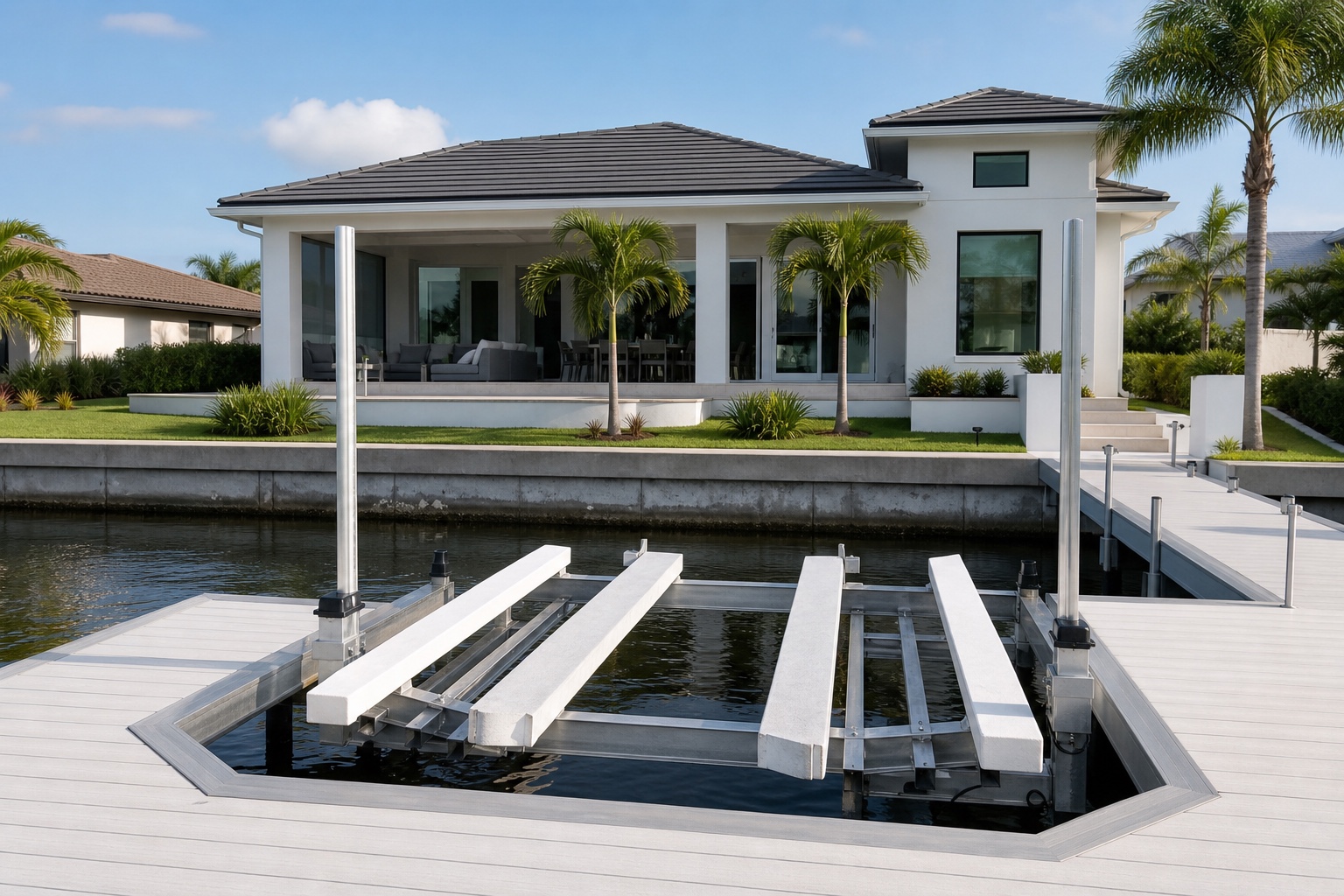
Key takeaways
- Rinse cables and the cradle with fresh water, keep the boat balanced on the bunks, and don't overload.
- Inspect cables for fraying or rust and service the lift once a year.
- Marine-grade aluminum, 316 stainless cable, and sealed motors resist salt — but upkeep still matters.
- A frayed cable, straining motor, or uneven lift means call a pro.
A boat lift is the cheapest insurance a Southwest Florida boat owner can buy — it pulls your hull out of the salt the moment you’re done for the day. But the lift itself lives in the same brutal environment your boat is trying to escape: salt spray, humidity, relentless sun, and a hurricane season that runs half the year. Salt doesn’t care how new your lift is. Left unchecked, it works into cables, gears, and fasteners until something seizes or snaps.
The good news is that keeping a lift healthy here isn’t complicated. A few minutes of routine care, a seasonal once-over, and one professional service a year will keep it running smooth for decades. Here’s exactly how to do it.
Rinse the salt off — regularly
Salt corrosion is the number-one killer of boat lifts on the Gulf coast, and the fix is simple: fresh water. Every couple of weeks, and always after a run in open water or a stretch of heavy spray, hose down the parts that take the most abuse.
- Cables — run water along the full length, top to bottom
- Cradle, bunks, and beams — where salt and grime collect
- Pulleys and sheaves — the moving points that grind when gritty
- Motor housing — rinse the exterior; never blast water into vents or seals
Salt that dries on a cable is what frays it from the inside out. A two-minute rinse is the single highest-value thing you can do.
Load the boat right — every time
How you park the boat matters as much as how you clean the lift. Drive on slow, get the hull centered and balanced on the bunks, and stop in the same spot each time so the weight sits where the lift was built to carry it.
A few habits that save your hardware:
- Don’t overload. Know your loaded weight — hull, engines, full fuel, gear — and stay under the lift’s rating. If you’re unsure you bought enough lift, our guide on what size boat lift you need walks through it.
- Keep it even. A boat that sits off-center or bow-heavy strains the cables unevenly and can rack the cradle to one side.
- Raise it all the way. Between uses, lift the boat fully clear of the water. That keeps the hull off the barnacles and takes tension off the cables at rest.
Inspect cables and bunks before they fail
You don’t need to be a technician to catch trouble early. Every month or two, take a slow walk around the lift and look closely.
- Cables: scan for fraying, broken strands (“fishhooks”), kinks, rust streaks, or flat spots. A single broken strand means the cable is on its way out — stop using the lift and get it replaced.
- Bunks and carpet: check for worn padding, exposed bolts, or rot in the wood underneath. Worn bunks let the hull rest on bare metal.
- Pilings: look for cracks, splitting, marine borers, or any lean. The lift is only as solid as what it’s bolted to, which is also where dock repair often overlaps.
- Hardware: spot any bolt, bracket, or clamp that’s rust-bled, loose, or backing out.
Grease the gears and service the motor
The drive system needs lubrication to fight off the salt and humidity. Follow your lift’s schedule, but in our climate most owners grease the gears, drive shaft, and pulleys every few months — more if you run the lift daily. Use a quality marine grease that’s made to stay put in wet, salty conditions.
While you’re at it, listen to the motor. A sealed marine motor should run smooth and quiet. Slow operation, straining under normal load, humming without moving, or new grinding noises all mean something’s wrong — a worn cable, a failing gear, or a motor that’s taking on water. Don’t push through it.
Book one professional service a year
Even a well-cared-for lift needs a trained eye once a year. A professional service catches what a quick look misses — cable wear at the drum, gear backlash, motor and bearing condition, piling integrity, and proper cable tension and alignment. It’s the difference between replacing a worn cable on your schedule and watching your boat drop on someone else’s. For Southwest Florida lifts, annual service is the standard we recommend — a small, predictable cost that protects a far bigger investment.
Why a salt-built lift makes maintenance easy
Routine care goes a lot further when the lift was built for this water in the first place. Everything we install is specified for the Gulf coast:
- Marine-grade aluminum frames that won’t rust like coated steel
- 316 stainless steel cables and hardware — the grade made to resist salt-water pitting
- Sealed marine motors rated to live in salt air and humidity
That spec is why these lifts shrug off conditions that destroy cheaper hardware in a few seasons — and why your maintenance routine stays short. (If you’re weighing a new lift, our boat lift cost guide breaks down what drives the price.)
Get your lift storm-ready
When a system is in the Gulf, your lift becomes part of your storm plan:
- Raise the boat to its highest position so it sits above expected surge.
- Center and strap the hull so it can’t shift or swing.
- Strip the loose stuff — canopy canvas, electronics, cushions, and gear that can fly.
- Check your power and rating; if a major storm could exceed what the lift was built for, have a plan to move the boat.
Watch for the warning signs
If you see any of these, stop using the lift and call a professional:
- Frayed, kinked, or rust-streaked cable
- A motor that’s slow, straining, or humming without lifting
- A cradle that lifts unevenly or leans to one side
- New grinding, screeching, or popping noises
- A piling that’s cracked, leaning, or splitting
Caught early, most of these are a simple repair. Ignored, they’re how a lift drops a boat.
Keeping up with the basics will get you years of trouble-free use — and when it’s time for cables, a motor, or a piling fix, we’re here. Florida Lifts & Docks services and repairs lifts with our own local crew across Cape Coral, Fort Myers, and the rest of Southwest Florida. See everything we do on our boat lifts and dock repair pages, grab a free on-site estimate seven days a week, or call (239) 397-3400.