
Why Isn't My Fish Light Attracting Fish? (And How Long It Takes)
Bait can show in minutes, but the dependable nightly snook-and-tarpon pattern takes several nights of consistent dusk-to-dawn running. Here's why a light underperforms and how to fix it.
Key takeaways
- Plankton and small bait can gather within minutes, but a dependable nightly gamefish pattern takes several nights of consistent dusk-to-dawn running to establish.
- The number-one reason a fish light underperforms is too few hours or an inconsistent timer — the food chain never gets time to settle in.
- A fogged or barnacle-grown lens chokes output fast in SW Florida salt water; a quick clean often brings a "dead" light back to life.
- Wrong color (white in tannic water), too-shallow placement, and too few lumens for the depth are the other common culprits.
- Give a correctly set, clean, green light a full week of nightly running before you judge it.
You bolted a fish light to your seawall, waited for the green-glow feeding frenzy everyone talks about, and got… a few minnows and a lot of disappointment. Before you write the idea off, know this: a fish light that “isn’t working” is almost always one that’s too new to judge, set up wrong, or quietly choked by salt water. All of those are fixable.
This is a diagnosis page, not a buying guide. Below is how long results actually take, then a straight checklist of why a light underperforms on a Southwest Florida canal.
How long should it take for a fish light to attract fish?
Plankton and small bait can show within minutes, but the dependable, every-night gamefish pattern takes several nights of running the light consistently from dusk to dawn. Night one is a preview; the real show is something you build.
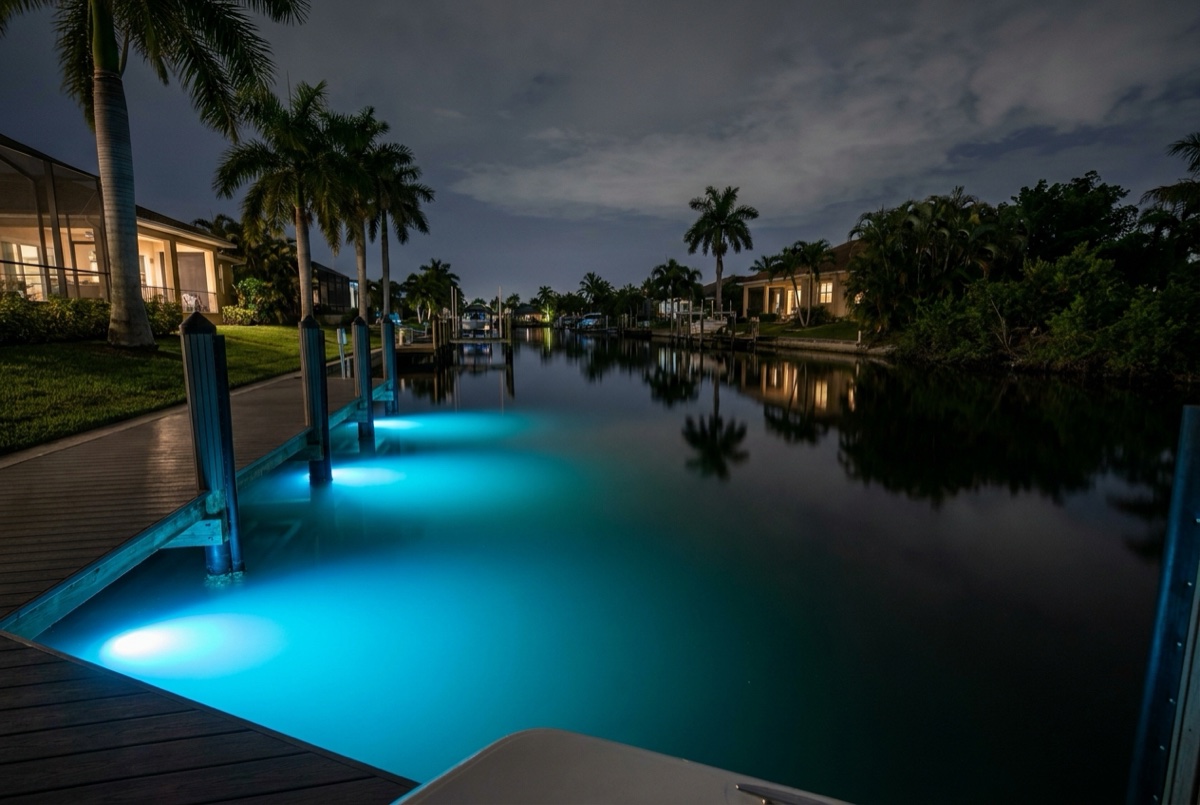
A fish light is a sealed, marine-rated underwater LED mounted to your dock or seawall that builds a food chain at night: light draws plankton, plankton draws baitfish like glass minnows and shrimp, and that bait ball pulls in snook, tarpon, trout, and redfish. (The full biology is in our underwater fish lights guide.) That chain doesn’t snap into place in one evening — each link needs time to concentrate, and the gamefish have to learn the spot is reliable.
| Timeframe | What you’ll typically see |
|---|---|
| First minutes | Plankton clouds, a few glass minnows and shrimp drawn to the glow |
| First few nights | Bait thickening, the occasional snook or trout edging in |
| About a week of nightly running | The dependable pattern — stacked bait, gamefish working the edges |
The biggest mistake is judging a light after a night or two. Give a clean, correctly set green light a full week of consistent dusk-to-dawn running before you call it underperforming.
Is my timer the problem?
Yes, more often than anything else. Fish learn patterns, and an inconsistent or too-short schedule never lets the food chain settle in.
If your light runs only a few hours, comes on at random times, or you flip it on by hand when you remember, the bait keeps re-gathering from scratch and the gamefish never establish a routine. The fix is simple:
- Put the light on a dusk-to-dawn timer or photocell so it runs the same hours every night without you thinking about it.
- Let it run all night, every night for at least a week before you judge results.
- Resist turning it off to “save the bait” — an off night resets the pattern.
A reliable timer is the cheapest fix most underperforming lights ever get.
Could a dirty or fogged lens be killing my fish light?
Absolutely — and in Southwest Florida salt water it’s the most underrated reason a light goes quiet. Algae film, barnacles, and salt haze grow over the lens and choke output long before the LED itself fails.
Our warm, nutrient-rich canals grow marine fouling fast, especially through summer and hurricane season. A lens you can barely tell is dirty still cuts output enough to shrink the pool of attraction. If your light looked great for a month and then faded, don’t assume it’s broken — assume it needs cleaning.
- Scrub the lens every few weeks in the warm months, at least monthly otherwise.
- Knock off barnacles and the green-brown film completely; a partial clean leaves partial output.
- Our full method, including how to do it safely around marine power, is in cleaning fish lights of barnacles and algae.
For a lot of “dead” lights, a quick scrub brings the show back the same night.
Is the wrong color or too little light to blame?
Often, yes. White light scatters fast in tannic canal water and stacks far less bait, and a fixture underpowered for your depth can’t reach enough water to matter.
Most SW Florida canals run tannic and tea-colored from runoff and the mangroves, and that stain eats the warm end of the spectrum within a few feet. Green penetrates stained water the farthest; white can look bright on the dock while barely registering to a baitfish forty feet down the seawall. If you’re running white and getting weak results, color alone may be your answer. (Full breakdown: green vs aqua vs white fish lights.) Lumens matter too — one small light on a wide, deep canal can only do so much, so a bigger fixture or a couple along the seawall lights more volume, and bait gathers in volume.
Is my light placed wrong — too shallow or out of the current?
Possibly. A light hung too high in the column or tucked into dead water can’t build the same pull as one set at the right depth. A few placement issues we see on service calls:
- Too shallow. A fixture just under the surface throws a thin pool; it usually wants to be deeper in the column where bait actually holds.
- Dead water. Bait and gamefish ride the tide. A light in a stagnant corner pulls less than one set where water — and food — flows past.
- Blocked or buried. A light crowded against pilings or a hull won’t project the way it should.
Tides matter too. Our canals swing with the Gulf, the Caloosahatchee, and Charlotte Harbor, so a light can fish great at one stage and sit half-out of the zone at another. If yours was a quick DIY drop, placement is worth a second look.
What if I’ve checked everything and it’s still slow?
Then look at fishing pressure. If you (or the neighbors) pull fish off the light hard every night, you can thin the gamefish faster than the spot restocks — the bait stays, but the snook turn cautious. Quick last-pass checklist before you call it:
- Timer running dusk to dawn, every night, for a full week
- Lens clean — no algae film, no barnacles
- Color is green (or a green-aqua blend), not white
- Enough lumens and fixtures for your canal’s depth and width
- Light set at a good depth in moving water, not a dead corner
- Not getting fished out night after night
Work that list and most “my fish light isn’t working” problems solve themselves. Clean, green, consistent, and placed right, a SW Florida seawall becomes a feeding station you’ll wish you’d built sooner.
Still slow after you’ve checked the basics? We’ll diagnose it on-site, read your water, and tell you straight what’s holding it back. Florida Lifts & Docks has installed and serviced marine-rated underwater fish lights across Southwest Florida since 2008 — our own local crew, never subbed, with in-house permitting and free on-site estimates seven days a week in Cape Coral, Fort Myers, Naples, and across the coast. Pair it with your above-water dock lighting, or call (239) 397-3400.