
The Best Dock Decking That Stays Cool for Bare Feet in Florida
Dark dock boards can hit 140°F+ in SW Florida sun while lighter surfaces run 20°F+ cooler. Why color beats material claims, and the coolest decking for a barefoot family dock.
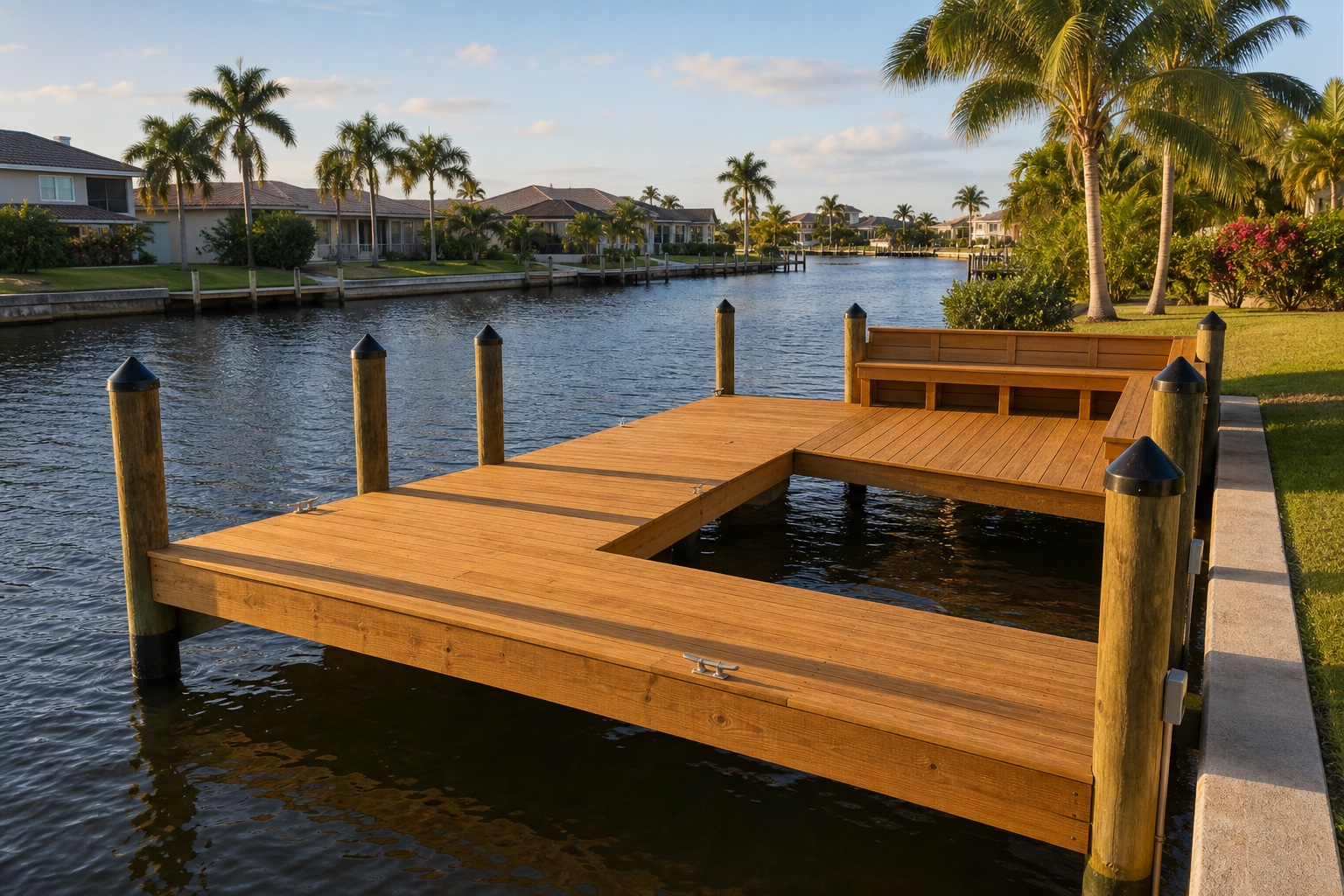
Key takeaways
- Surface color drives barefoot comfort more than the material name — a dark deck can top 140°F in SW Florida sun while a light board runs 20°F+ cooler.
- For the coolest barefoot dock, choose a light-colored board first, then pick the material: light capped composite or light PVC are the top picks.
- Aluminum conducts heat to skin and reads hottest underfoot; it's best for shaded or boathouse decks, not open-sun family docks.
- Dark wood and dark composite hold the most heat; "heat-reflective" caps help, but a pale color helps far more.
- Pair a light deck with shade (tiki hut or canopy) to make a midday summer dock comfortable barefoot.
You walk out for an evening swim, the kids run ahead, and somebody yelps — the dock boards are too hot to stand on. If you own a waterfront home in Southwest Florida, you know the moment. By mid-morning in July a dock that looked perfect in the showroom can be genuinely painful underfoot.
Here’s the part most material brochures bury: what decides whether your dock is barefoot-comfortable isn’t really the material. It’s the color. A dark board soaks up the Florida sun and radiates it back into your feet, while a light one stays far cooler in the exact same spot. This is the focused, “too hot to walk on” answer that goes one level deeper than our broader dock decking materials guide — how to build a dock you can walk on barefoot at noon.
What makes a dock deck hot in the first place?
Deck surface heat comes from absorbed sunlight, not air temperature — and dark colors absorb far more than light ones. A board in full sun reradiates stored solar energy straight into the soles of your feet, which is why a deck can feel scorching on an otherwise pleasant 88°F day.
Three things drive how hot any board gets:
- Color and reflectivity. The big one. Dark tones store the most energy; light, reflective tones bounce much of it away.
- Conductivity. How fast the surface dumps its stored heat into your skin on contact — metal does this almost instantly, plastics and composites far more slowly.
- Sun exposure. A board in open, all-day Gulf sun runs much hotter than the same board under a tiki hut or canopy.
Color is the lever you control most cheaply, because almost every decking line sells the same product in both pale and dark shades.
How hot are we actually talking?
Hot enough to matter. In direct Southwest Florida summer sun, a dark deck surface can climb well past 140°F, while a light-toned board in the same spot typically runs about 20°F or more cooler — often the difference between “ouch” and “fine.”
A surface around 140°F causes discomfort almost immediately and can burn the thin skin on a child’s feet in seconds. That’s why this matters most for families with kids and dogs, who don’t grab sandals before bolting out to the water. So on our coast, board color is a safety and comfort decision, not just a style one.
Which dock decking stays coolest for bare feet?
The coolest decking is a light-colored board, in either capped composite or PVC. Both are engineered for salt and sun, both stay comfortable underfoot in light tones, and the gap between them in the same color is small. Aluminum and dark wood are the hottest and the ones to avoid for an open-sun barefoot dock.
Here’s how the common Southwest Florida options compare specifically on barefoot heat:
| Decking (full SW FL sun) | Barefoot heat | Why |
|---|---|---|
| Light PVC / vinyl | Coolest | Fully synthetic, low conductivity, palest tones reflect the most |
| Light capped composite (TimberTech/Trex) | Very cool | Heat-reflective cap + light color; wood-like look and feel |
| Dark capped composite | Warm–hot | Same good cap, but a dark color cancels much of the benefit |
| Dark / tropical hardwood (ipe) | Hot | Dense, dark, holds heat; needs oiling too |
| Aluminum (even light) | Hottest underfoot | Metal conducts stored heat straight into skin on contact |
Notice the pattern: a light capped composite beats a dark capped composite by a wide margin even though it’s the very same product. Material matters, but within any line, color matters more.
Does the material still matter, or is it all about color?
Color is the biggest factor, but conductivity is the tiebreaker between two boards of the same shade. A light PVC and a light composite feel close; a light aluminum plank still feels hotter than both because metal transfers its stored heat to your skin almost instantly.
That’s the honest nuance:
- PVC (vinyl) is fully synthetic and the most heat- and stain-resistant, so the palest PVC edges out everything for raw coolness. The trade-off is it can feel a touch more “plastic.”
- Capped composite in a light color stays very comfortable and gives you a realistic wood look and a solid feel — the reason it’s what we build with most often. Modern TimberTech and Trex caps are engineered to reflect heat, which helps in lighter tones.
- Aluminum is bombproof and fireproof but conducts heat fast. It shines on shaded docks, boathouse interiors, or for owners who’ll always wear shoes — not the first pick for a barefoot family dock in open sun.
- Wood, especially dark-stained or dark tropical hardwood, holds a lot of heat on top of needing sealing or oiling on a saltwater canal.
For the full head-to-head on lifespan, salt, and cost, see the materials guide; for the classic two-way decision, our composite vs. wood docks breakdown.
What’s the practical recommendation for a barefoot dock?
Choose the lightest board color you like, in capped composite or PVC, and add shade where the family gathers. That combination gives you a dock that’s comfortable underfoot through the hottest part of a Southwest Florida summer day.
A simple build order:
- Pick a light tone first. Driftwood grays, sandy tans, weathered light browns — pale beats dark by more than any brand claim, and this step is essentially free.
- Then choose the material. Light capped composite for the best balance of look, feel, and value; light PVC if maximum coolness and stain resistance top your list.
- Add shade over the hangout zone. A tiki hut or a lift canopy keeps the gathering area out of direct sun, and shaded decking of any color runs dramatically cooler.
- Keep it clean. A grimy board reflects less; an easy rinse keeps it cool and looking new (here’s how to clean composite decking in saltwater).
One thing color won’t fix: whatever you walk on is only as good as the structure beneath it. We build every deck on CCA-treated marine-grade framing with 316 stainless fasteners, because salt destroys cheap hardware long before a good board wears out. If your current boards are graying, splintering, or scorching, our dock repair crew can tell you on-site whether you need a re-deck or a rebuild.
Ready to build a dock you can actually walk on?
Staying cool barefoot comes down to one choice up front — a light board on a structure built for salt — and it’s one of the easiest ways to make your dock more usable all summer. We’ve built every one of these surfaces on Southwest Florida canals, so we can bring real samples, set light tones side by side in your own sun, and design the shade to match how your family uses the water.
Explore everything we build on our custom docks page, and we’ll come out for a free on-site estimate seven days a week across Cape Coral, Naples, Fort Myers, and the rest of the coast. Call (239) 397-3400 and let’s get you a dock the whole family can walk on barefoot.