
Does a Seawall Add Home Value in Southwest Florida?
The value case for a sound seawall on a SW Florida canal lot — usable land, the foundation your dock and lift sit on, and buyer confidence at sale — made on logic, not numbers.
Key takeaways
- A sound seawall protects value more than it flashily adds to it — but on a SW Florida canal lot that barely matters, because the wall keeps the land you paid for out of the canal and holds up everything behind it.
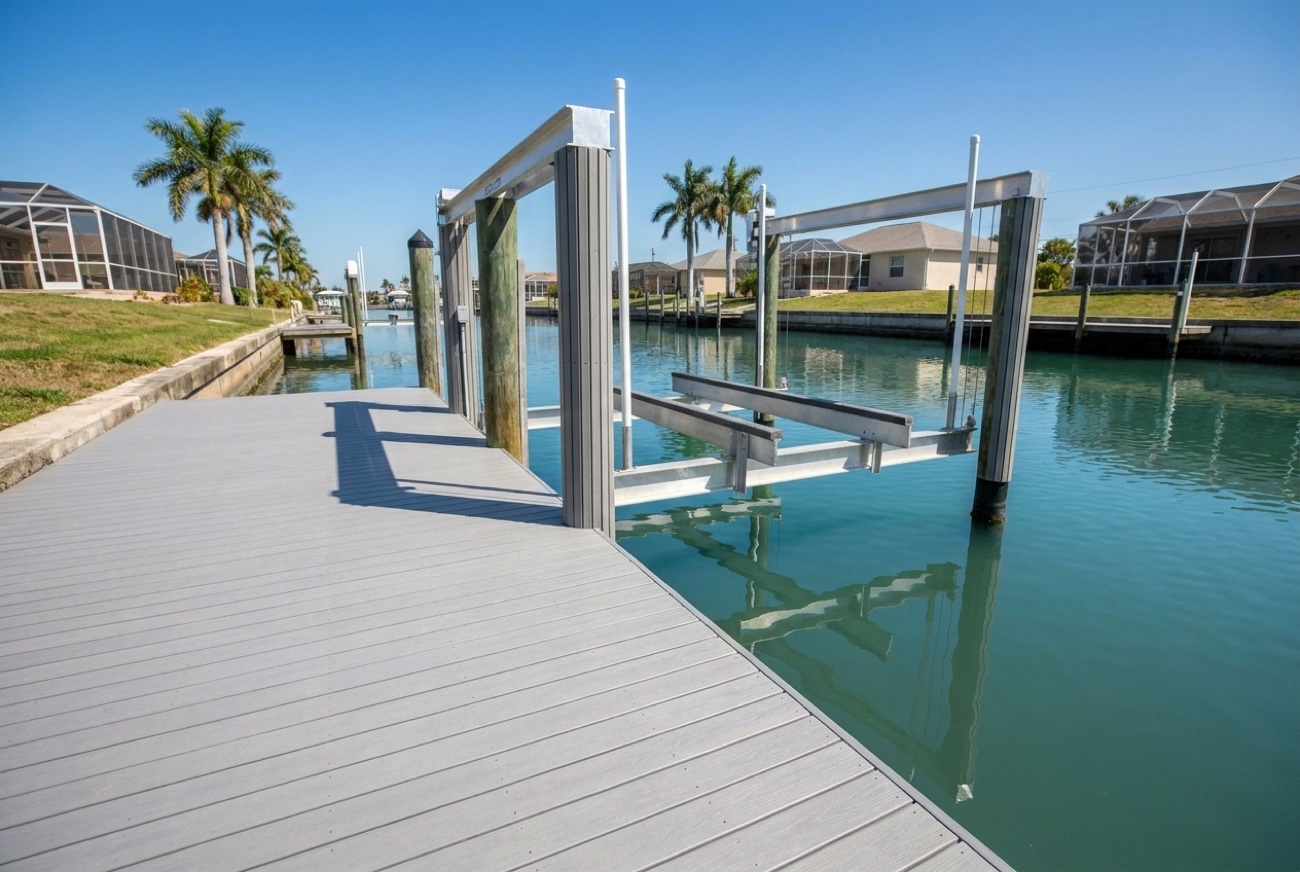
- The seawall is the foundation your dock, boat lift, pool cage, and lanai all depend on; if the wall moves, everything tied to it is at risk, which is why sharp buyers evaluate the shoreline first.
- At sale, a sound, well-kept wall reads as a green light to buyers and inspectors; a leaning or cracked one becomes a red flag that invites price cuts or scares buyers off entirely.
- There is no honest percentage for how much a seawall adds — the value case is built on logic (protected land, buyer confidence, avoided escalation), and an on-site look is the only way to know where yours stands.
If you own waterfront in Southwest Florida, your seawall is the least glamorous thing on the property and quietly the most important. Nobody tours a home and says, “look at that seawall.” But it is the one structure holding your backyard out of the canal — and when a buyer, an inspector, or a lender looks hard at your home, it is one of the first things they check.
So does that wall actually do anything for what your home is worth? Here is the honest answer — not an invented percentage, but the plain logic of what the wall protects and what sits on top of it.
Does a seawall add value to a waterfront home?
A sound seawall protects your home’s value more than it dramatically adds to it — but on a Southwest Florida canal lot, that is a distinction without much difference. The wall keeps the land you paid for from sliding into the canal, and it holds up everything you have built behind it.
Consider what you are really buying with waterfront: the water access, yes, but also a usable backyard right to the edge. A seawall is the only thing keeping that edge still — take it away and the canal takes the yard back, tide by tide. That is not a perk; it is the premise of a canal-front home.
We cover the dock-and-lift side of this question separately in does a dock or boat lift add home value. This piece is about the wall those structures stand on.
What is a seawall actually protecting?
Your usable land — and everything anchored to it. Every foot of yard, patio, and structure near the water depends on the wall holding the line.
- The land itself. Without the wall, the canal undercuts your shoreline until the backyard shrinks. Protected land is land you can use and sell.
- The yard you enjoy. A level, dry backyard to the water’s edge — for the fire pit, the lawn, the grandkids — exists only because the soil behind the wall stays put.
- Everything built near the water. Patios, pool cages, screened lanais, and landscaping all sit on soil the seawall holds. When the wall lets that soil escape, those structures settle and crack from underneath.
Why is the seawall the foundation everything sits on?
Your dock, boat lift, pool cage, and lanai all depend on the shoreline staying exactly where it is. The seawall is the base of that whole system — if it moves, everything tied to it is at risk.
This is the part owners underestimate. A dock and boat lift are often tied into or built off the seawall, and a pool cage or paver deck may sit only feet behind it. So when the wall bows, leans, or lets soil escape, it does not fail alone — it drags its neighbors with it: dock footings shift, the lift falls out of alignment, the pool deck tilts.
A buyer who understands waterfront knows this, which is why a sharp one evaluates the seawall first: it is the foundation the expensive things stand on.
How does a sound seawall affect a sale?
It reads as a green light. When a buyer, their inspector, and their lender look over the waterfront, a sound, well-kept seawall is one less thing to worry about — and that reassurance protects your asking price.
The moment a waterfront home lists, the seawall becomes a due-diligence item, and a thorough inspection looks at the cap, the joints, the toe, and the soil behind the wall. Here is how the two outcomes read:
| What the buyer’s side sees | How it reads |
|---|---|
| Straight, sound wall with an intact cap and good drainage | An asset — no immediate project, the offer holds |
| Leaning, cracked, or rust-streaked wall; dips in the yard | A liability — a repair bill subtracted from the offer |
| Documented, properly permitted work | Confidence — clean paperwork at closing |
| Undocumented or unpermitted wall | A question mark that can stall the deal |
Buyers, their lenders, and their inspectors all scrutinize waterfront structures, and a visibly compromised seawall can raise questions that complicate a closing. We will not make promises about any particular lender or insurer — those rules vary and change — but the pattern is consistent: a sound, documented wall keeps the sale simple.
How does a failing seawall become a negotiating liability?
A failing wall turns into a line item the buyer uses against you — expensive to fix, threatening everything behind it, and impossible for an inspector to miss. So it becomes a discount, a repair demand, or a reason to walk.
Of every red flag on a waterfront property, a wall showing signs of failure is among the most alarming, because a rebuild is a major expense and the wall protects the whole backyard. Once it is in the report, you are negotiating from behind — credit the repair, drop the price, or watch the buyer move to the house next door whose wall is not a question mark.
And the problem never sits still. A wall left alone escalates, and the collateral damage grows with it — which we walk through in the cost of delaying a seawall repair. The lesson for value is simple: the cheapest time to protect your sale price is long before the wall becomes the buyer’s leverage.
So what is the honest bottom line?
A sound seawall is not a flashy upgrade with a tidy return — it is the foundation that protects the value of everything else. You will not find an honest number for “how much a seawall adds,” and anyone who hands you one is guessing. What is real is that a sound wall protects your land and everything on it, while a failing one quietly erodes all of it — literally and financially.
Whether your wall is solid, questionable, or already aging, the smart move is knowing where it stands before it becomes the buyer’s leverage. Florida Lifts & Docks has built and rebuilt seawalls across 18 Southwest Florida cities since 2008 — with our own local crew (never subbed), in-house permitting, and a 5.0-star rating on Google. See what a wall built to last looks like on our seawalls page, explore our work in Cape Coral, and get a free on-site estimate seven days a week. Call (239) 397-3400.