
Waterfront Upgrades: What to Build First (Smart Order)
The smart order to build waterfront upgrades in Southwest Florida — seawall first, then dock, then lift, then lighting — and why sequencing saves money and rework.
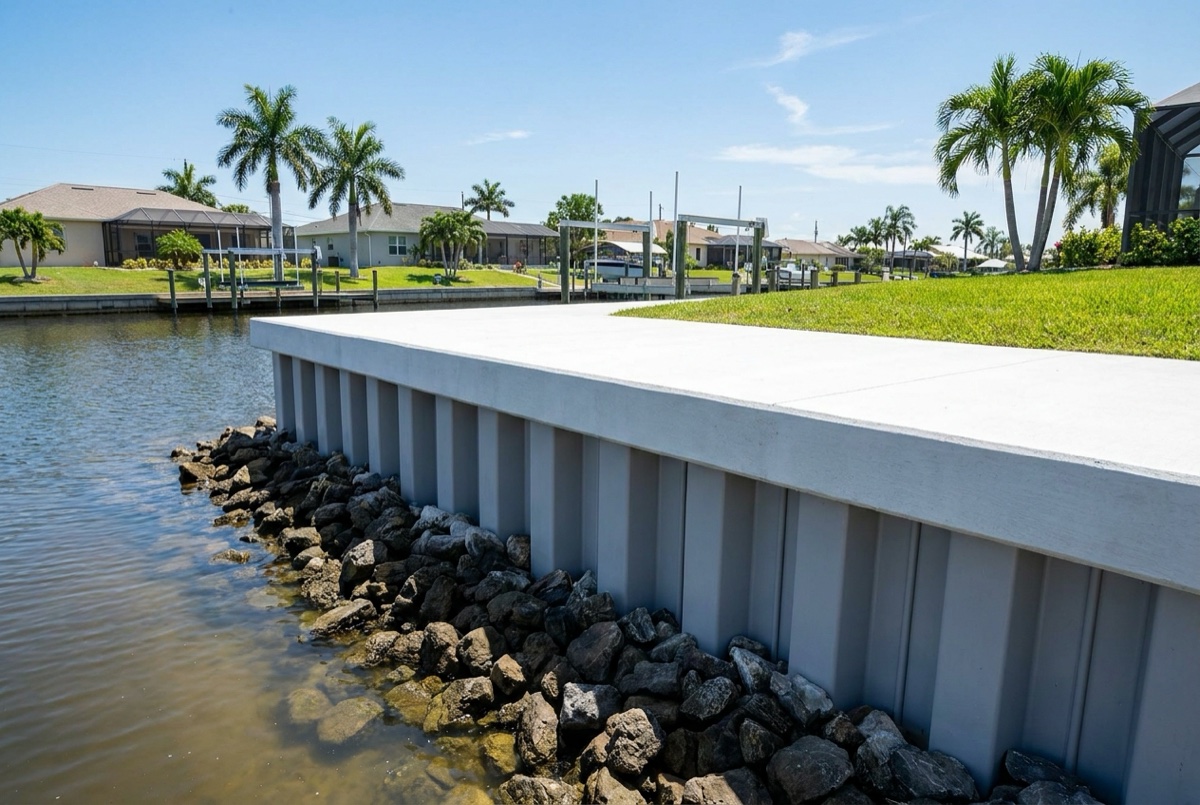
Key takeaways
- Build in this order: shoreline protection (seawall or rip-rap) first, then pilings and dock, then the boat lift, then power, lighting, and accessories.
- The seawall comes first because everything else sits behind or attaches to it — building a dock in front of a failing wall means costly rework later.
- Design the dock and any future lift together up front so piling layout and electrical are right the first time, even if the lift comes a season later.
- Lighting, fish lights, and a canopy can safely wait a season; shoreline protection and structural work cannot.
- Sequencing means one mobilization per phase and no tear-outs, which makes phasing the pay-as-you-go alternative to financing the whole project at once.
Planning several waterfront upgrades at once — or spacing them out to spread the cost — raises a question that quietly decides how much you’ll spend: what order do you build them in? Get the sequence right and each phase sets up the next. Get it wrong and you’re paying a crew to mobilize twice, or tearing out a brand-new dock to fix the seawall it’s bolted to.
Here’s the smart order we recommend for Southwest Florida waterfronts, why each step comes when it does, and what can safely wait a season versus what can’t.
What’s the right order to build waterfront upgrades?
Build from the shoreline out and from the ground up. The sequence that saves the most money and rework is:
- Shoreline protection first — seawall repair or replacement, or rip-rap where it fits. This is the foundation.
- Pilings and the dock — driven and built once the shoreline is secure.
- The boat lift — set onto pilings that were placed and powered with it in mind.
- Power, lighting, and accessories — dock lighting, fish lights, a canopy, and the finishing touches.
Each layer is the foundation for the one above it. The rest of this guide explains why, and where you have room to phase.
Why does the seawall (or shoreline) come first?
Because everything else sits behind it or attaches to it. A dock and lift are only as sound as the shoreline holding your yard in place — so if the seawall is failing or the bank is eroding, that gets fixed before you build anything on top of it.
Think about the alternative. If you build a beautiful new dock in front of a seawall that’s a year or two from replacement, you may have to tear out or work around that new dock to get the wall replaced — paying twice for the same footprint. Worse, a failing wall lets soil wash out from behind it, which can undermine the very ground your dock pilings and yard depend on.
So start by being honest about the wall. If you see leaning, cracking, rust stains, or sinkholes in the yard, read the signs your seawall is failing and get it inspected before you plan anything else — our seawall repair vs. replacement guide covers which fix fits. If your seawall is already solid, good news: you can skip straight to the dock.
Next: pilings, dock, and lift
With the shoreline secure, the structure goes in — pilings first, then the dock, then the lift. The critical move here is to design the dock and any future boat lift together, even if the lift comes later.
Why they belong on one plan:
- Piling layout for a lift is different from a plain dock. Placing those pilings while the barge is already there is far cheaper than adding them later.
- Electrical for a lift motor should be run when the dock power goes in, not chiseled in afterward.
- Water depth and tide decide how far out the dock reaches and where the lift can sit — details worth solving once, on paper.
If the budget means the lift waits a season, that’s fine — just tell your builder now so the dock is built lift-ready and the pilings are positioned for it. When you’re ready, the boat lift drops onto pilings already set and powered for the job, with no retrofitting. (Costs for each piece are broken down in our custom dock cost guide.)
What can safely wait a season — and what can’t?
The finishing layer can wait; the structure and shoreline can’t. This is exactly where phasing works in your favor.
Safe to add later:
- Dock lighting, pilecap lights, and walkway lighting
- Fish lights
- A lift canopy or cover
- Cleats, ladders, benches, and other accessories
Don’t defer:
- Seawall repair or shoreline protection — it only gets worse and more expensive
- Anything structural — pilings, the dock frame, load-bearing hardware
- Electrical rough-in that later phases depend on (run the capacity now, add fixtures later)
The rule of thumb: if it holds soil, water, or a boat, do it now. If it’s comfort or curb appeal, it can wait for the next phase. New to the water entirely? The orientation comes before the build order, and living on an Estero canal does that job for one stretch of frontage.
How does building in order save money — and let you phase?
Sequencing saves money two ways: the crew mobilizes once per phase instead of coming back to redo work, and nothing finished gets torn out to reach something underneath. Marine mobilization — getting a rig, barge, or pile driver to your canal — is a real cost, so doing related work together, in the right order, keeps it down.
It also makes phasing genuinely practical. Building shoreline-first, then dock, then lift, then lighting lets you spread the cost across seasons and pay for each phase as it’s built — the pay-as-you-go alternative to financing the whole project at once. We cover the funding side, including phasing versus borrowing, in how to pay for a dock, boat lift, or seawall. The trick that makes it all work is a single up-front design, so every phase you add later fits what came before without rework.
Thinking through your own build order? Florida Lifts & Docks has built seawalls, docks, and lifts across the Southwest Florida coast since 2008 — our own local crew, never subcontracted, with a 5.0-star rating on Google and permitting handled in-house. We’ll help you map the right sequence for your lot and budget. We give free on-site estimates seven days a week across Cape Coral, Fort Myers, and Naples. Start on our seawalls or custom docks page, or call (239) 397-3400.