
Snowbird's Guide: Dock & Boat Lift Care While You're Away
A pre-departure checklist for the half-year-empty waterfront — raise the boat out of the salt, strip it down, confirm your lift and power for storm season, and line up someone to check after storms.
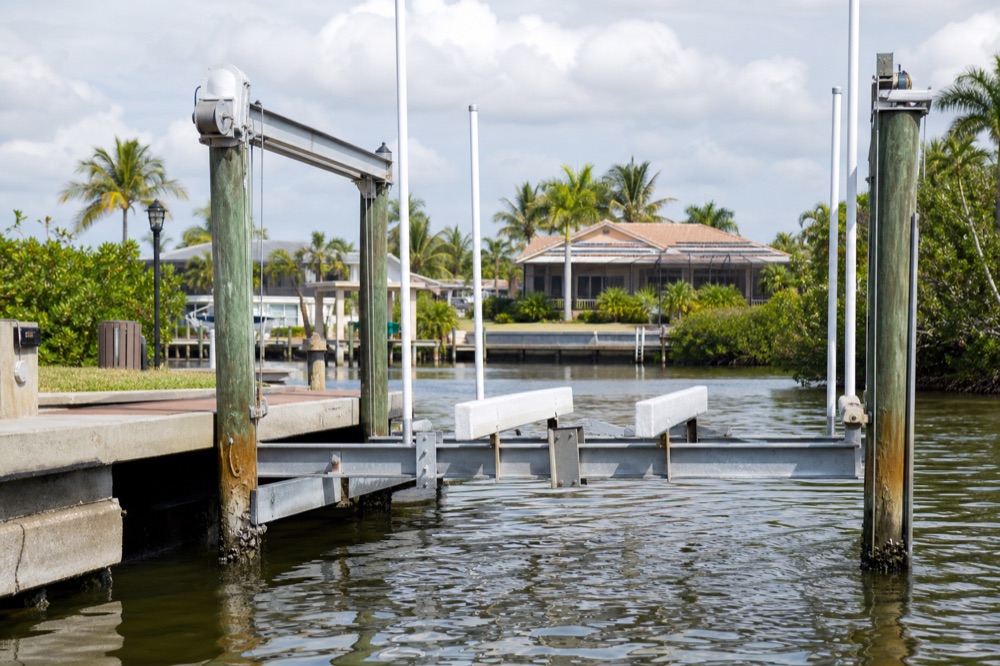
Key takeaways
- Raise the boat fully clear of the water before you leave — barnacles colonize a wet hull in days on these salt canals, and six months down means a fouled bottom and lower unit.
- Center the boat on the bunks and strap it down so wind and wakes can't walk it off the cradle while no one's watching.
- Strip canvas, biminis, cushions, and removable electronics; sun and storm wind destroy what you leave behind over a SW Florida summer.
- Confirm your lift's capacity rating and that its power stays on, then set it to your maker's storm position for the June 1–November 30 hurricane season.
- Arrange someone local to walk the dock after every storm — a leaning piling or stressed cable found in July beats a collapse discovered in November.
If you’re one of the snowbirds who closes up the Southwest Florida house and heads north before the heat rolls in, your dock and boat lift are about to spend six months completely unattended — through the hottest sun, the highest tides, and the entire June 1 through November 30 hurricane season. That’s a very different problem from prepping for a single approaching storm; it’s the difference between bracing for a punch and leaving the house unlocked for half a year.
A focused afternoon before you leave saves you from the homecoming nobody wants: a fouled hull, a sun-rotted bimini, a leaning piling, and a dock crusted in bird mess. Here’s the pre-departure checklist we’d run on our own waterfront.
What does “boat lift care while away” actually mean?
Boat lift care while away is the set of steps you take before a long absence to leave your boat raised out of the salt, secured against weather, and stripped of anything the sun and storms can damage — plus a plan for who checks it while you’re gone.
The core idea is simple: salt, sun, wind, and wildlife never take the summer off. Your job is to pull your boat and gear out of their reach and make sure the one machine doing the protecting — your boat lift — is rated, powered, and positioned to work without you standing next to it.
Why does the boat have to come fully out of the water?
Because barnacles don’t wait. On these warm saltwater canals, growth can take hold on a submerged hull in a matter of days, and six months floating means a fouled bottom, clogged raw-water intakes, and a lower unit that needs hours of cleaning.
Raising the boat all the way out of the salt is the single most important thing you do. A hull left in the water all summer comes back with:
- Barnacles and slime caked on the bottom and running gear
- Blistered or stripped bottom paint from warm-water immersion
- Corroded lower units and trim tabs soaking in constant salt
- Clogged intakes and fouled transducers that strand you on your first trip back
Lift the boat fully up — not just to the float line — so the hull and lower unit sit in the air. This is the whole reason a lift earns its keep, and it matters most when you’re not here to splash and rinse. (For year-round upkeep of the lift itself, see our salt-water boat lift maintenance guide.)
How should I secure the boat on the lift for six months?
Center the boat squarely on the bunks or cradle and strap it down so wind, wakes, and tide swings can’t slowly walk it off the lift while no one’s watching.
A slightly off-center boat is fine for a weekend. Over six months — with afternoon thunderstorms, passing wakes, and the occasional tropical blow — that misalignment becomes a real problem. Square it up, make sure the weight sits evenly on the bunks, and add straps. While you’re at it, strip the boat down:
- Remove the bimini, canvas, covers, and cushions — UV and storm wind shred them
- Pull removable electronics, the battery if you can, and anything of value
- Clear the dock of loose gear, furniture, and planters that become projectiles in a storm
What you leave exposed, the Florida summer will find — and what blows off your dock slams into your boat, your seawall, and your neighbor’s property.
Is my lift ready to ride out hurricane season alone?
Confirm two things before you go: that the lift is rated for your fully-loaded boat, and that its power stays on the whole time you’re away. Then set it to the storm position your lift maker recommends.
Capacity is sized to your boat’s loaded weight — hull, engines, fuel, batteries, and gear — not its length. If you’ve added weight since the lift went in, or you’re not sure it was sized right, get it checked. Then plan the season honestly:
| Boat plan for the season | Best for |
|---|---|
| Haul out to dry storage or a trailer | Maximum peace of mind; removes the boat from surge entirely |
| Leave on the lift, storm position set | Owners with a sound, rated lift and a local who’ll check it |
| Move to a hurricane hole before a storm | Only realistic if someone’s here to move it — usually not the snowbird |
There’s no single right answer on leaving a boat on a lift through a storm. If you go that route, follow your lift manufacturer’s guidance for your specific model and don’t freelance. Our hurricane prep guide walks through the full season as a system.
Who checks the dock after a storm when I’m not here?
This is the gap every snowbird has to close: someone local has to walk your waterfront after each storm. A leaning piling or stressed cable caught in July is a routine fix; the same problem discovered in November may be a collapse.
Line up a trusted neighbor, a property manager, or a marine service, and ask them to:
- Walk the dock and lift after every named storm and send photos
- Watch for leaning or loosened pilings, frayed or slack cables, and shifted bunks
- Flag standing damage to your seawall or decking before it spreads
Damage isn’t always obvious from one phone photo, so have a pro assess anything that looks off before the boat goes back to work. We do post-storm assessments and dock repair across the region, and a quick look in season beats an emergency in the fall.
The same person can handle the other slow threat: birds and growth. An empty, uncovered dock is an open invitation, and months of droppings stain decking and eat at gelcoat, canvas, and hardware. Deterrents on the high perches make the spot less attractive, a cover protects your upholstery, and clearing buildup now and then keeps stains from setting in. Our guide on keeping birds off your dock and boat lift covers what works in this climate.
Leave knowing it’s handled
You shouldn’t spend your summer up north wondering whether the boat slid off the lift or the dock survived a July squall. The fix is a solid pre-departure routine plus a plan for who looks after the waterfront while you’re gone — exactly the arrangement we set up for snowbirds across Cape Coral, Naples, Fort Myers, and the rest of the coast.
We’re a local crew with our own people — we never sub the work out — we handle permitting in-house, and we’ve kept Southwest Florida waterfronts whole since 2008. Have us check your lift, pilings, and power before you head north, or set up post-storm checks for the season. Start at our boat lifts page, or call (239) 397-3400 for a free on-site estimate, seven days a week.