
Rebuild Order After a Storm: Seawall First, Then What?
Waterfront structures stack: shoreline, pilings, dock, lift, power. Rebuild from the bottom of that stack up and every phase sets up the next one.
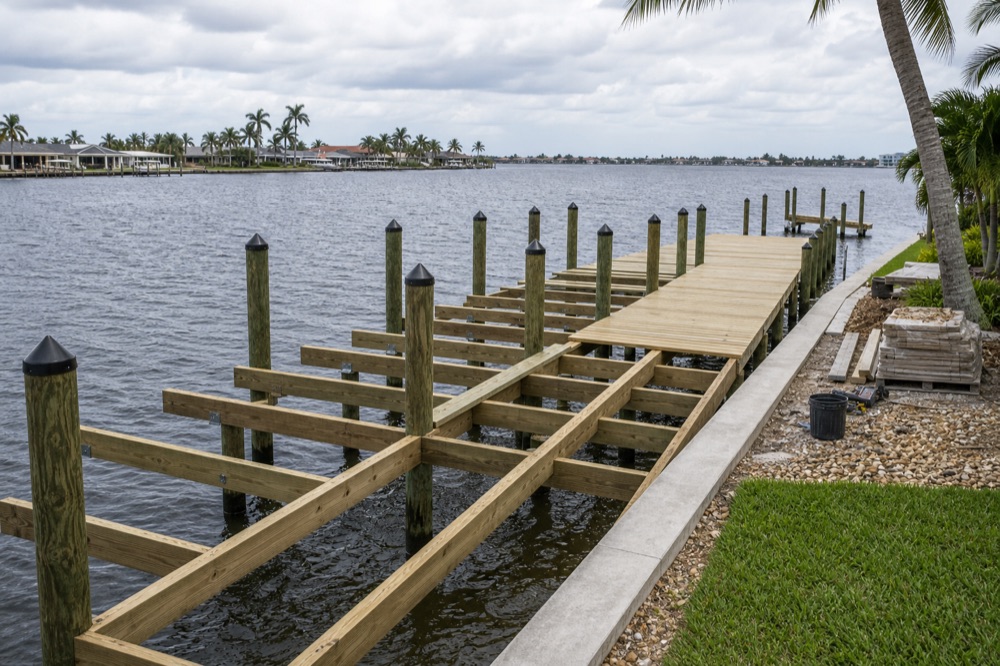
Key takeaways
- Rebuild from the bottom of the stack up: shoreline and seawall first, then pilings, then the dock structure, then the lift, then power, lighting, and accessories.
- The seawall comes first because it holds the ground everything else stands in, and because replacing a wall means putting heavy equipment exactly where a new dock would be.
- Pilings come before decking. A pile that looks perfectly straight can have lost embedment in the storm, and you cannot drive a new one through a deck you already paid for.
- Out-of-order rebuilds cost you twice in two specific ways: tearing out finished work, and mobilizing crew, barge, and equipment to your address a second time.
- Safety outranks sequence. Anything unsafe or actively getting worse gets stabilized now, and a stabilization is documented and priced as temporary, not as the repair.
The week after a storm, the calls all sound about the same. The dock is wrecked, the lift is twisted, there is a new crack in the seawall cap, and the owner wants to know what to fix first. It is a fair question with a real answer, and the answer has less to do with what looks worst than with what holds up everything else.
Waterfront structures stack. The shoreline holds the ground, the pilings stand in that ground, the dock frame ties to the pilings, the lift bolts to the dock and pilings, and power and lighting ride on top of all of it. Rebuild from the bottom of that stack up and every phase sets up the next one. Rebuild out of order and sooner or later you pay a crew to tear out work you already bought.
What is the right rebuild order after a storm?
Shoreline and seawall first, then pilings, then the dock structure, then the lift, then power, lighting, and accessories. It is the same sequence we recommend for a planned waterfront upgrade project, because a storm does not change the physics of what sits on what. It just compresses the timeline, adds a damage assessment at the front, and puts every owner on this coast into the same queue in the same month.
| Phase | What it includes | Why it has to come first |
|---|---|---|
| 1. Shoreline | Seawall repair or replacement, rip-rap, backfilling voids behind the wall | It holds the ground everything else stands in, and equipment needs that stretch of bank clear |
| 2. Pilings | Re-driving loosened pilings, replacing snapped ones, setting the final layout | Every structure above the water hangs off them |
| 3. Dock structure | Frame, stringers, decking, railing, ladders | Framing and fastener layout depend on where the pilings actually ended up |
| 4. Boat lift | Beams, motors, cradle, cables | It bolts into pilings and framing that must already be final |
| 5. Power and finish | Conduit, dock lighting, fish lights, accessories | Wire runs through finished framing and should not be pulled twice |
Why does the seawall have to come first?
Because it is the only part of the system holding the ground the rest of it stands in, and because rebuilding a wall means putting equipment exactly where the dock is.
A seawall is a retaining structure: panels driven into the bottom, tied back to anchors buried in your yard, locked together by a poured concrete cap. Its worst storm damage is usually what you cannot see from the lawn: bottom material scoured away from the toe, and soil pulled out from behind the panels by water that came over the top. A yard that looks perfectly normal can be hollow underneath.
If the wall has moved or the soil behind it is voided, the ground your pilings live in has not finished settling, and a dock built in front of that is built on something still in motion. When the wall does get replaced, the barge and the excavator need that shoreline: now occupied by new construction.
The honest flip side: if your wall came through sound, do not invent work for it. A wall that holds its line, drains through open weep holes, and shows no soil loss behind it is no reason to delay the dock. That is what a real assessment is for.
Why do pilings come before decking?
Because everything above the waterline hangs off them, and because you cannot drive a pile through a deck you just paid for.
Storms loosen pilings without breaking them. A pile that took a hard shove from moving water and floating debris can stand up straight, look untouched, and still have lost embedment, the depth of pile held in the bottom that gives it its holding power. Screw a new frame to it and the dock reads solid the day it is finished, then starts moving a season later.
Re-driving or replacing a pile also needs open access from the water. Decking installed first is decking that comes back up, the most common out-of-order mistake we get called out to unwind.
What does rebuilding out of order actually cost?
Two things you never get back: tear-out and a second mobilization. Mobilization is the unglamorous line on every marine job: getting a crew, a barge, a pile driver, and materials staged at an address on the water. It does not get cheaper the second time.
- New decking pulled back up to reach a frame or a piling underneath it.
- A new dock standing in front of a seawall that gets replaced the following year.
- A lift set onto pilings that later have to be pulled, re-driven, or repositioned.
- Conduit and lighting run before the framing was final.
None of it is dramatic. It is just paying twice, quietly.
How do permitting and material lead times shape the order?
They set the calendar, which is why the full scope should be assessed and permitted up front even when you build it in phases.
Two things get long after a regional storm, and neither is in any contractor’s control: the permit queue and the supply chain. Everyone applies at once and orders the same pilings, hardware, and lift components in the same stretch of weeks. We will not put a number on either, because after a storm those numbers move week to week, and anyone quoting a firm date at the door is guessing.
The permit path also depends on scope, since restoring what was there and building something bigger are handled differently. Settle that early, because scope decided late is the expensive kind: see storm rebuild permits. Then design once and build in phases:
- Draw the finished project up front, including the lift you might not buy until next year.
- Set the piling layout for the final design, not just the phase in front of you.
- Run conduit and sleeves while the framing is open, even if the lights come later.
- Order the long-lead item for the next phase while the current one is being built.
- Keep accessories last. Lighting, fish lights, canopies, and railing upgrades wait a season for free.
When does triage break the order?
When something is unsafe or actively getting worse. Sequencing is a strategy for spending money once. It is not a reason to leave a hazard standing.
Progressive damage does not wait for phase one. A seawall joint pumping soil into the canal on every tide, a piling leaning toward a neighbor’s boat, decking hanging over the water, a damaged electrical panel. Those get handled now, in whatever order safety dictates. But stabilizing something is not repairing it, and a temporary measure should be documented as temporary and priced separately, or it has a way of quietly becoming the finished product. Temporary patches versus permanent repairs covers where that line sits.
Florida Lifts & Docks has rebuilt Southwest Florida waterfronts since 2008 with our own crew: seawalls, pilings, docks, and lifts, with permitting handled in-house, so the sequence and the paperwork get planned together instead of colliding. If you are looking at storm damage and trying to work out what comes first, see our dock repair page or call (239) 397-3400 for a free on-site assessment and rebuild estimate.