
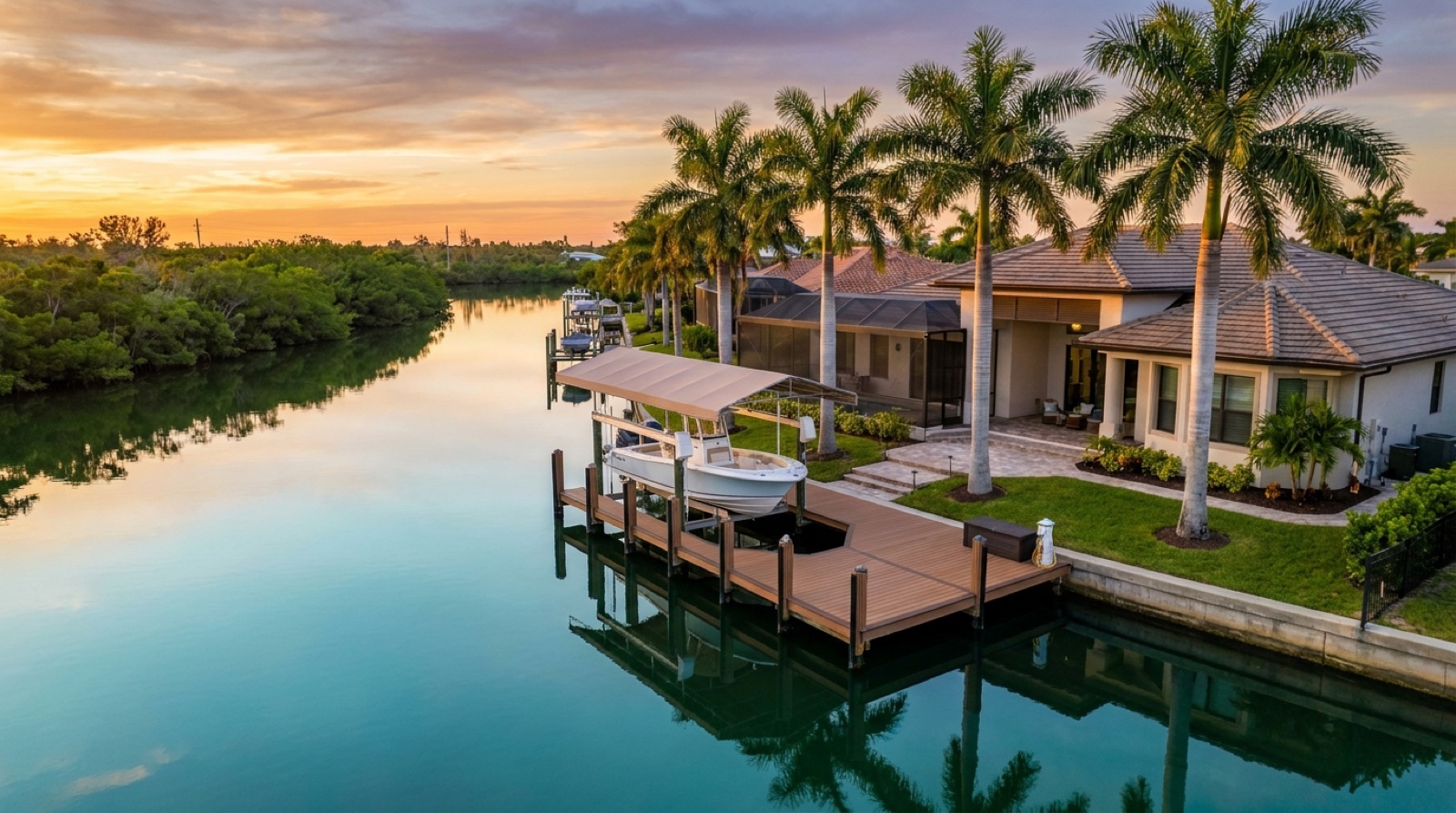
A working storm system for Southwest Florida waterfront owners: what to fix before the season, what to do as weather approaches, and how to come back safely afterward.
If you own waterfront property in Southwest Florida, hurricane season is not weather news. It is an annual condition of the address. The dock, the lift, the seawall, and the pilings holding all of it up are exposed structures sitting at the exact place where wind, water, and debris arrive first, and unlike your roof, nobody is going to notice they are failing until you look.
This Storm Center exists because most of the storm damage we get called out to was preventable, and most of the panic in the days before landfall is avoidable. Both problems come from the same root: treating a storm as an event to react to rather than a season to run a system through. What follows is that system: how the pages here are organized, what belongs in which phase, and where our judgment stops and the official forecasters take over.
Storms rarely invent damage. They collect on it.
Walk through what we actually find after a storm and the pattern repeats: a piling that had already lost soil around its base, a seawall with weep holes buried under fresh sod, decking fasteners that had been backing out for two seasons, a lift with a cable that was overdue. The storm did not create those conditions. It simply applied the one load large enough to find them.
That is good news, because it means the highest-value work is entirely within your control and none of it happens in a panic. It happens in April, when the water is flat and crews have room on the calendar. A board re-fastened in the spring costs almost nothing. The same board missing in September is an opening that takes the boards on either side of it.
The second reason waterfront needs its own system is that the loads are unusual. A house resists wind. A dock resists wind, moving water, uplift from underneath, floating debris, and the slow disappearance of the soil holding its foundation: all at once, and mostly in directions you cannot inspect from the yard. Understanding what is actually happening down there changes what you check. Start with how storm surge actually works on Southwest Florida canals if you have never had it explained plainly; it reframes most of the prep list.
Three phases, in the order a season delivers them.
Prep is the long phase and the one that matters most. It covers the structure-specific playbooks: dock, boat lift, seawall, pilings, boathouse, tiki hut, floating dock, jet ski lift, dock lighting, fish lights, each written for what that build actually needs and what it actually loses in a storm. These are not interchangeable. A seawall’s prep is almost entirely pre-season wall health and drainage. A dock’s prep is loose items and fasteners. A lift’s prep is a set of decisions that depend on your specific equipment. Read the one that matches what you own, and read it in the spring rather than the week you need it.
Ride-out is short, time-boxed, and deliberately narrow, because the last few days are when good judgment gets replaced by improvisation. It starts at 72 hours out, when there is still time to schedule, reserve, move, and buy. It narrows at 24 hours out to final physical moves, the last sweep, the breakers, the photos. And it ends, for many people, with locking down the waterfront before you evacuate.
One rule sits above every list in this phase and we will repeat it on every page: an evacuation order for your zone outranks everything. No dock, lift, seawall, or boat is worth staying for. If the order comes and your checklist is half-finished, the checklist loses.
Recovery is where people get hurt, so it is ordered around safety before property. The first 48 hours covers what to do and what not to touch before you go anywhere near the water. From there the triage pages walk each structure: dock, lift, seawall, in the order that keeps you off compromised decking and out of water that may be energized. Post-storm electrical safety is the one page we would ask you to read before any of the others: after flooding, the only safe homeowner moves are leaving the breakers off, looking from dry ground, and having a licensed electrician verify the system before power goes back on.
Atlantic hurricane season runs June 1 through November 30, and a waterfront property runs a different job in each part of it.
Spring is the repair window. It is when you inspect, when you fix the thing you have been watching, and when a crew can actually get to you. Everything in the prep playbooks is designed to be worked through here.
Early summer is the readiness window. Breakers labeled. Boat plan decided in advance and written down. Photos of every structure taken while it is intact, because documented before-condition is the most useful thing you can hand an adjuster later. Insurance is worth a conversation now rather than then: coverage for docks, lifts, and seawalls varies enormously by policy, so confirm with your agent or carrier what you actually have and what they want documented.
In-season is watching, and watching is not scrolling. It means knowing your evacuation zone, knowing where your official information comes from, and having the short list ready so a three-day warning is a calm three days.
And after a storm, the job changes to assessment: carefully, in order, and with the understanding that the most dangerous damage on a waterfront property is the kind that leaves no visible trace. Scour takes the soil from around pilings and leaves the posts standing. Overtopping erodes the yard behind a seawall and leaves the sod looking fine. Both fail later, under load, in the next storm rather than this one.
Forecasts, watches, warnings, and storm surge products come from the National Hurricane Center. Evacuation zones and orders come from your county emergency management office: Lee, Collier, Charlotte, or Sarasota, depending on where you sit. Those are the authorities for your address, and they are the ones to follow when anything on this site seems to conflict with them.
We are deliberate about this because surge is site-specific in a way that resists generalization. What reaches your seawall depends on the storm’s track, size, forward speed, and timing against the tide, and on the shape of your canal or bay. Nobody can hand you a number in advance, and anyone who does is guessing. What we can tell you is what those forces do to built structures, which is what every page here is about.
Florida Lifts & Docks has been building on this coast since 2008. We are a licensed and insured marine contractor with our own local crew. We never sub the work out, and we handle permitting in-house.
What that means in a storm context is specific. We inspect, repair, and rebuild: docks, boat lifts, seawalls, pilings, boathouses, tiki huts, floating docks, and lighting. We write detailed, itemized estimates you can put in front of an adjuster, and every estimate is free and on-site.
What we are not is an emergency service. We do not tarp, we do not haul boats, and we will not tell you we will be at your seawall the morning after: nobody can promise that honestly, and the contractors who do are the ones you should be most skeptical of. What we can promise is that when you are ready to find out what the storm actually did, we will come look and tell you straight.
Start with the playbook for whatever you own. If something has already moved, cracked, leaned, or come loose, go straight to dock repair or seawalls, or call (239) 397-3400 for a free on-site inspection, repair, or rebuild estimate.
 Storm & Hurricane
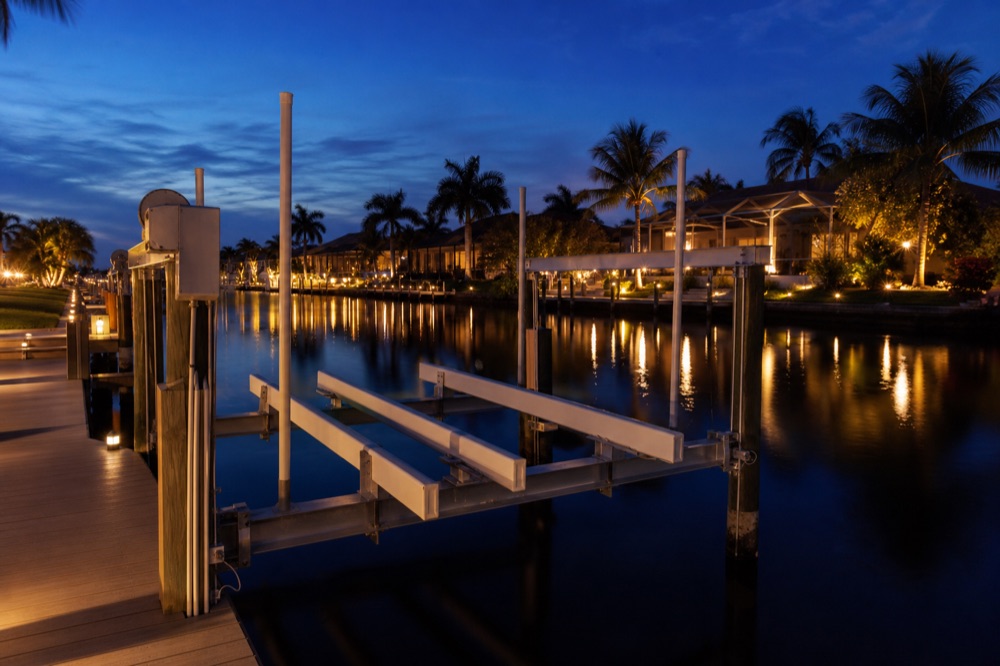
The full arc for a Southwest Florida boat lift: pre-season condition, the boat-on-lift-or-trailer decision, canopy and cradle considerations, and the order you check things afterward.
 Storm & Hurricane
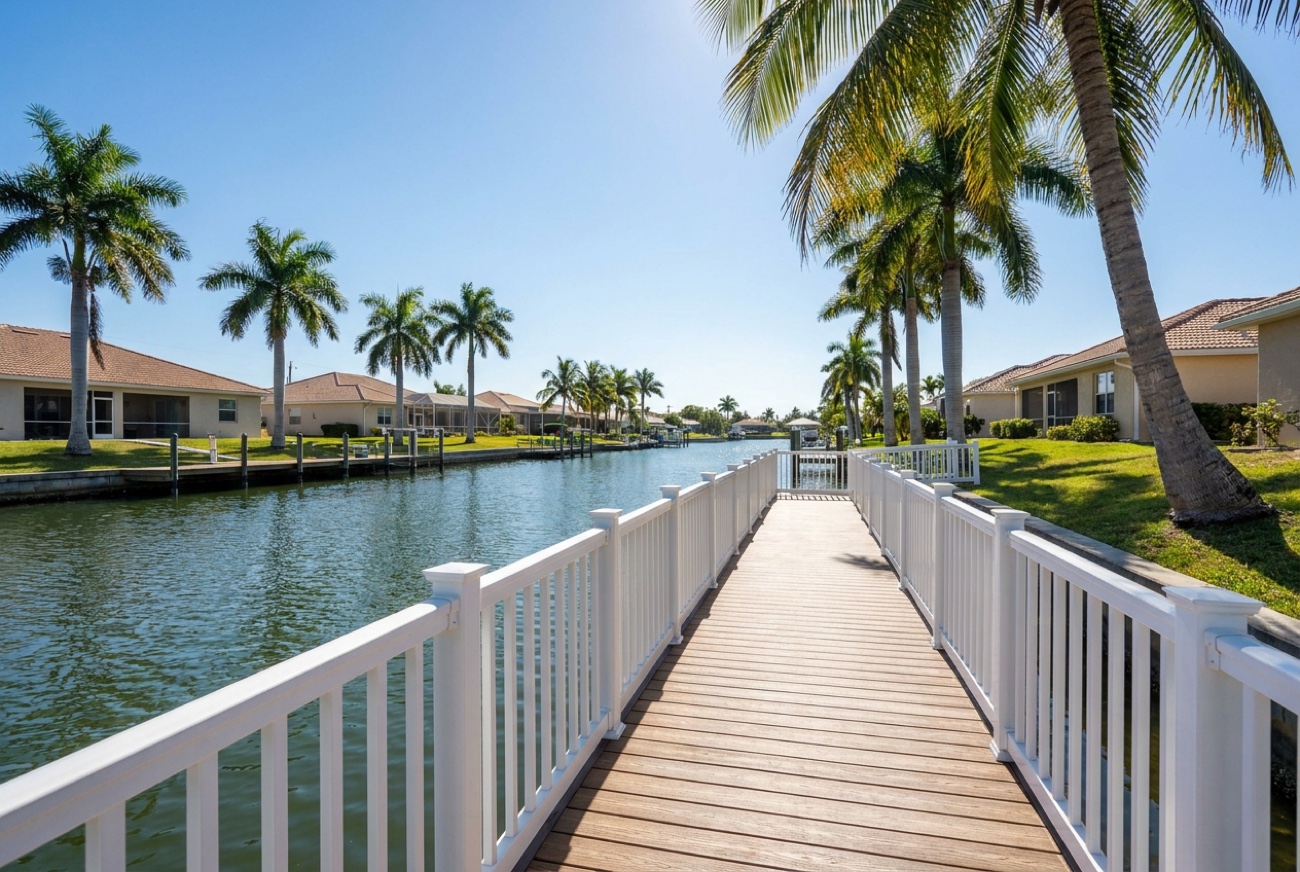
The dock-specific storm routine: what to sweep off, what to check before the season, what to shut down, and the order to inspect in afterward.
 Storm & Hurricane
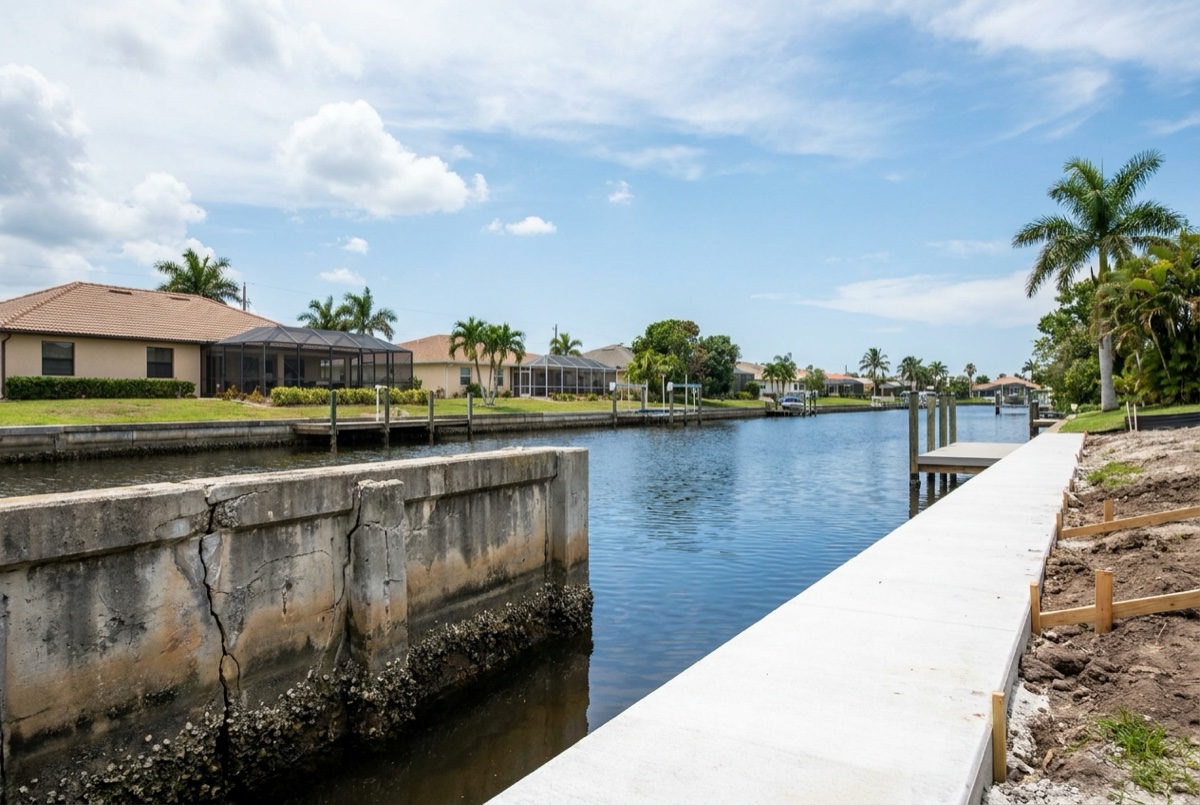
Almost all seawall storm prep happens months before the storm, here is what to fix in spring, what surge actually does to a wall, and how to triage one afterward.
 Storm & Hurricane
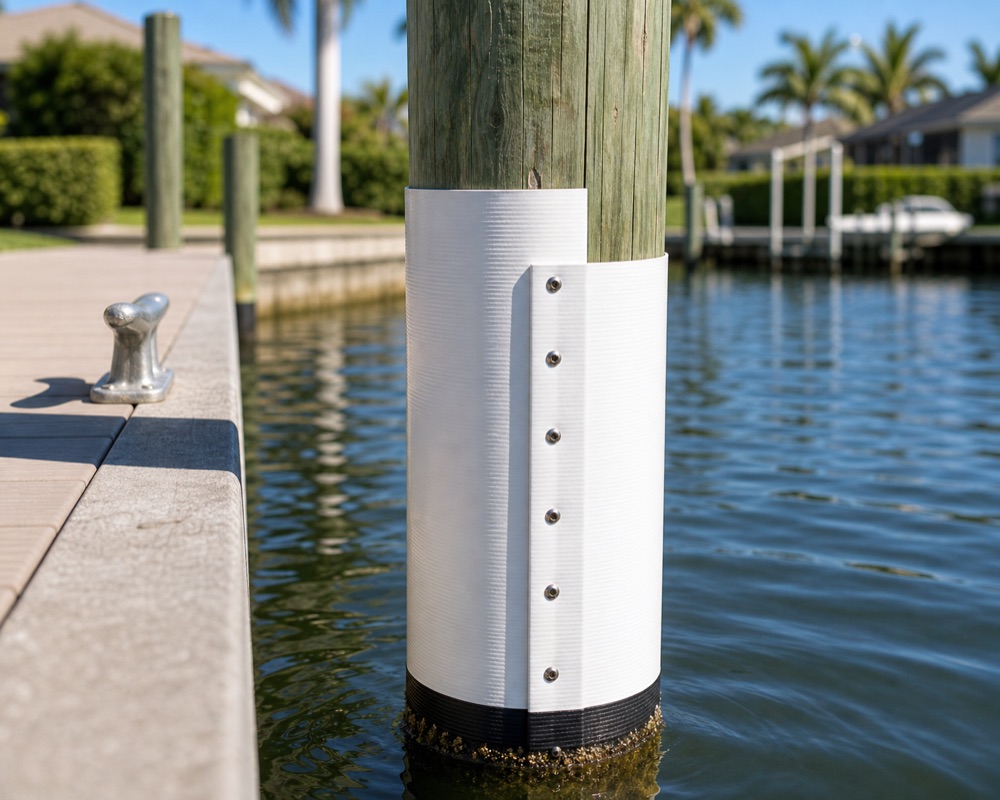
Sound pilings are the storm protection you already own, here is how to check wraps, splash zones, and necking before the season, and how to triage lean and wobble after.
 Storm & Hurricane
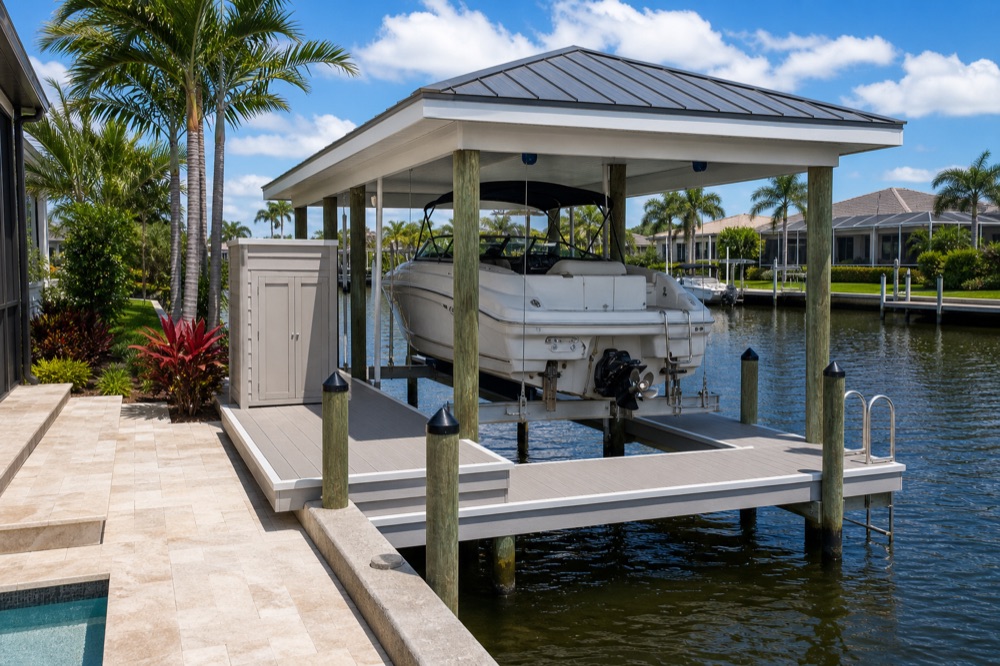
A boathouse puts a roof over the water, which changes everything about storm prep: roof and fastener checks, what to strip out, door strategy, and how to triage posts afterward.
 Storm & Hurricane
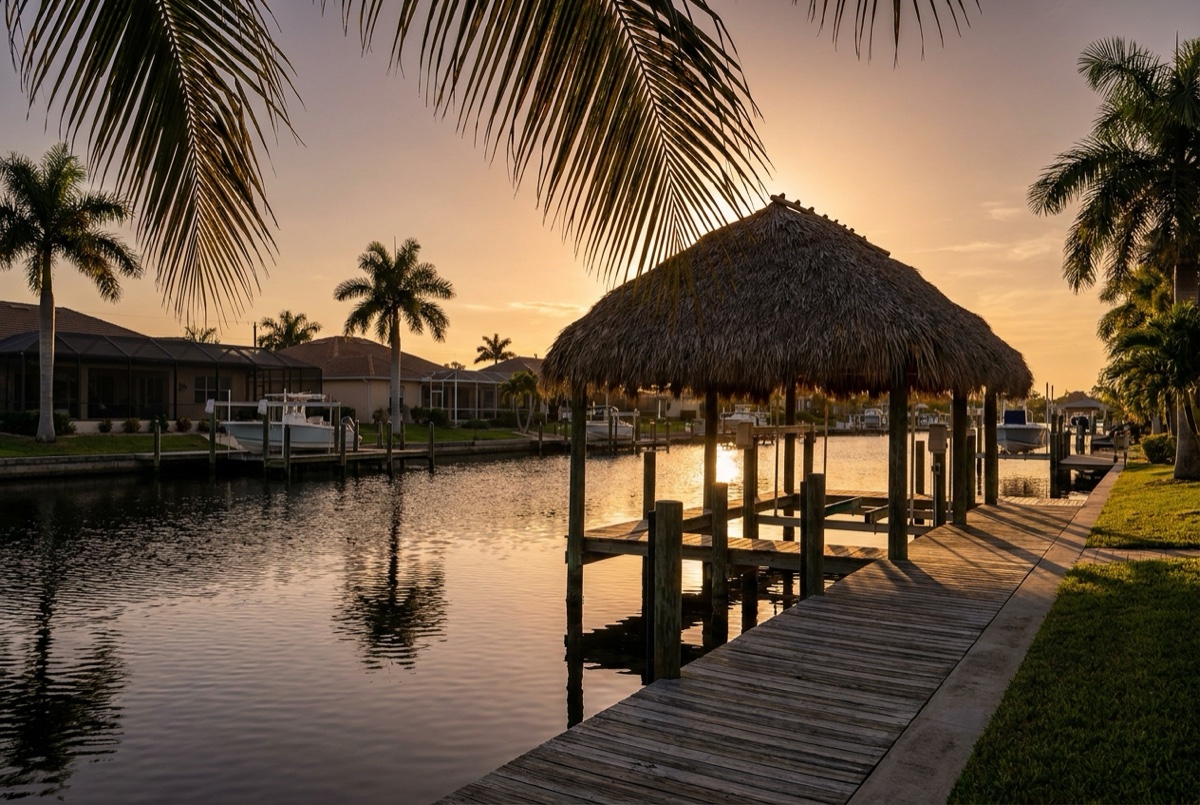
Thatch sheds and posts hold, here is the Southwest Florida tiki hut storm sequence, from pre-season post checks to the re-thatch-or-rebuild call once the water goes down.
 Storm & Hurricane
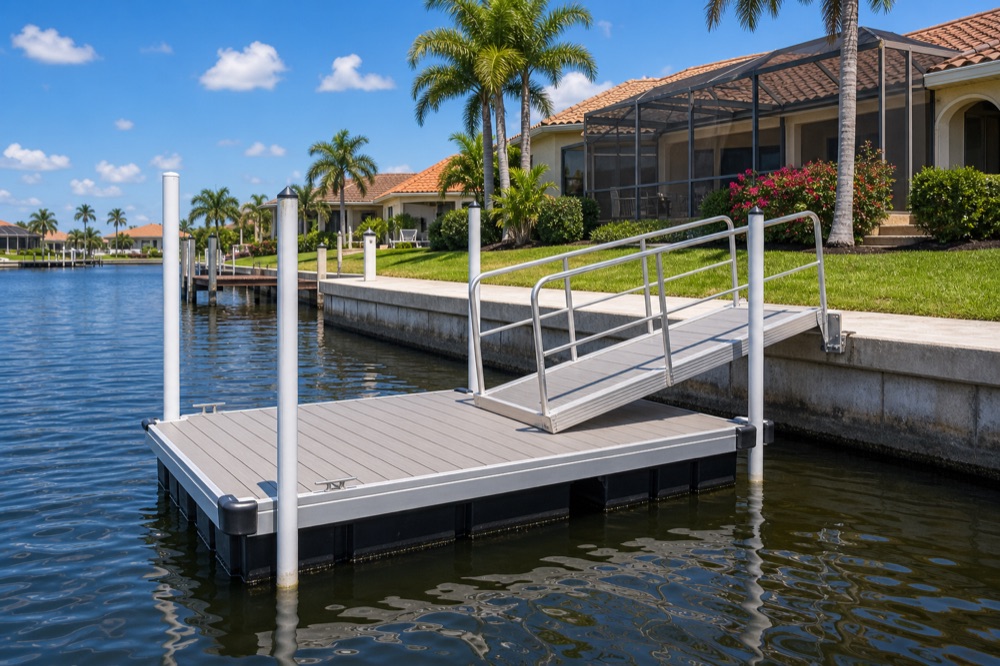
Floating docks ride water up, which is a strength until it isn't. How guide piles, connectors, and gangways behave in a storm, and what to clear off before one arrives.
 Storm & Hurricane
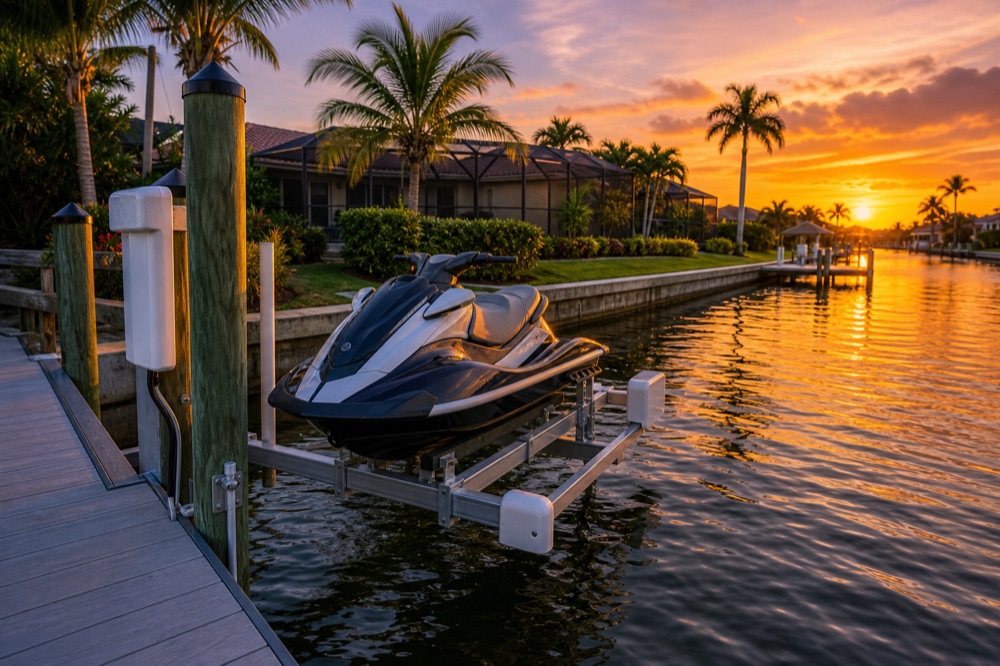
A PWC-specific storm plan for Southwest Florida: pre-season condition, the trailer-or-lift decision, securing the ski, and what to check before you run the lift again.
 Storm & Hurricane
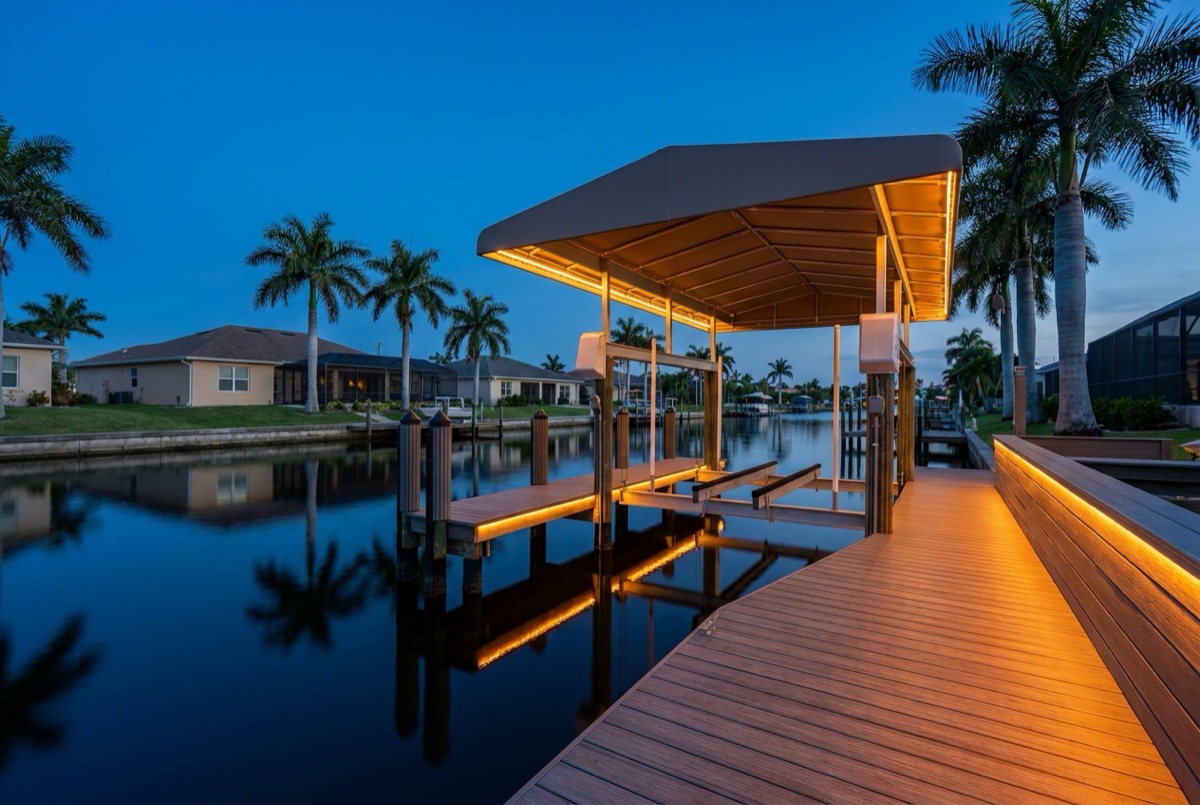
Dock lights come with one storm rule that is not a judgment call: power off at the breaker before the weather arrives, and not back on until a licensed electrician clears it.
 Storm & Hurricane
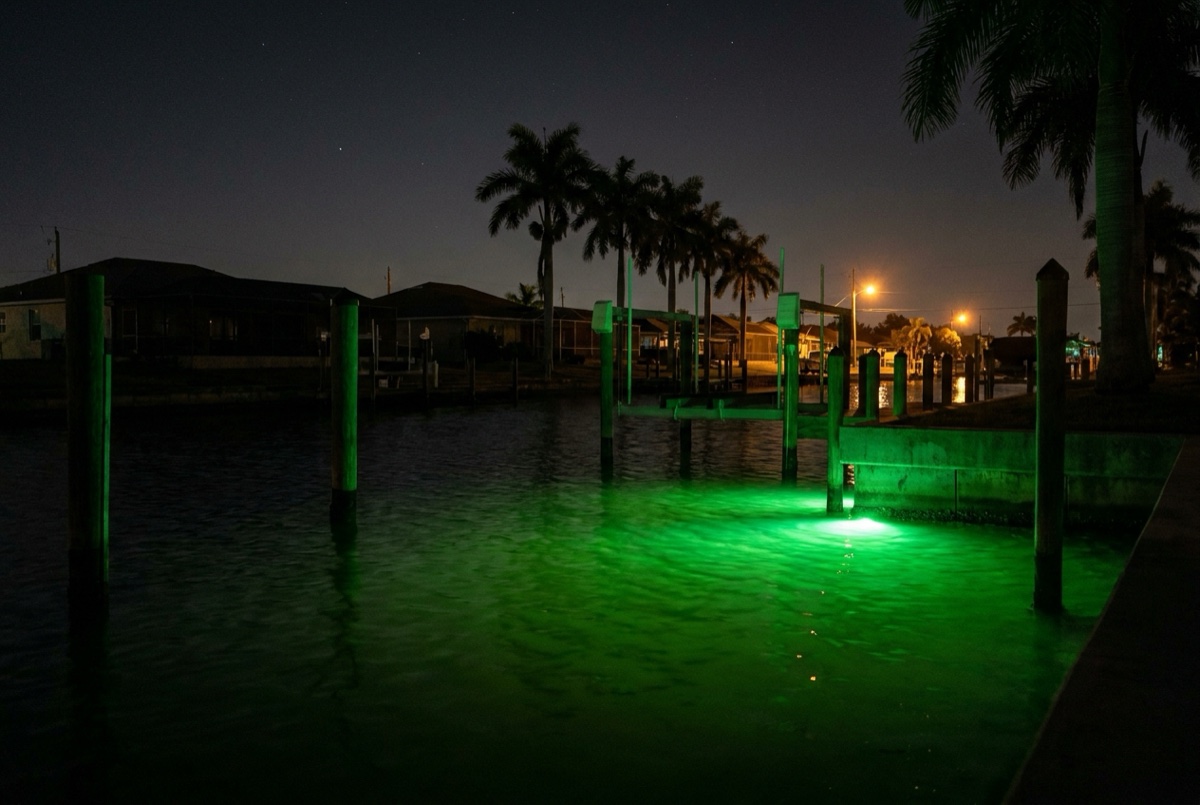
Pull it or leave it? What to actually weigh before a storm, how surge loads the cable, and why your fish light looks dim for a while after the water settles.
 Storm & Hurricane
Surge is not rain and it is not a wave. It is the Gulf itself being pushed inland. Here is why our shallow shelf and canal network make it the thing to plan around.
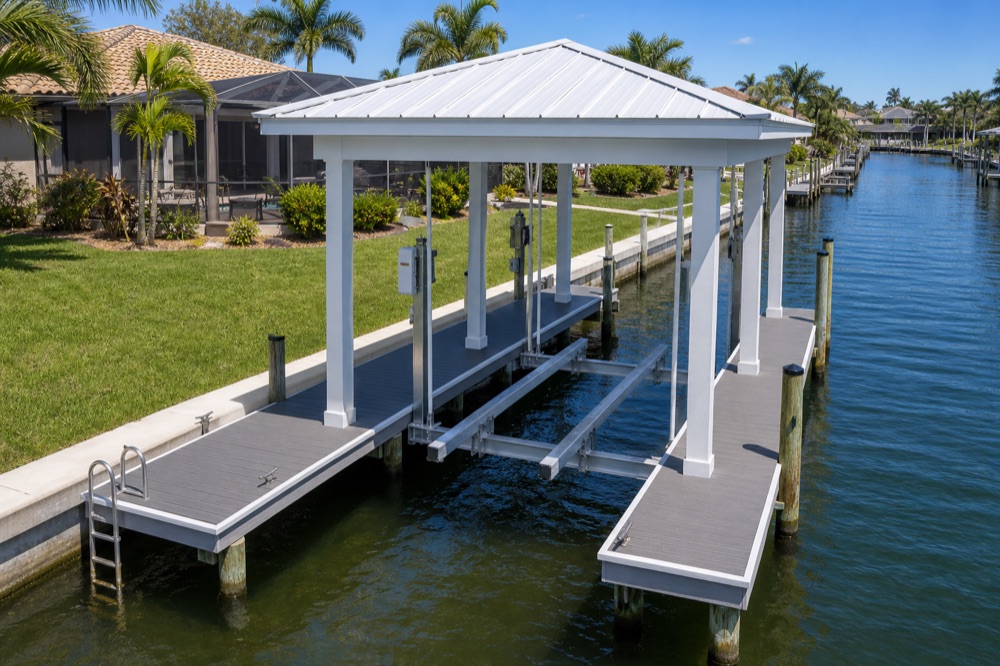 Storm & Hurricane
Three different forces hit your waterfront in a storm, and each one goes after a different part of it: here's how to tell them apart before the season does it for you.
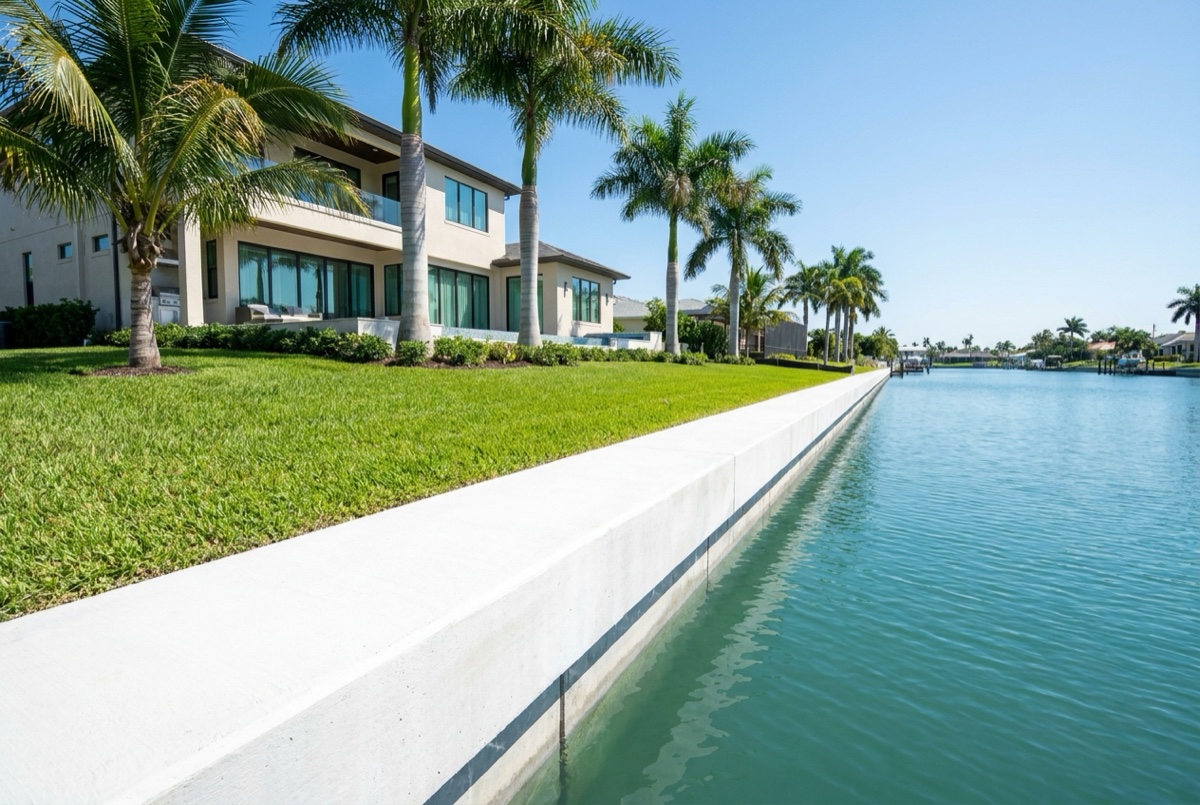 Storm & Hurricane
The same storm can be two completely different events on your dock depending on the tide it arrives on: here's why timing matters more than most waterfront owners realize.
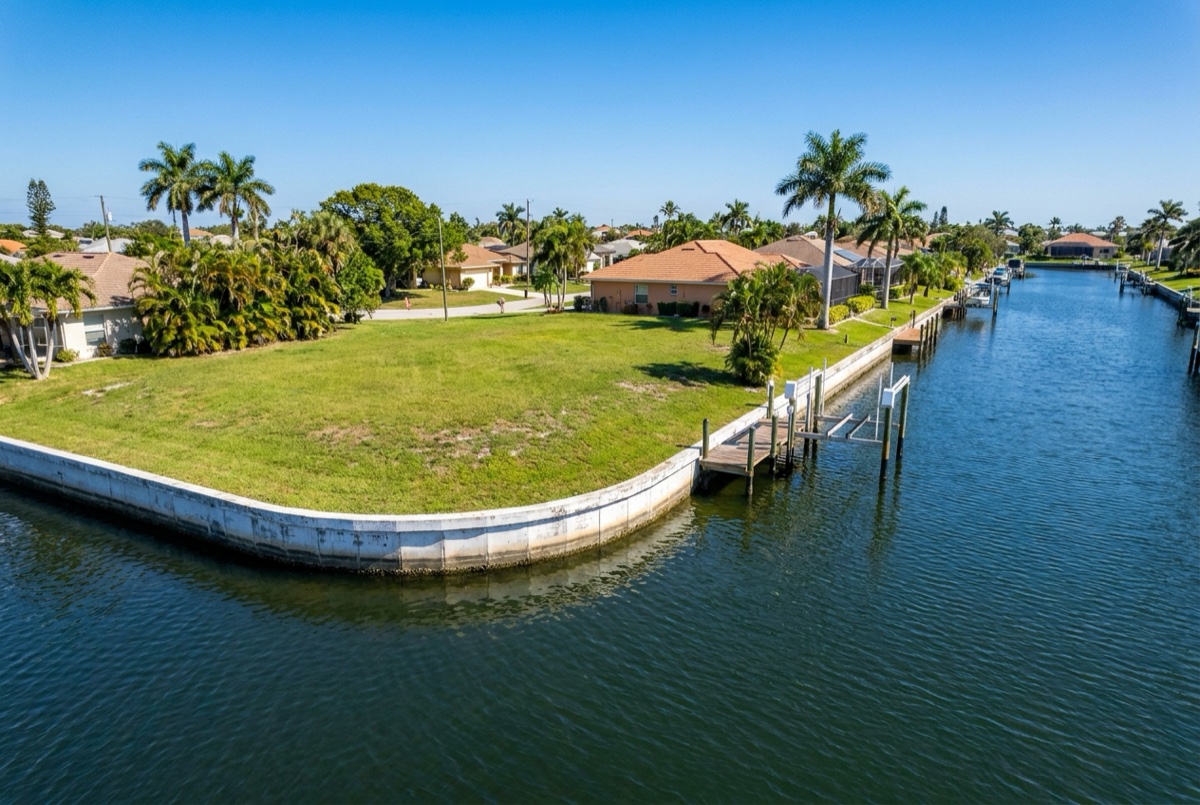 Storm & Hurricane
Two neighbors on the same waterway can get wildly different wave action in the same storm, the reason is fetch, and it's visible on a map before it's visible on your seawall.
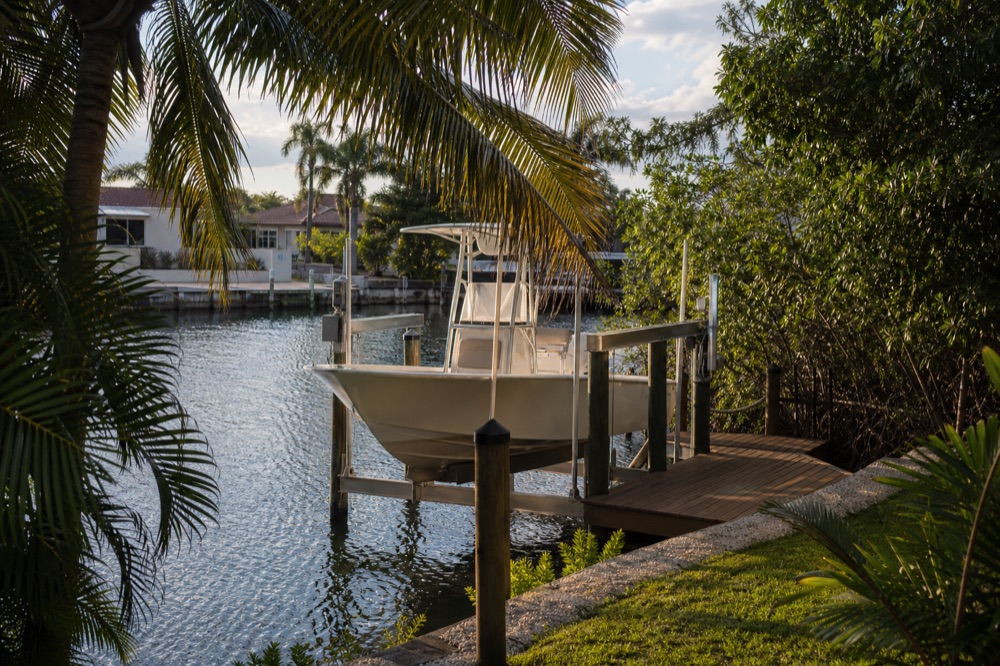 Storm & Hurricane
A hurricane watch is up and your dock, lift, and seawall are on the clock: here's what to do with the first and most valuable block of time you'll get.
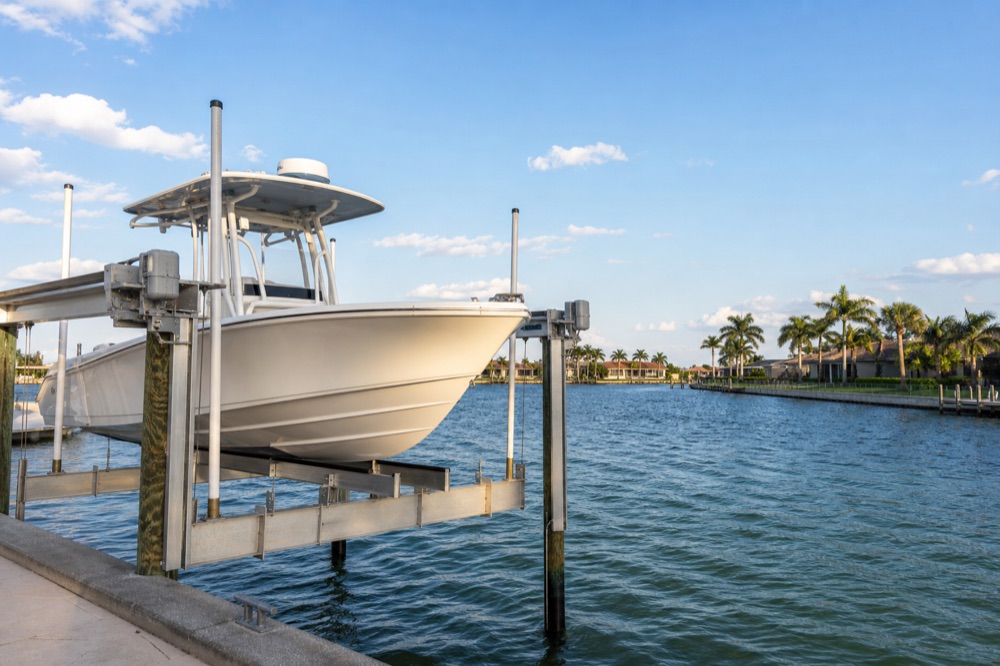 Storm & Hurricane
A hurricane warning is up. At this point the job is finishing, not starting: here's the short list that's still worth your time, and the list that isn't.
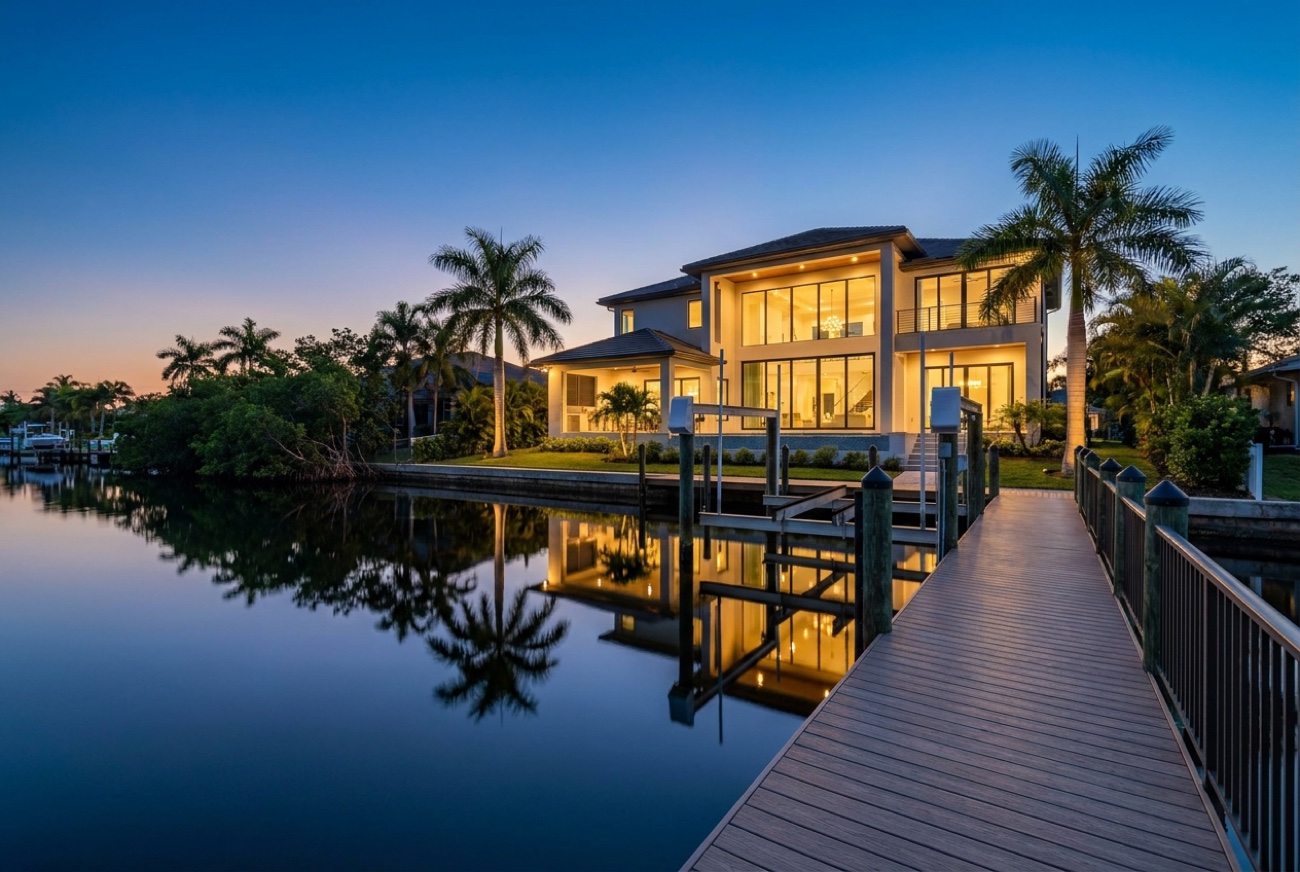 Storm & Hurricane
When you're leaving, the waterfront gets a compressed list in a specific order, and several items get dropped entirely. Here's what makes the cut.
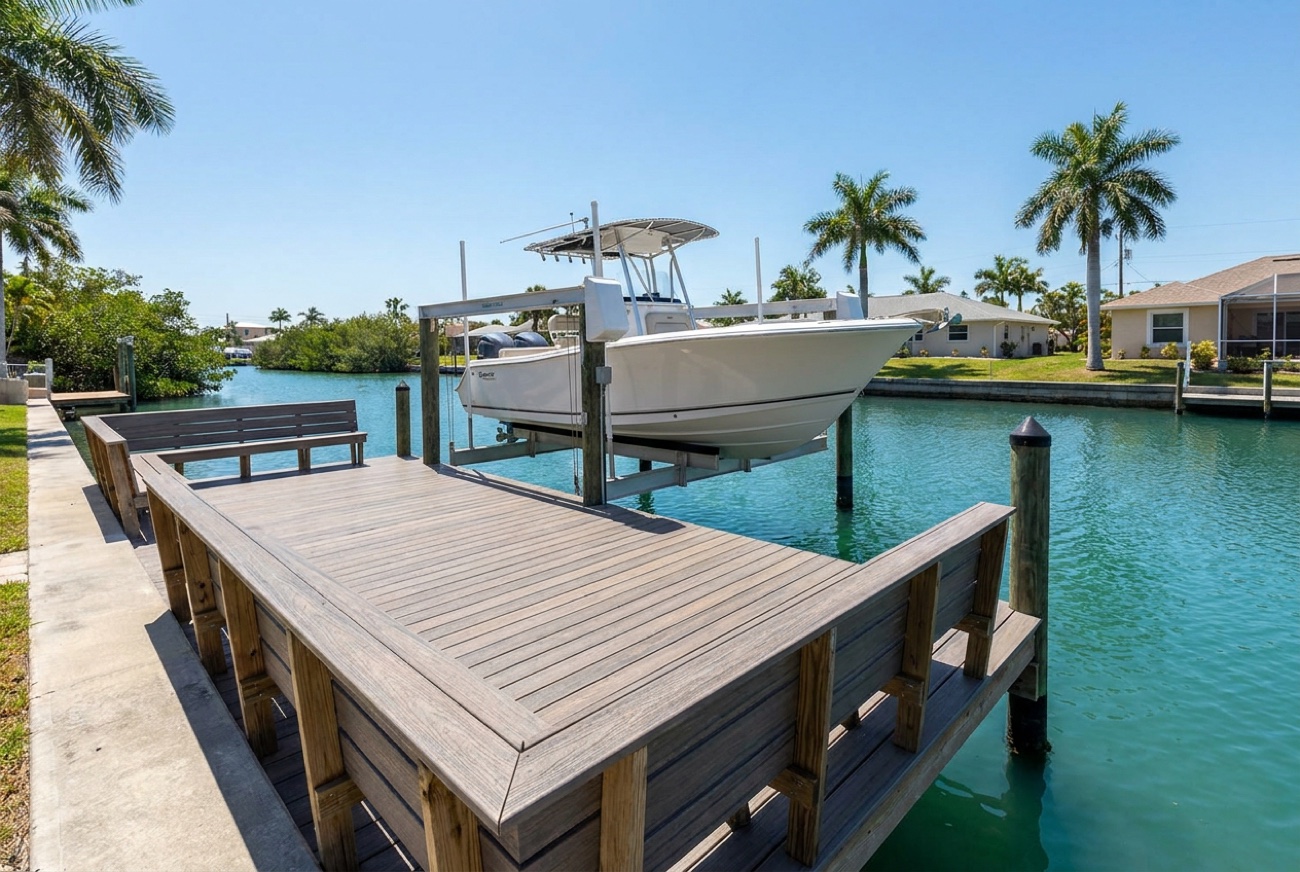 Storm & Hurricane
The hazards to clear before you walk out to the water, the order to inspect your property in, and where to go next for your dock, lift, seawall, and electrical.
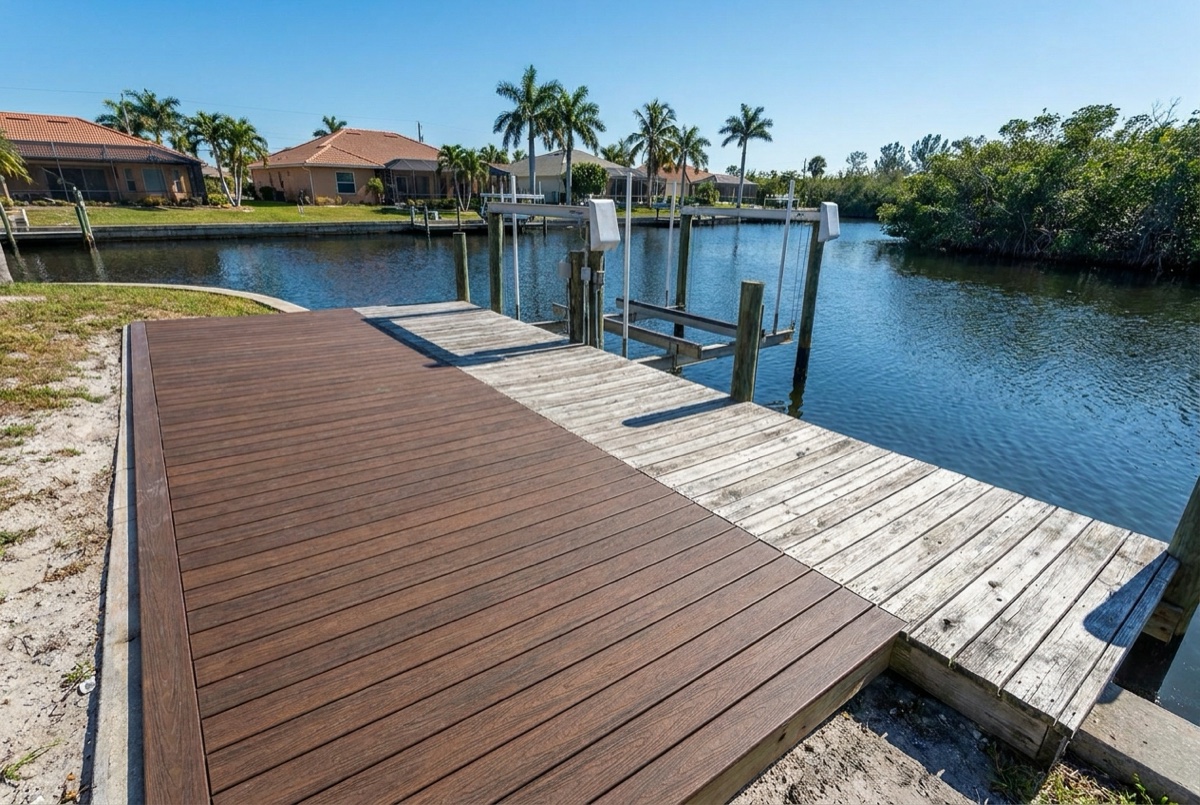 Storm & Hurricane
How to check a dock after a storm without getting hurt: what to look for from dry land, the pilings-frame-decking order, and the signs that mean stay off.
 Storm & Hurricane
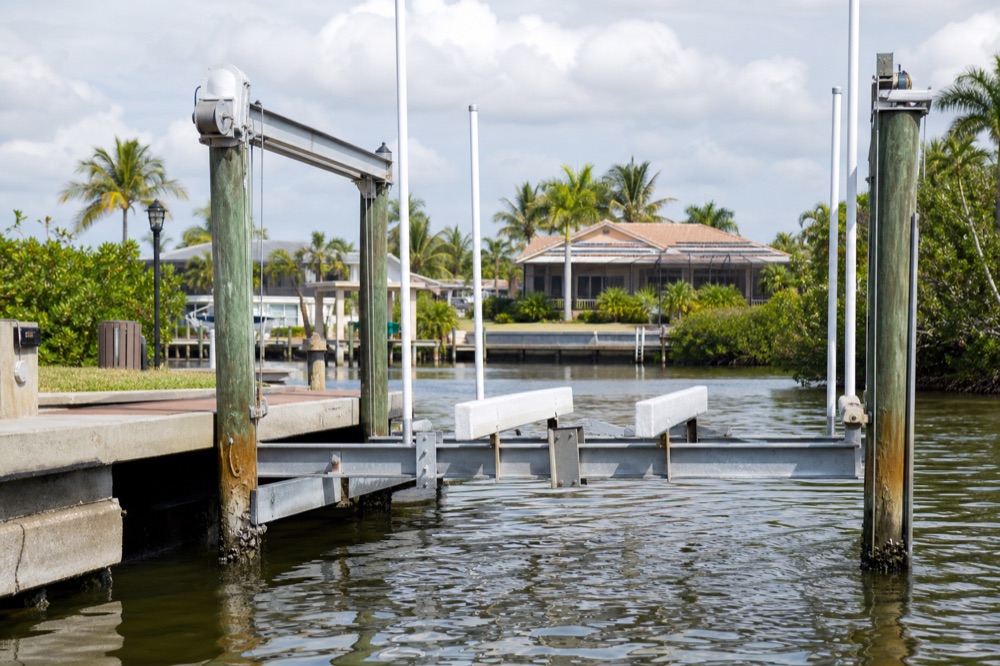
Why running your boat lift is the last thing you should do after a storm, and the cable, pulley, beam, and motor checks that come before power ever goes back on.
 Storm & Hurricane
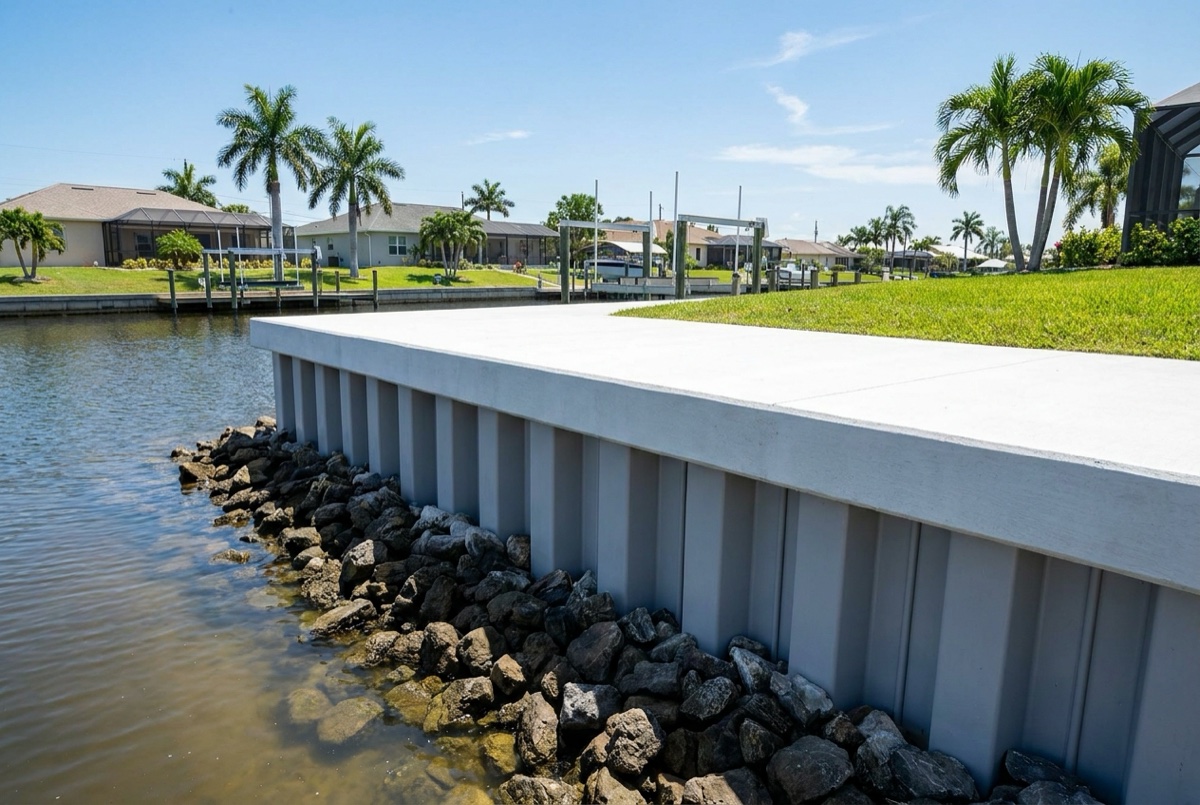
The yard-side signs that a seawall took real damage, what to look for at the water when it's safe, and why the weeks after a storm matter more than the day of.
 Storm & Hurricane
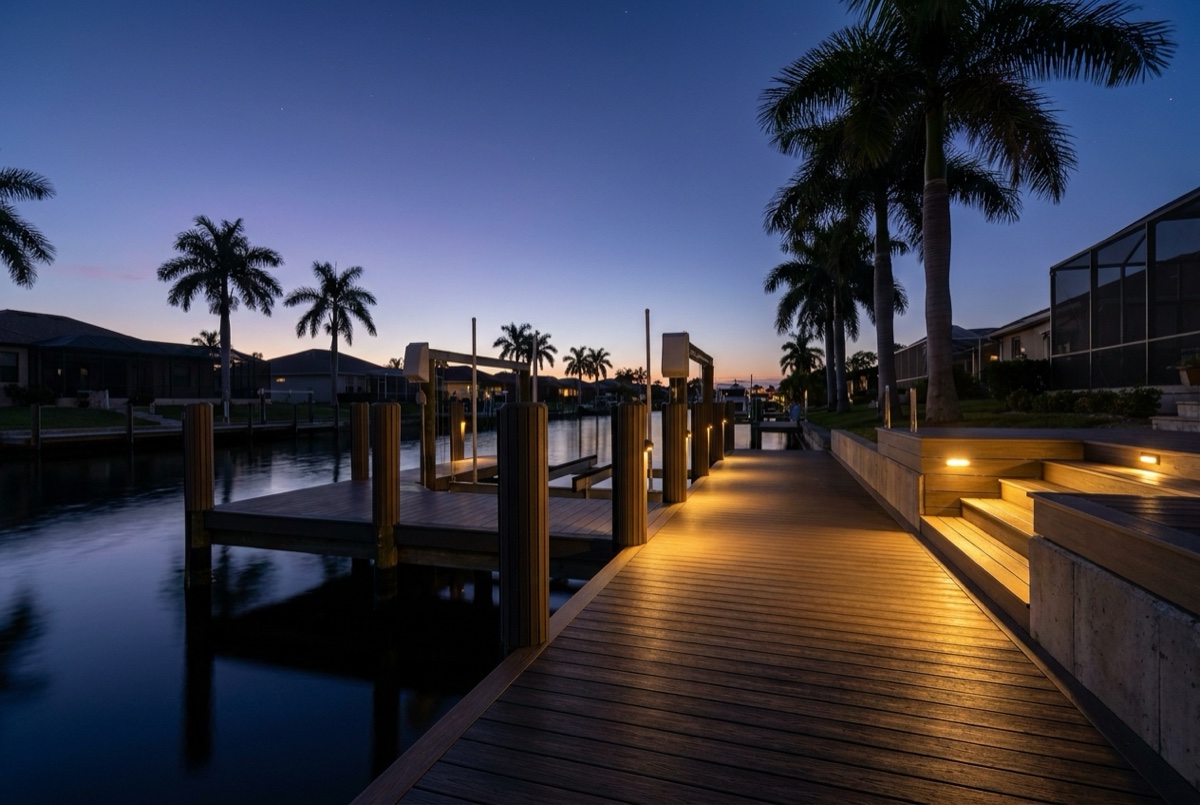
After flooding, the only safe homeowner moves around dock power are keeping the breaker off, looking from dry ground, and calling a licensed electrician. Here's why.
 Storm & Hurricane
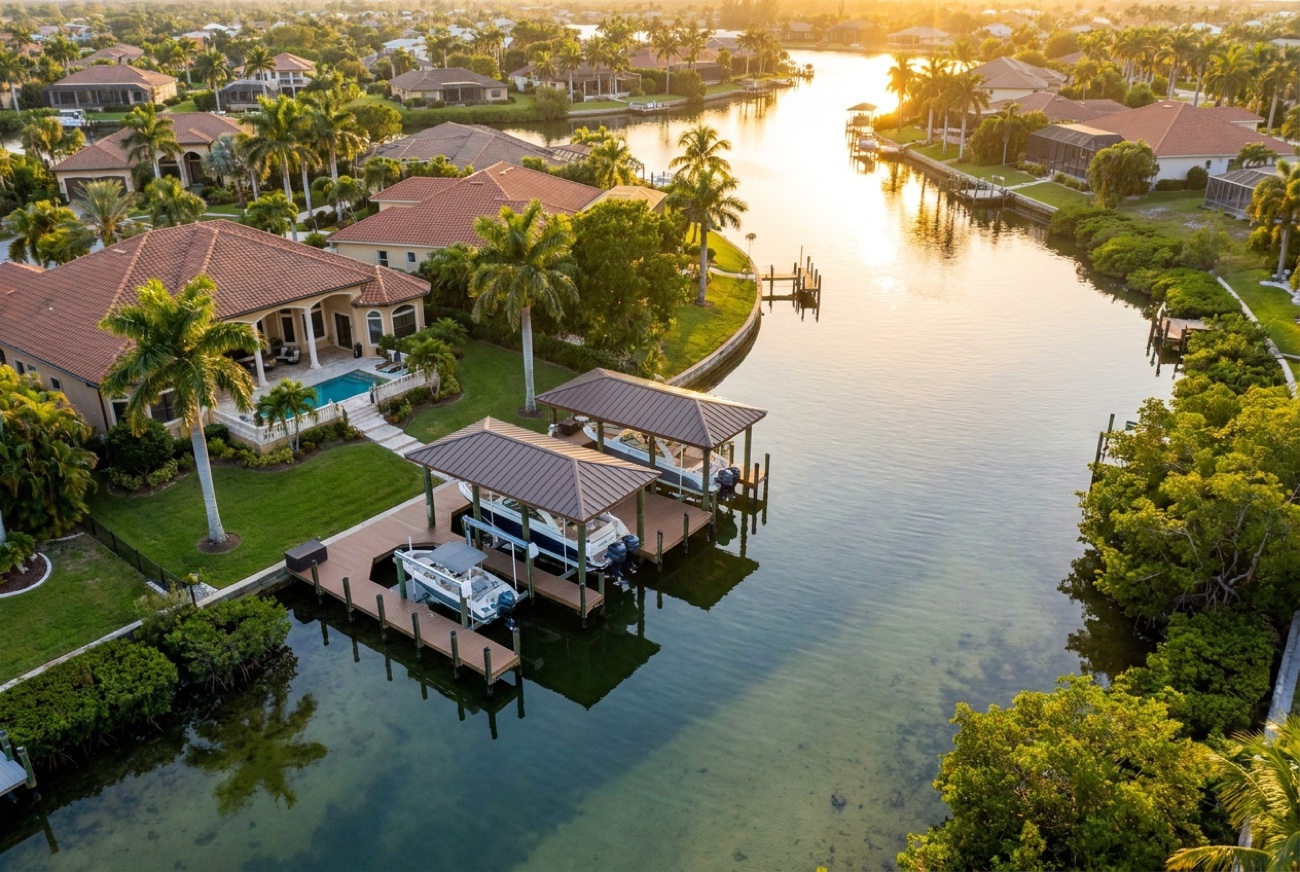
How to build an honest, dated record of what your dock, lift, and seawall looked like before a storm and after, and why the before-photos are the part almost nobody has.
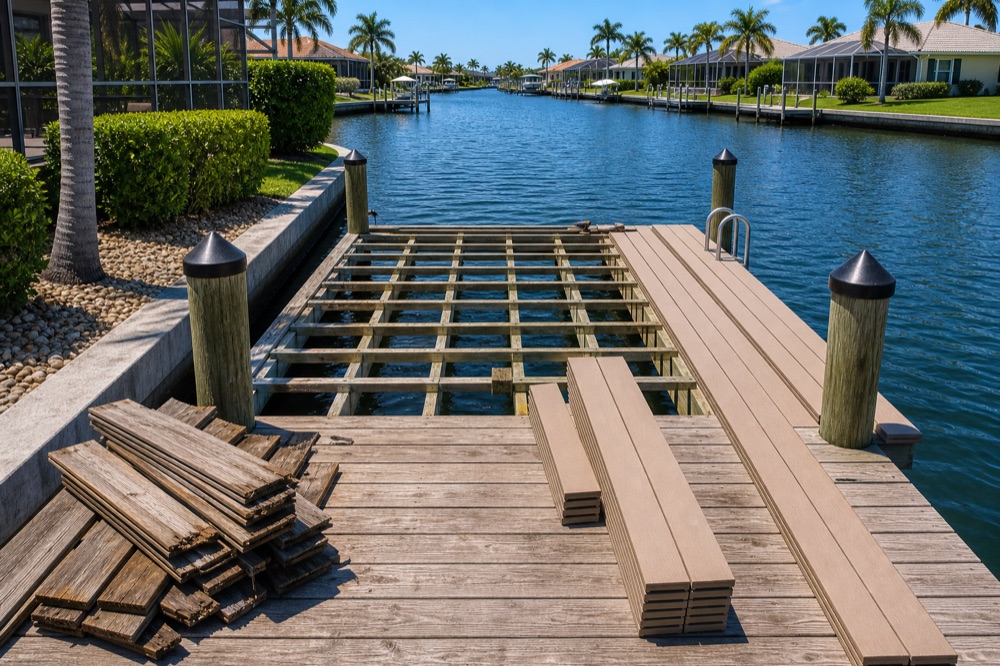 Storm & Hurricane
The six things we watch waterfront owners do after a storm that make the rest of the process harder: none of them about squeezing a carrier, all of them about keeping the record straight.
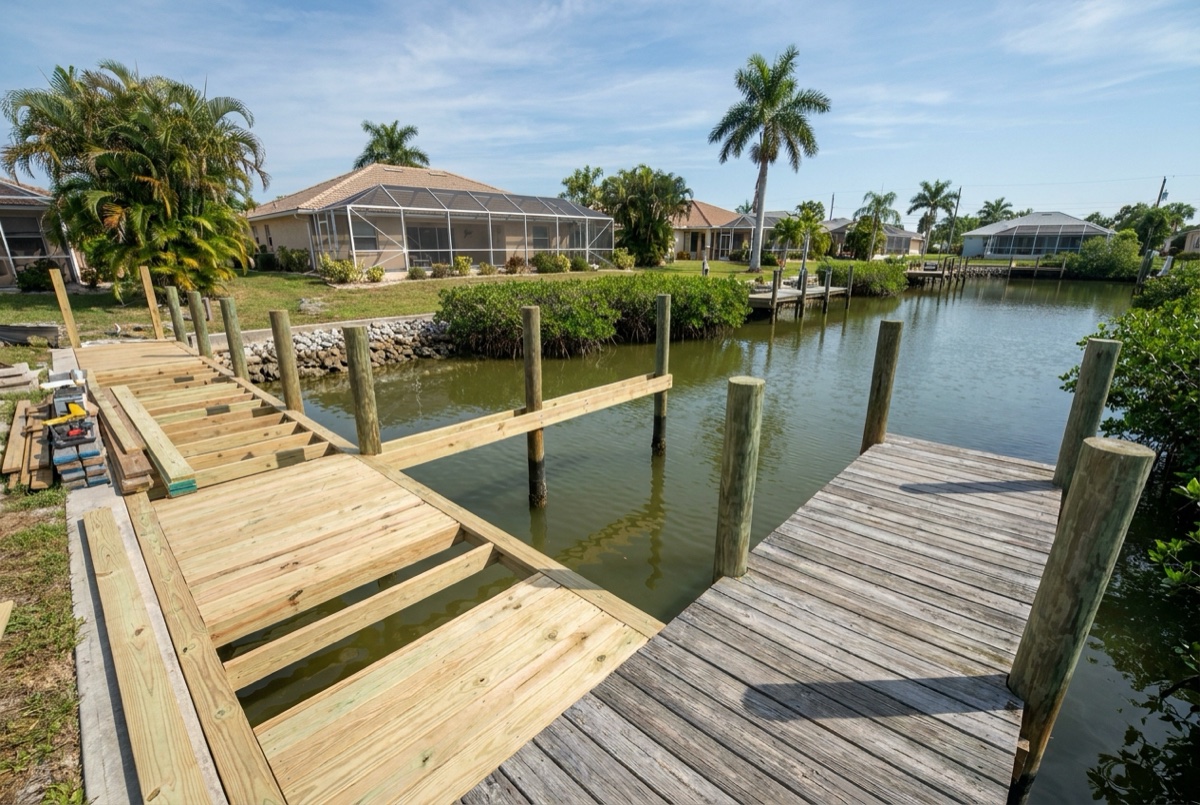 Storm & Hurricane
How to get ready for the walk-through: documentation organized, access made safe, facts stated plainly, and why staying in the lane of what you actually observed serves you best.
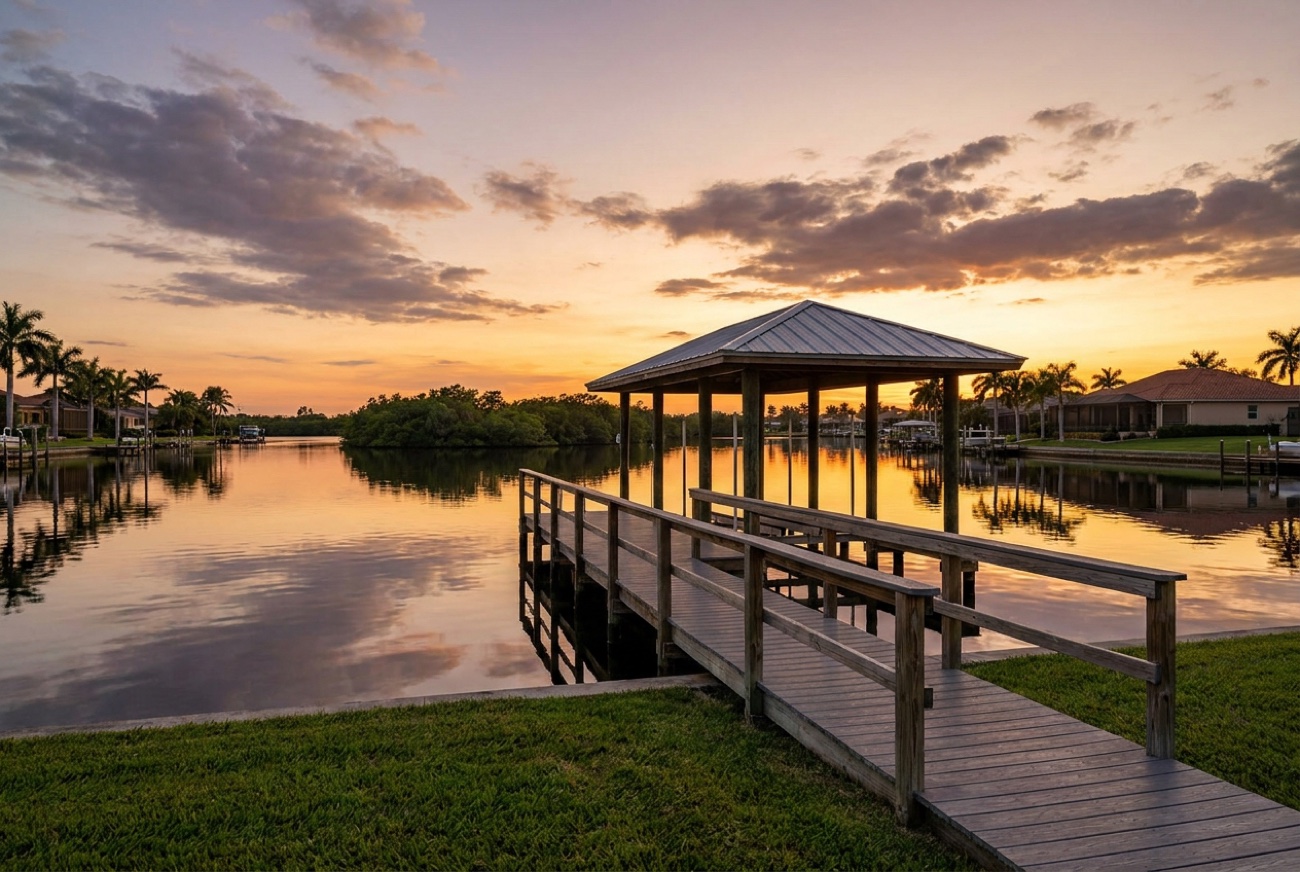 Storm & Hurricane
Why wind and rising water are generally handled by two different policies, why a dock is generally treated differently from the house, and the questions to ask your agent before the season, not after.
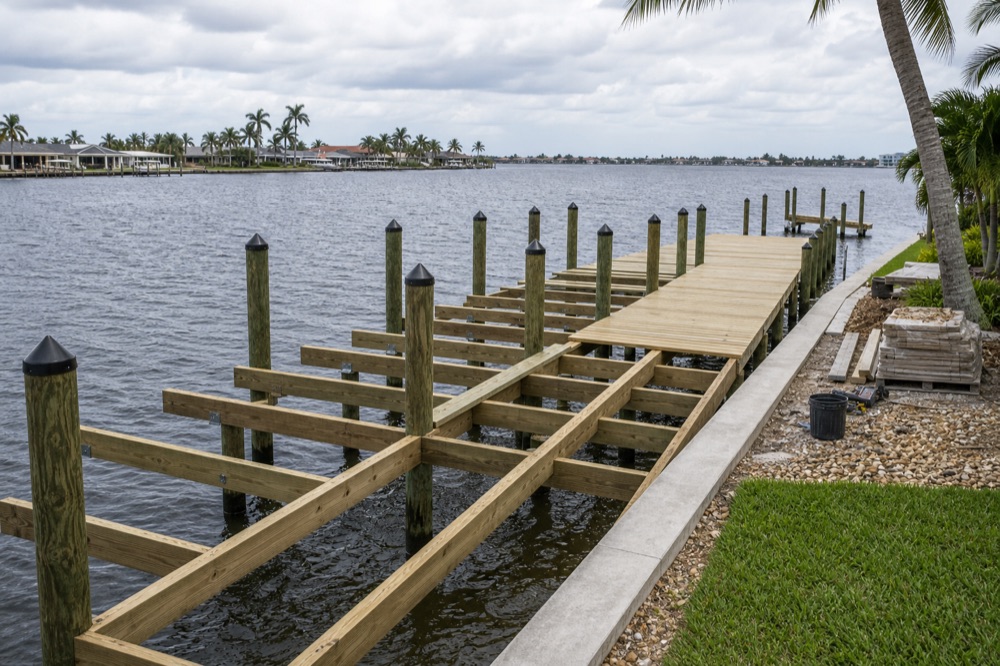 Storm & Hurricane
Waterfront structures stack: shoreline, pilings, dock, lift, power. Rebuild from the bottom of that stack up and every phase sets up the next one.
 Storm & Hurricane
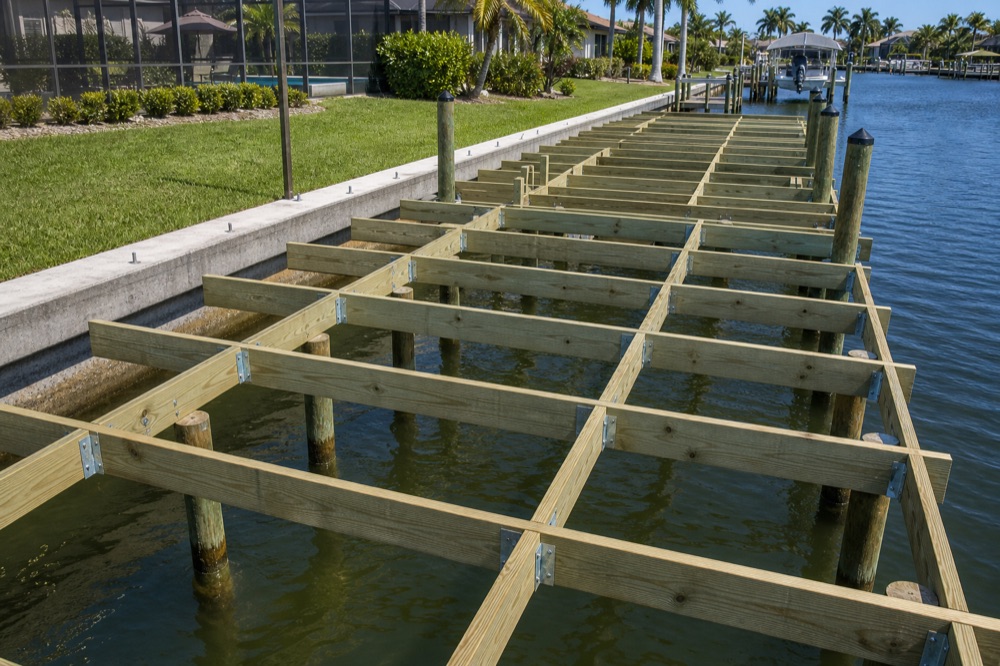
A legitimate temporary fix does two jobs: makes a site safe and stops damage from spreading. It is not a repair you can live with, and here is how to keep it from becoming one.
 Storm & Hurricane
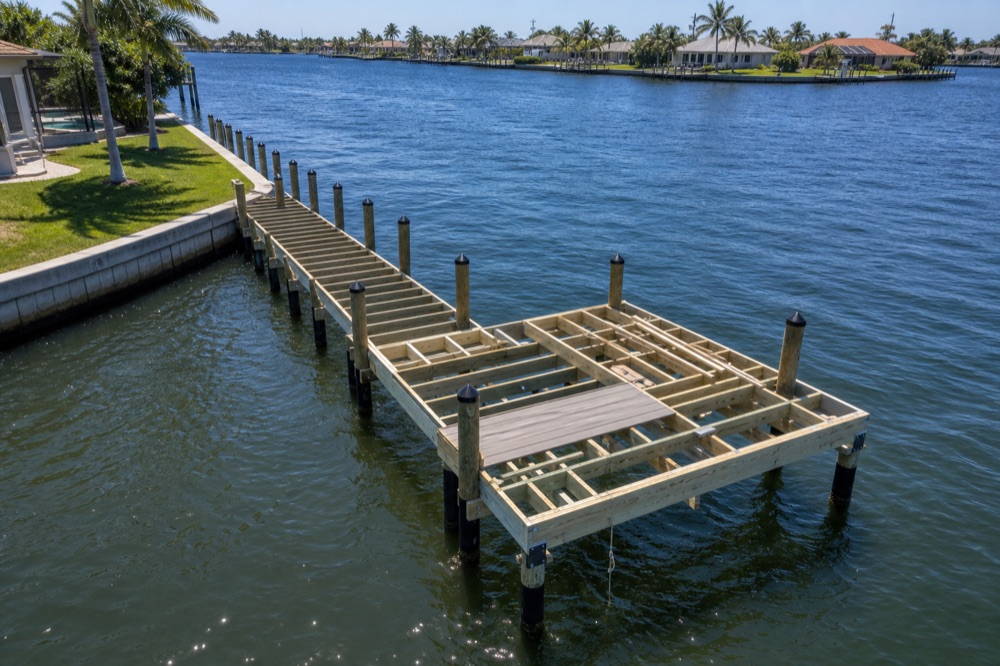
After a storm, the trucks come. Here are the patterns worth slowing down for, and the two verification steps that are entirely in your hands as the homeowner.
 Storm & Hurricane
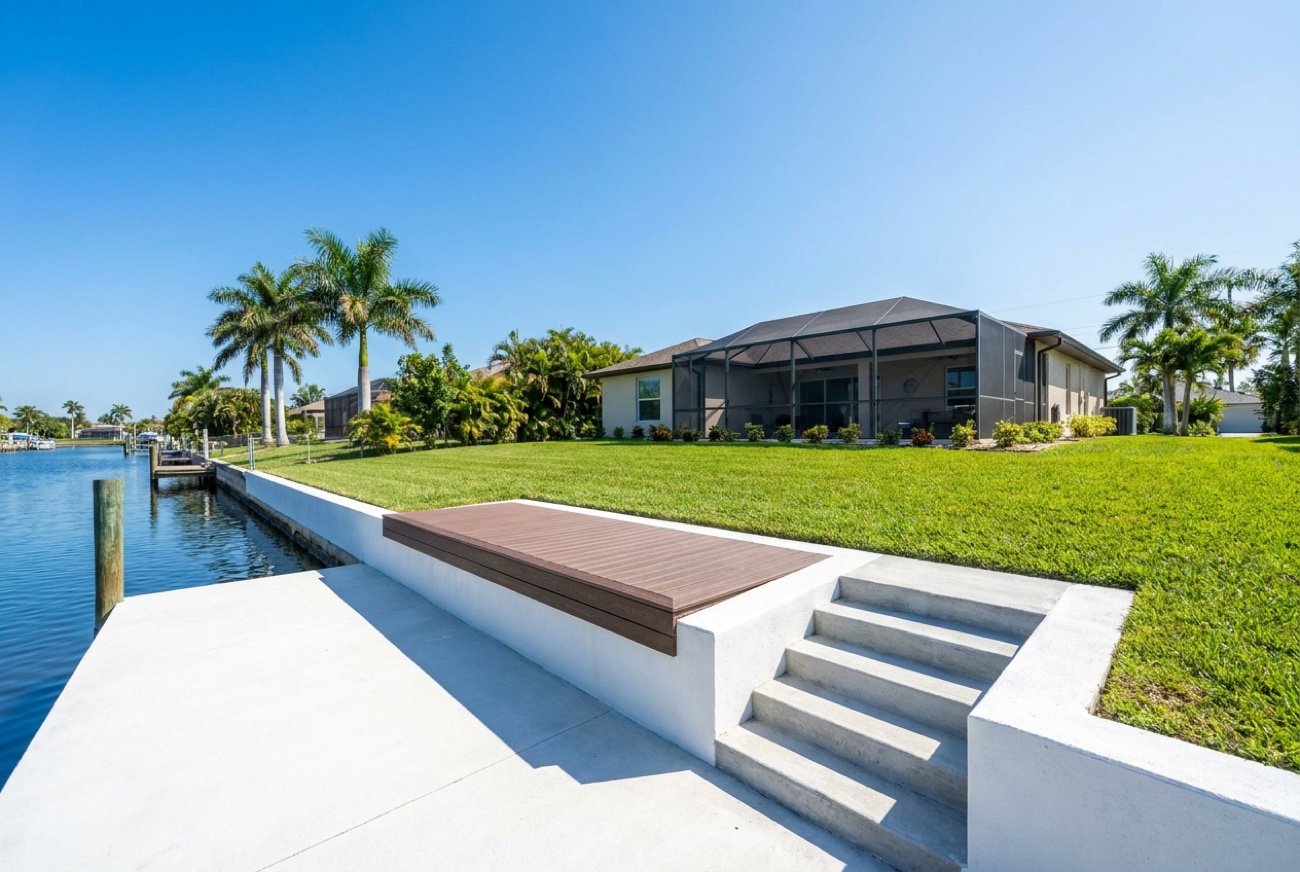
Permitting does not disappear because a storm came through. What can change is the path, and the only office that can tell you which path applies to your address is your county building department.
 Storm & Hurricane
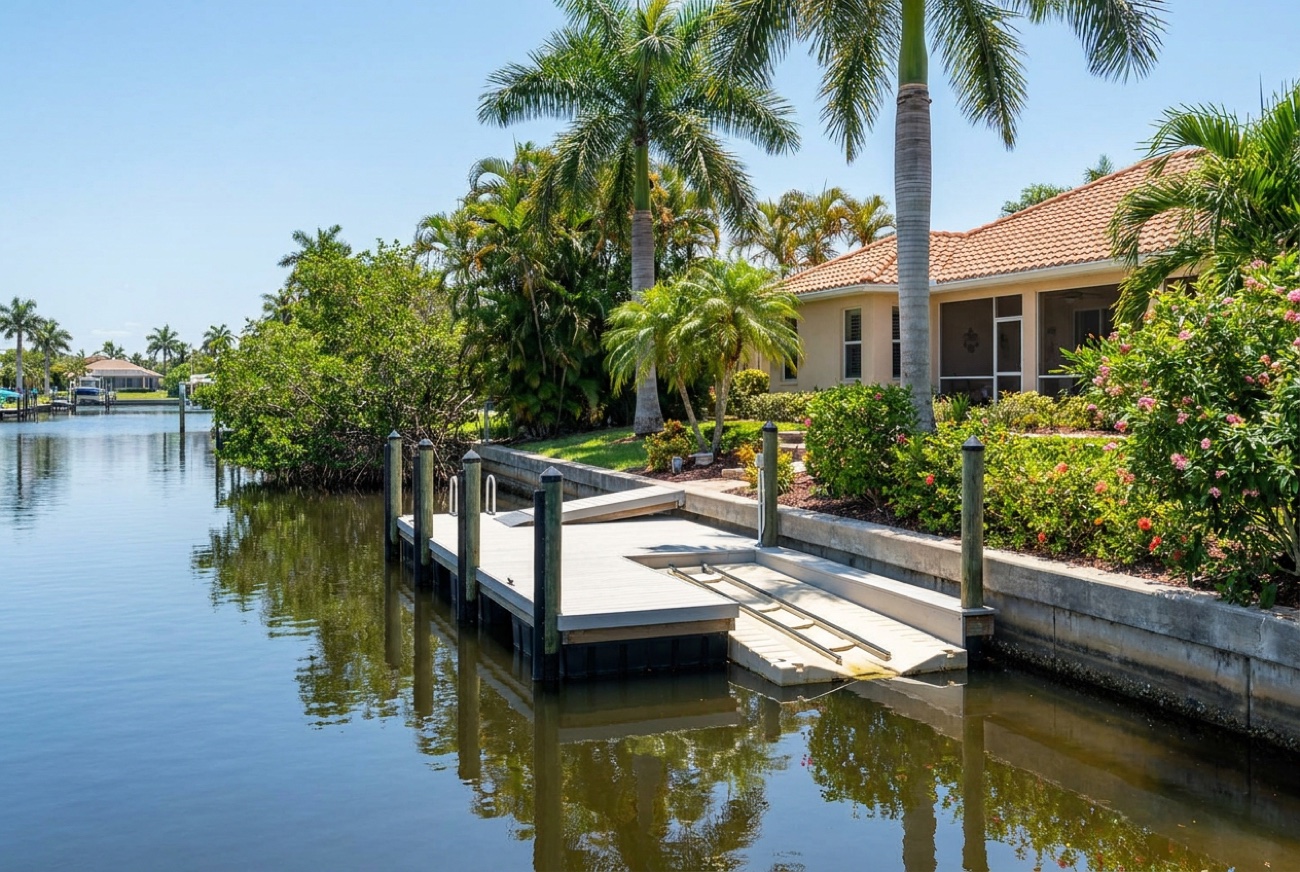
Carbon monoxide, backfeeding, flooded dock circuits, and the honest answer on running a boat lift off a generator, the safety rules on this page do not bend.
 Storm & Hurricane
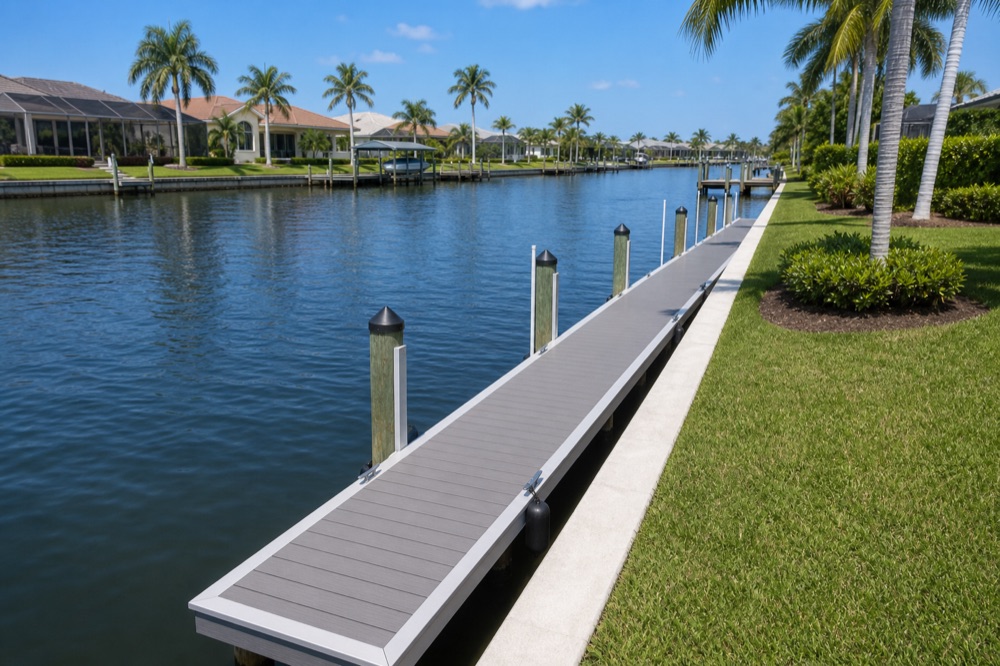
What's actually dangerous about debris in the canal, how to find out who is responsible for clearing it, and the honest line between what you can handle at your dock and what needs a crew.
 Storm & Hurricane
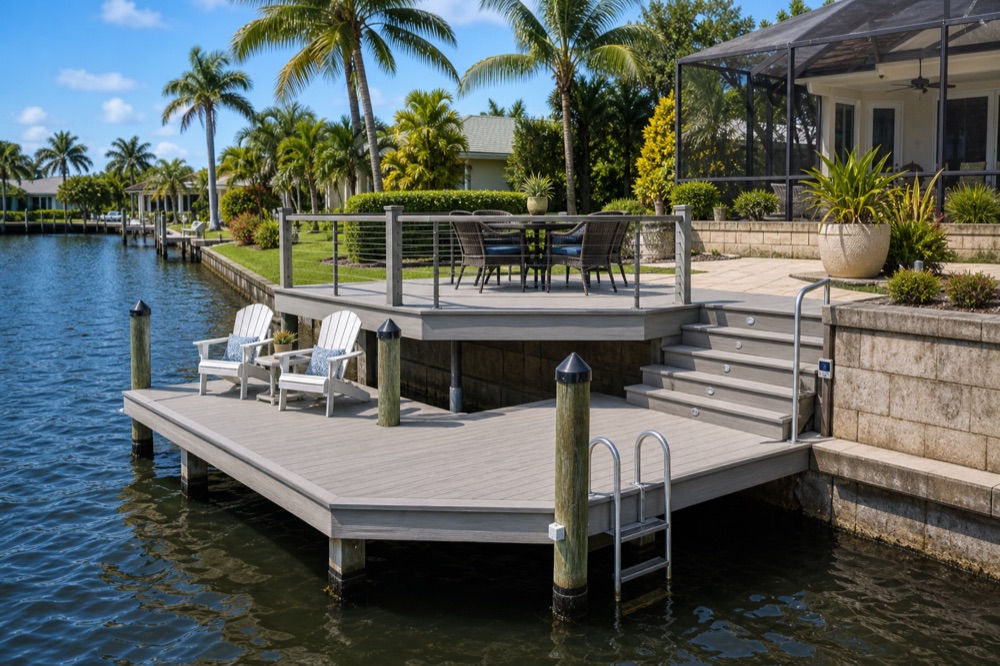
On a canal you share consequences. How to coordinate prep on shared docks and seawalls, what community rules can touch storm work, and how to handle the aftermath neighborly.
 Storm & Hurricane
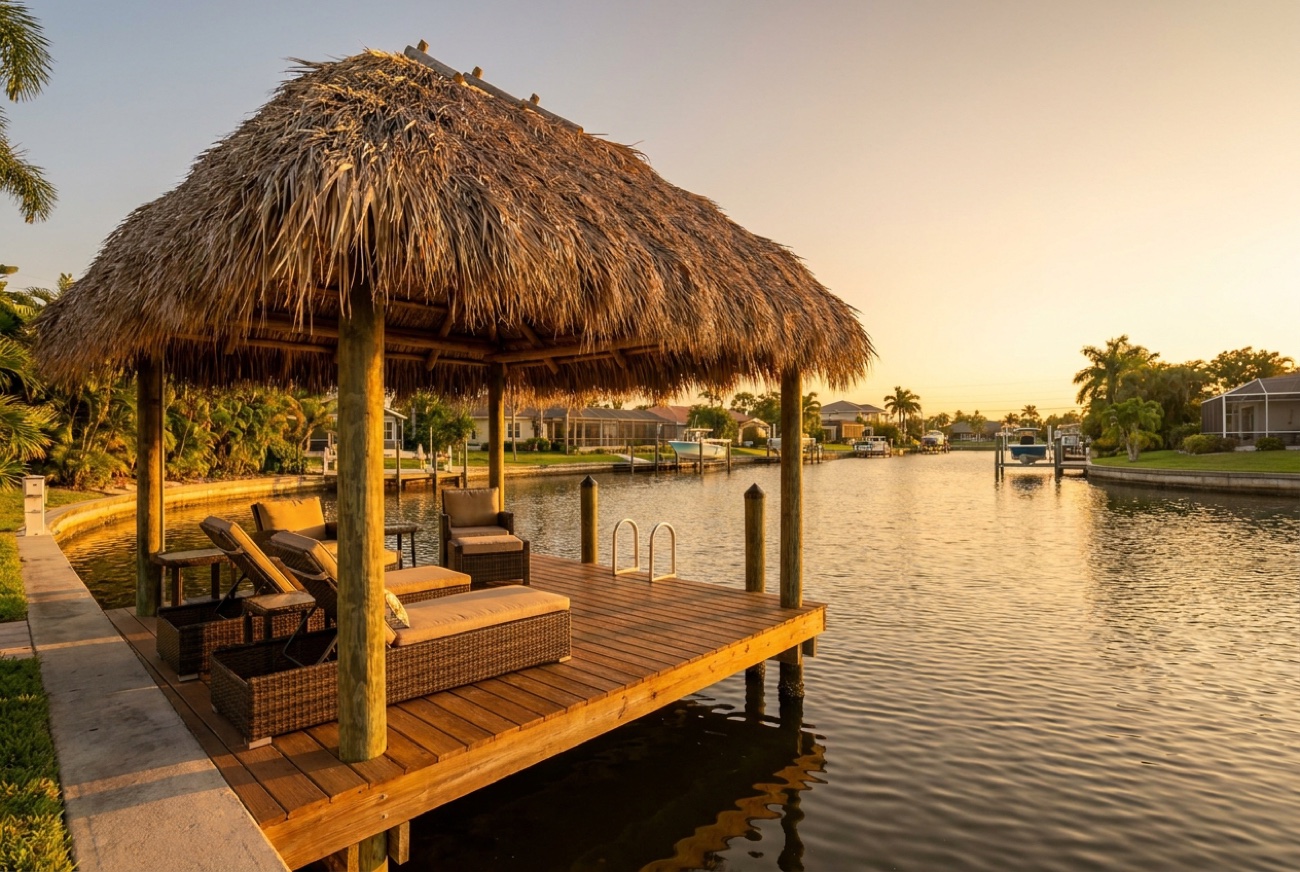
Managing a Southwest Florida dock and lift from a thousand miles north, the pre-departure state that makes the season survivable, local eyes, what cameras miss, and what you can actually authorize remotely.
 Storm & Hurricane
The considerations on both sides, laid out honestly: canal exposure, lift height and capacity, where you'd actually tow it, evacuation timing, and haul-out demand. No universal verdict, because there isn't one.
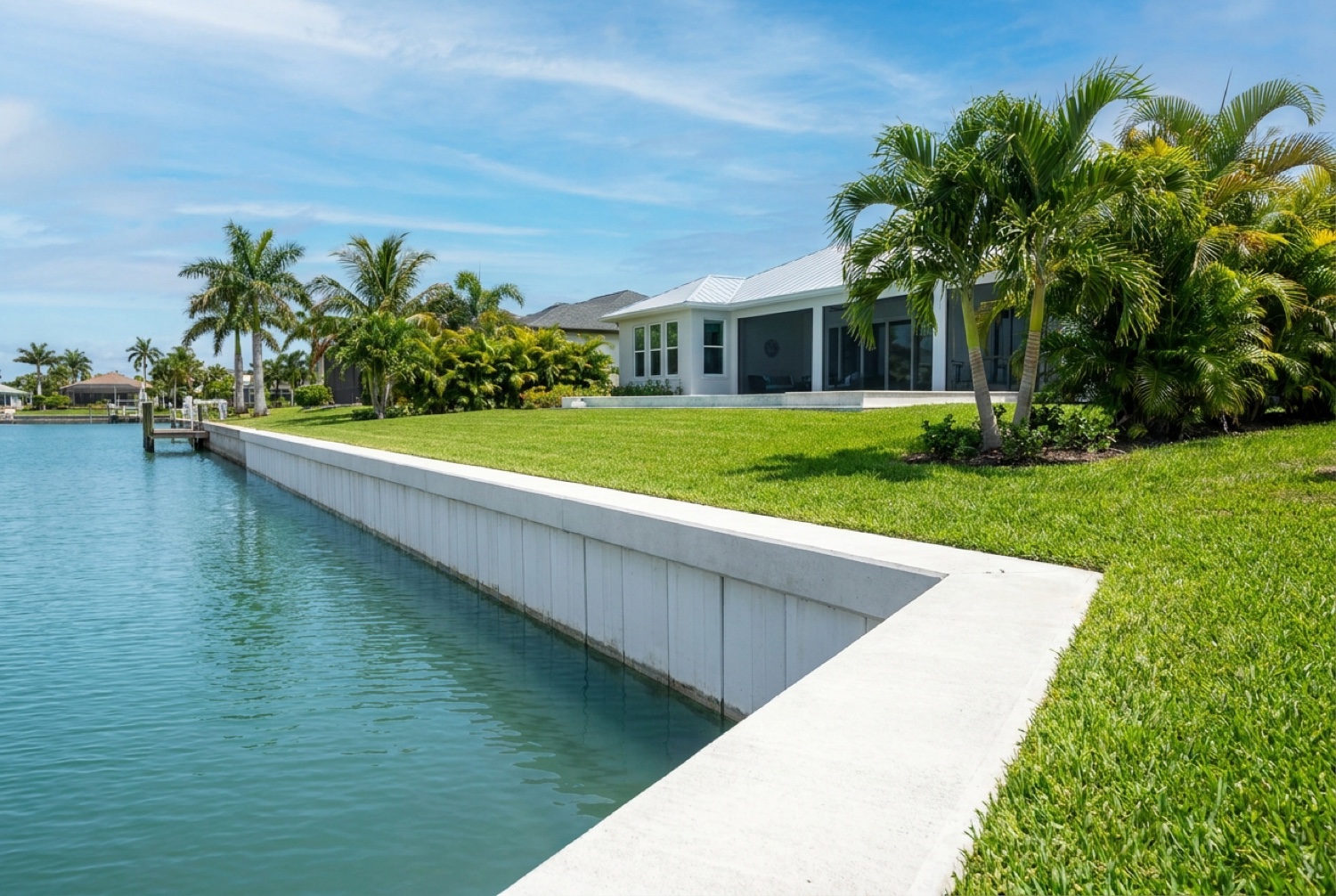 Storm & Hurricane
We don't have a dataset. We have rebuild work, and taking apart what's left teaches you the same lesson over and over: storms don't create weakness, they find it.
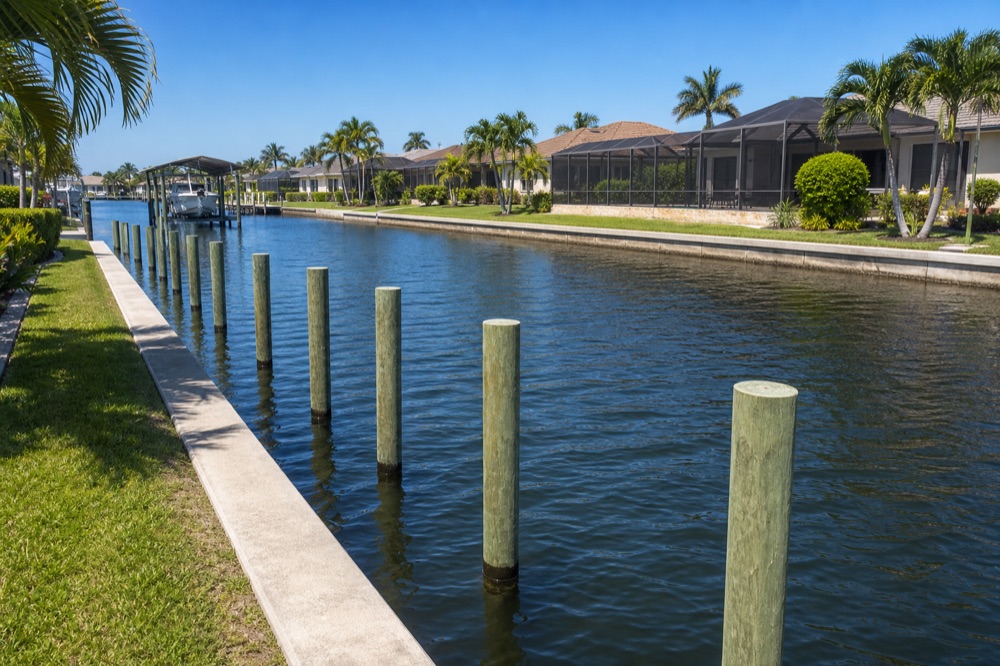 Storm & Hurricane
What securing a boat on a lift is actually trying to prevent, why bunk condition decides more than the straps do, and where general advice honestly runs out.
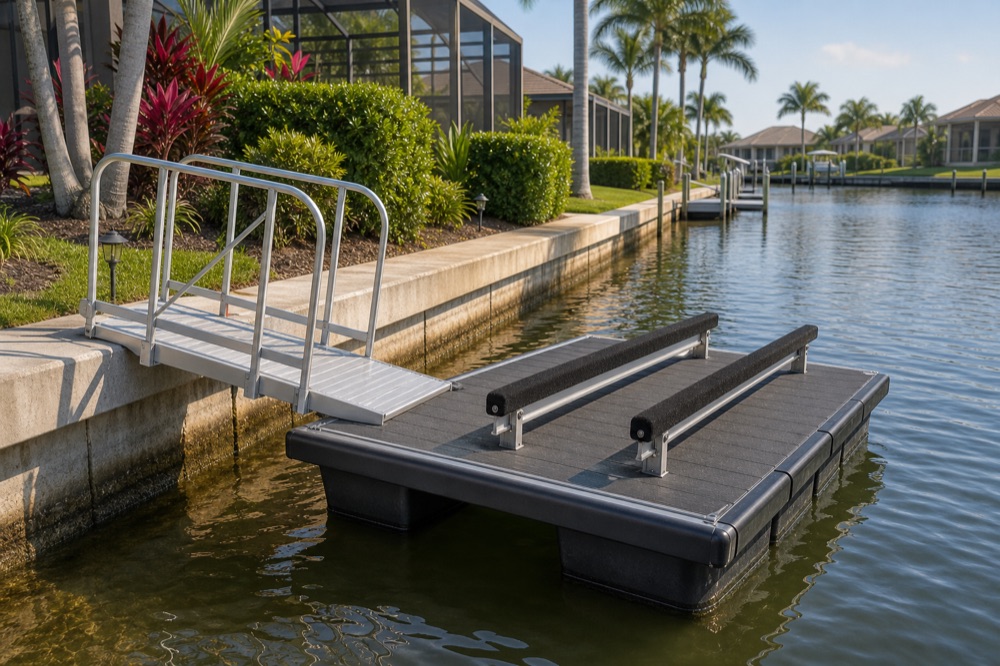 Storm & Hurricane
Floating docks ride rising water instead of fighting it, a real advantage, right up until the water outruns the guide piles. Here is the mechanism, both directions.
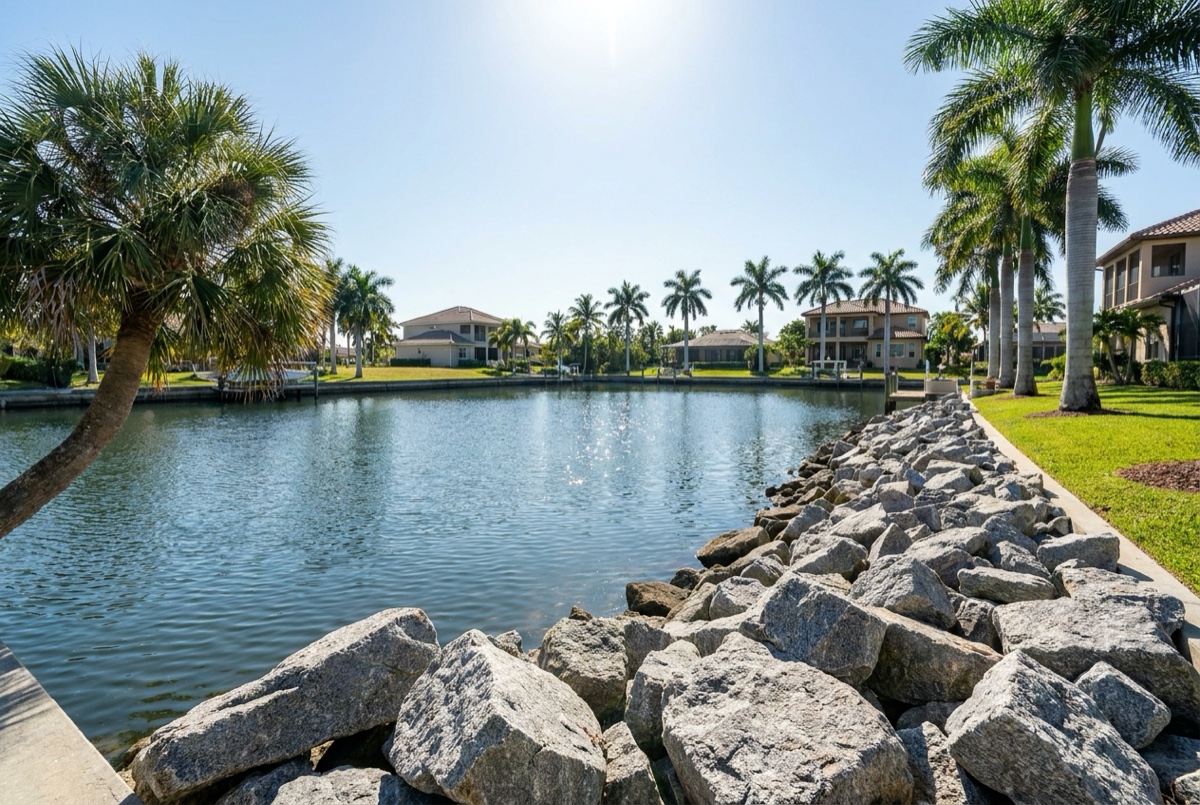 Storm & Hurricane
Fast water pulls material out from the base of a seawall while everything above the waterline looks untouched. Then, months later, the yard starts to go.
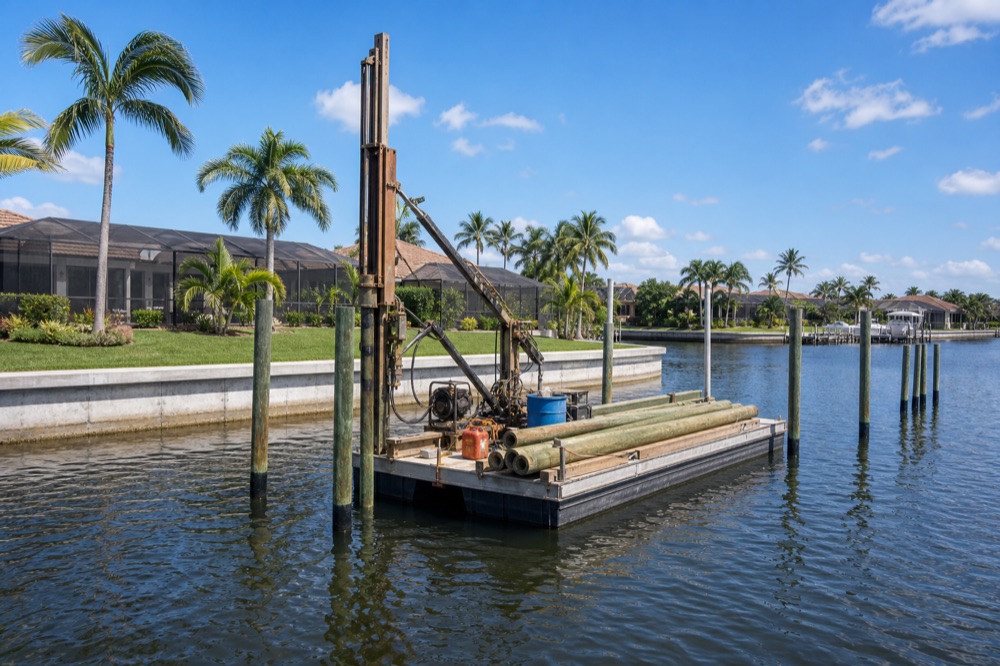 Storm & Hurricane
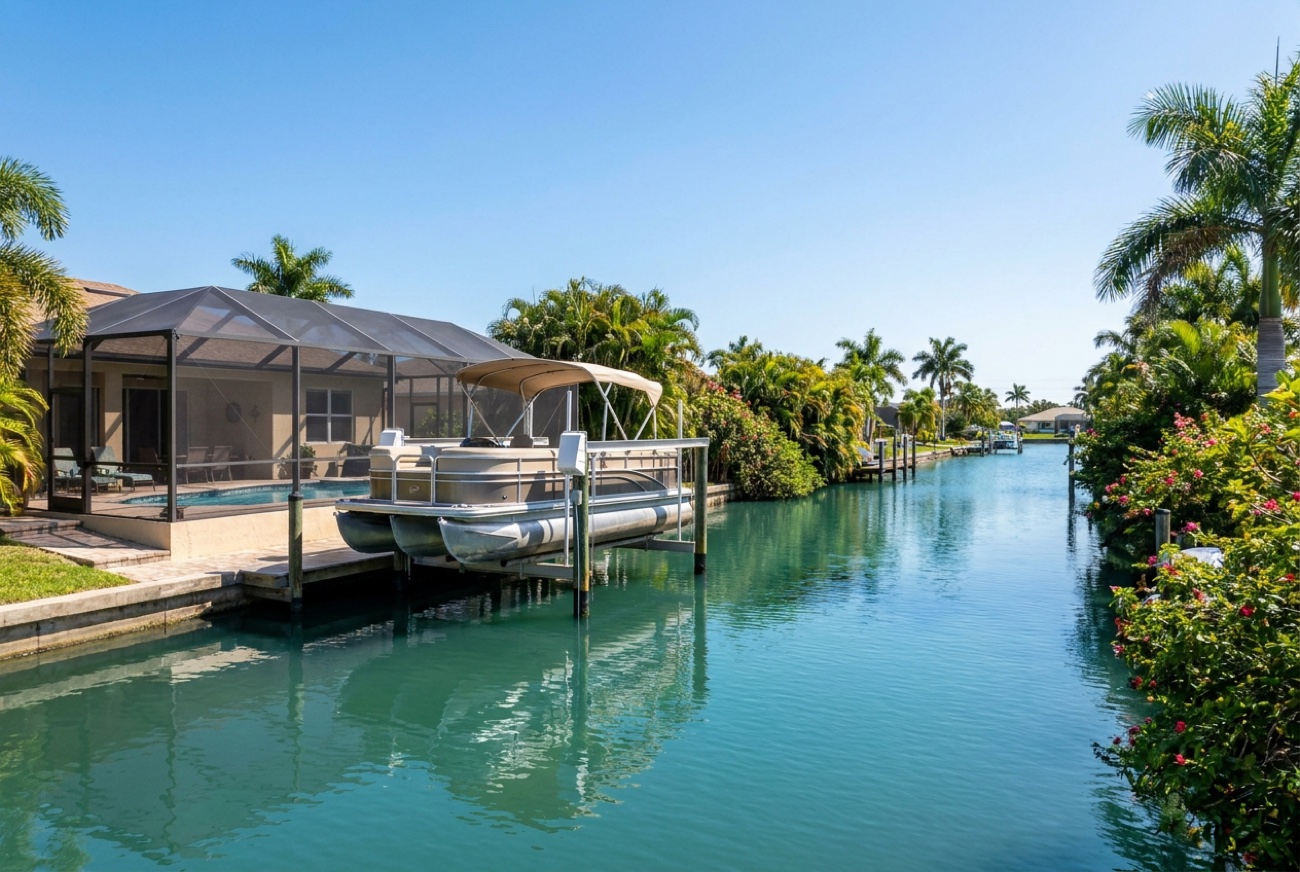
Nothing on the water is hurricane-proof. But the difference between a dock that comes through and one that doesn't is mostly decided at design time, not in the last 72 hours.
 Storm & Hurricane
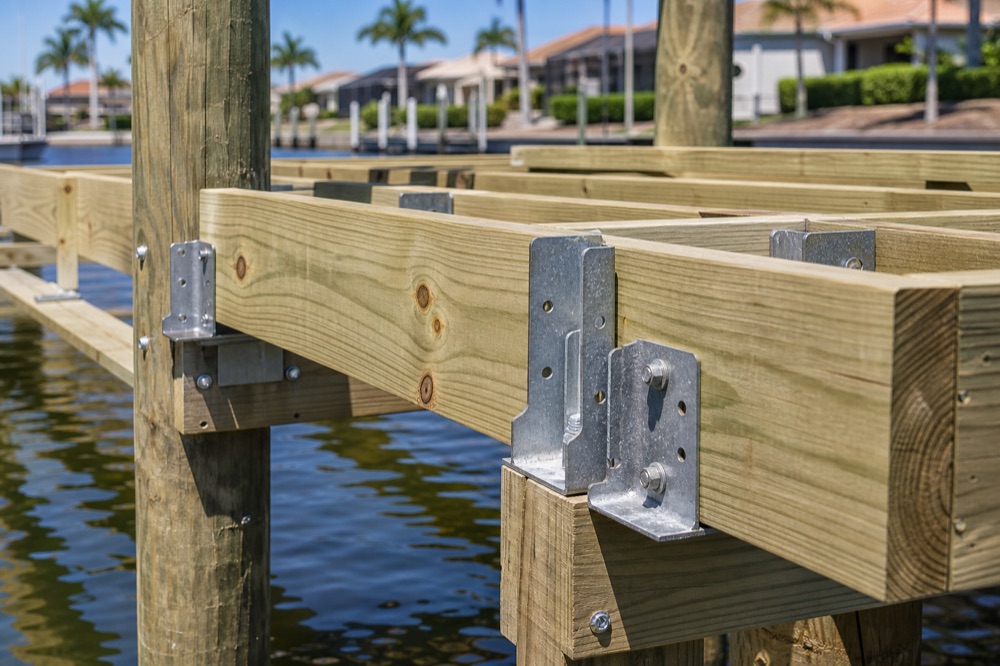
What to actually do, and when, across a Southwest Florida storm season, from the spring inspection nobody schedules to the repair window most owners miss.
 Storm & Hurricane
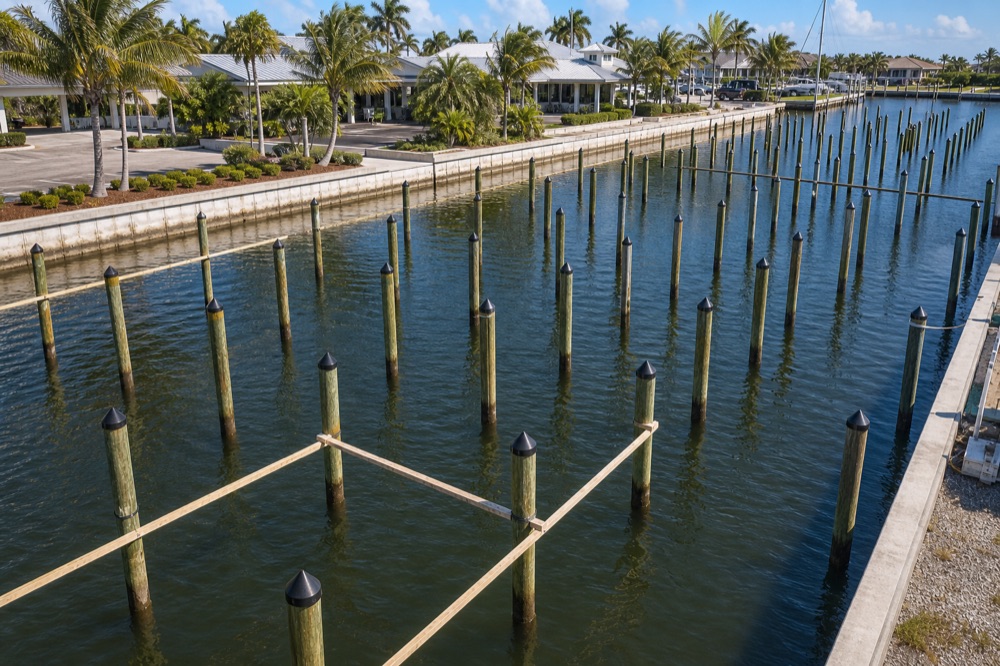
Why the label on the forecast is a poor guide to what your dock is about to experience, and what actually decides how hard you prepare.
 Storm & Hurricane
How to read a piling that moved: what a lean means, what a wobble means, what scour does underwater, and when to stop walking on the dock.
 Storm & Hurricane
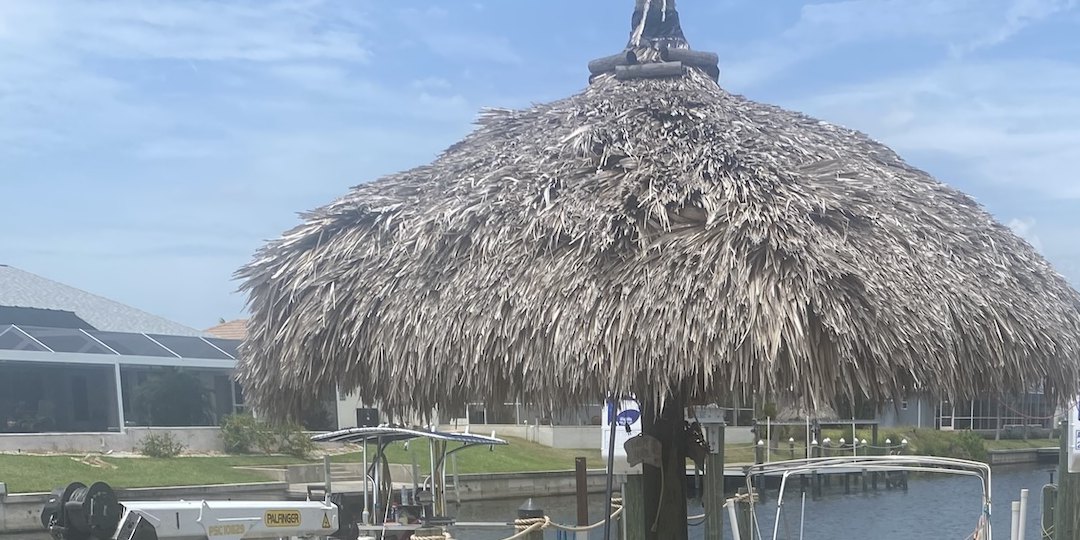
Thatch is designed to be the part that gives. How to tell whether you lost a roof or a structure, and why the ugliest tiki on the canal is often the soundest.
 Storm & Hurricane
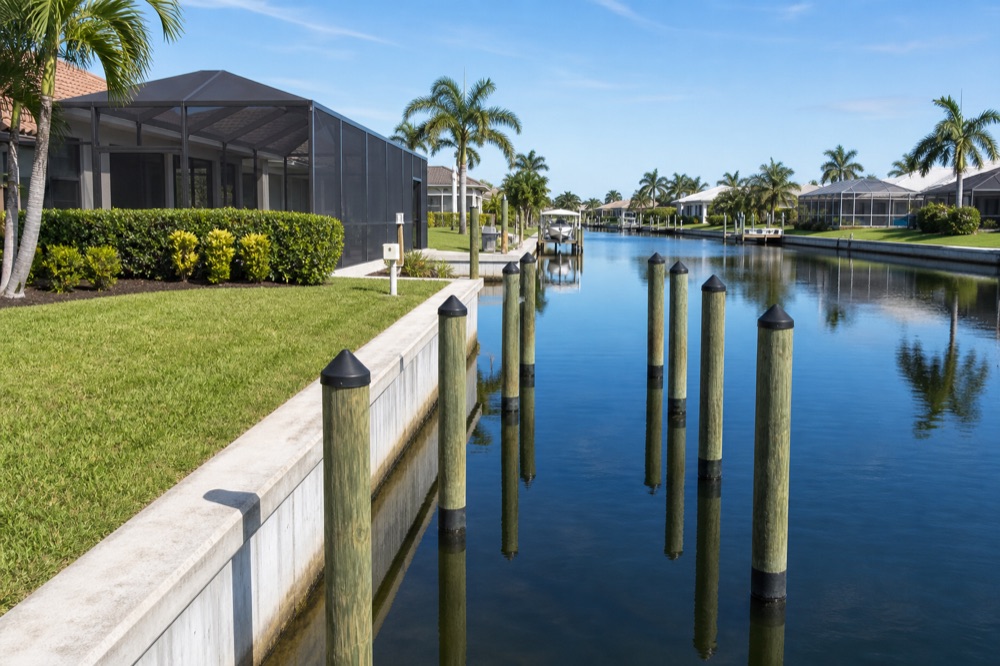
A seawall is an erosion structure, not a flood barrier. Understanding the difference is what stops owners from buying the wrong solution to the wrong problem.
 Storm & Hurricane
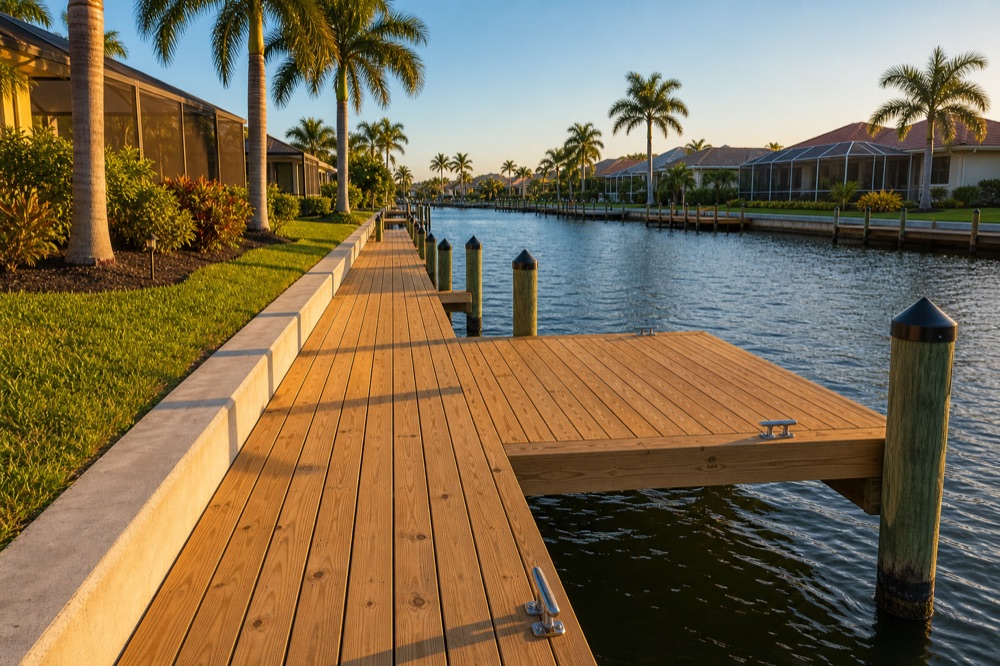
You bought the waterfront house and now it's June. What's worth worrying about, what isn't, and how the people who've done this a while actually think about it.
 Storm & Hurricane
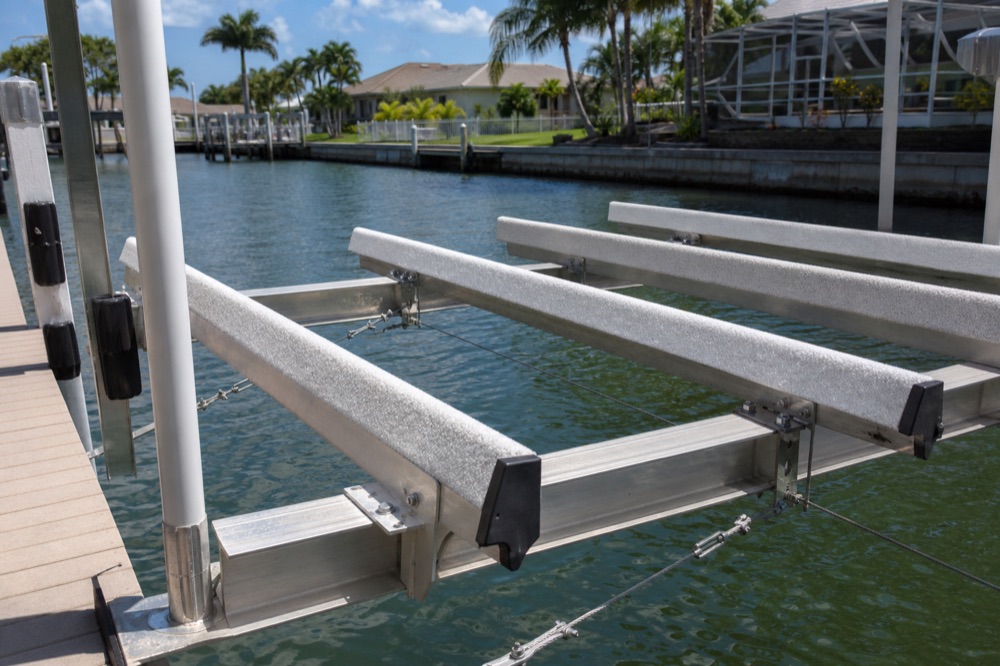
Raising the boat is the instinct. Here's the honest version of what height buys you, what it costs you the rest of the year, and where the limit actually sits.
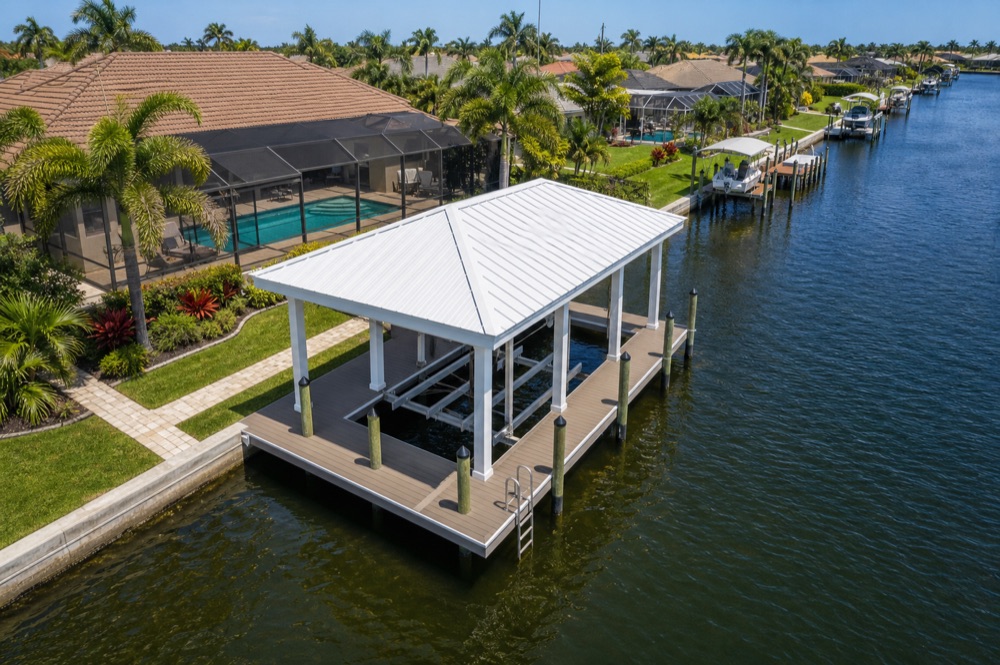 Storm & Hurricane
What people mean by a rider, an endorsement, and scheduling a structure: why a dock, a lift, and a seawall are rarely a single yes-or-no, and the questions to take to your own agent.
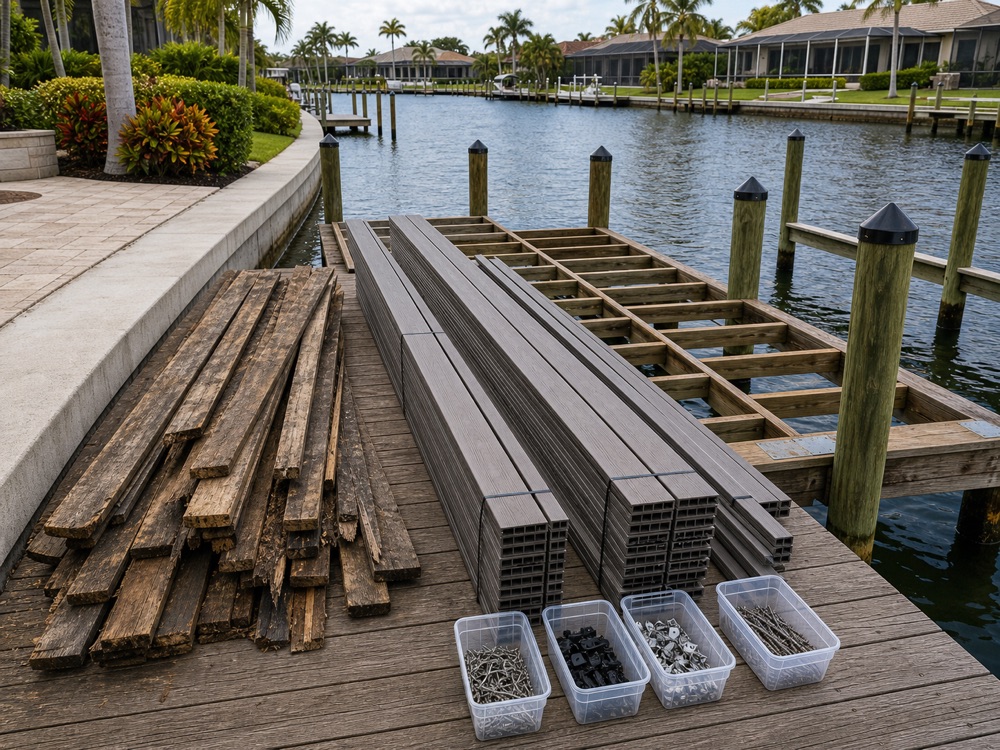 Storm & Hurricane
Nobody can honestly tell you how long a dock claim will take, so here is the part that is genuinely yours: the record, the receipts, the material you keep, and the follow-up you write down.
 Storm & Hurricane
It happens on canals more often than people think. Safety first, photograph before anything moves, don't try to recover it yourself, and notify rather than negotiate.
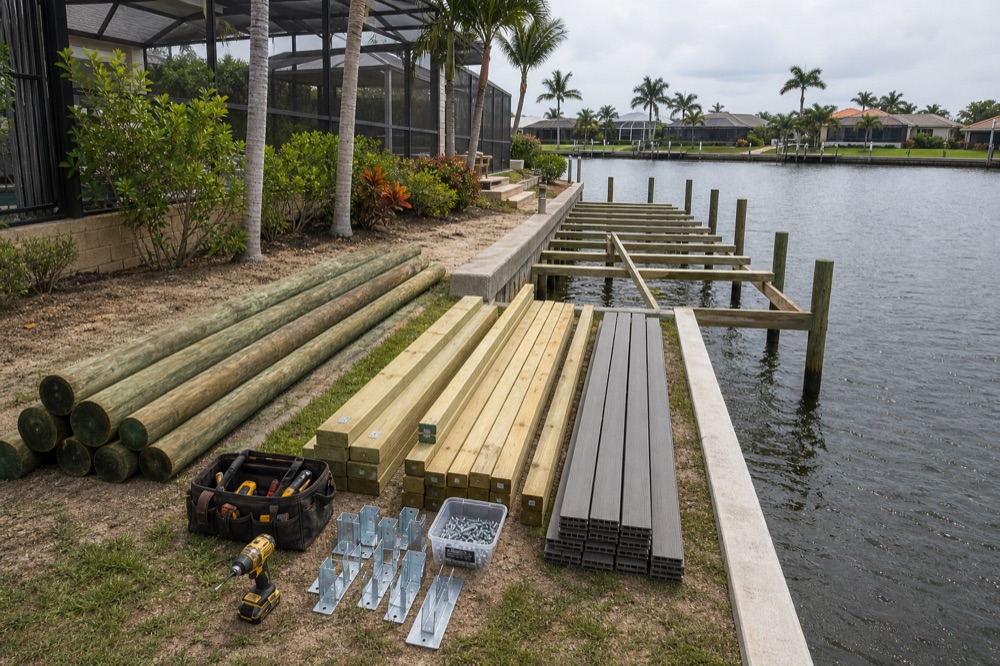 Storm & Hurricane
The patterns that show up on your driveway in the week after a storm, and, just as usefully, what an honest contractor's process looks like, so the difference is something you can feel.
 Storm & Hurricane
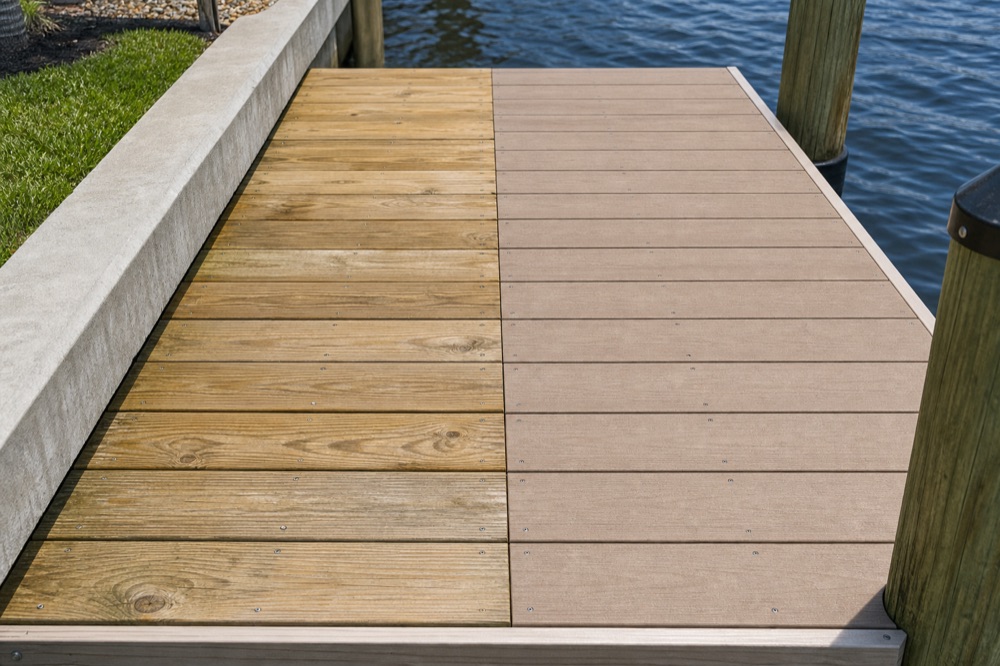
You are already paying for the access, the mobilization and the permit. That makes a rebuild the one moment when the upgrades that matter cost the least, here is which ones earn their place.
 Storm & Hurricane
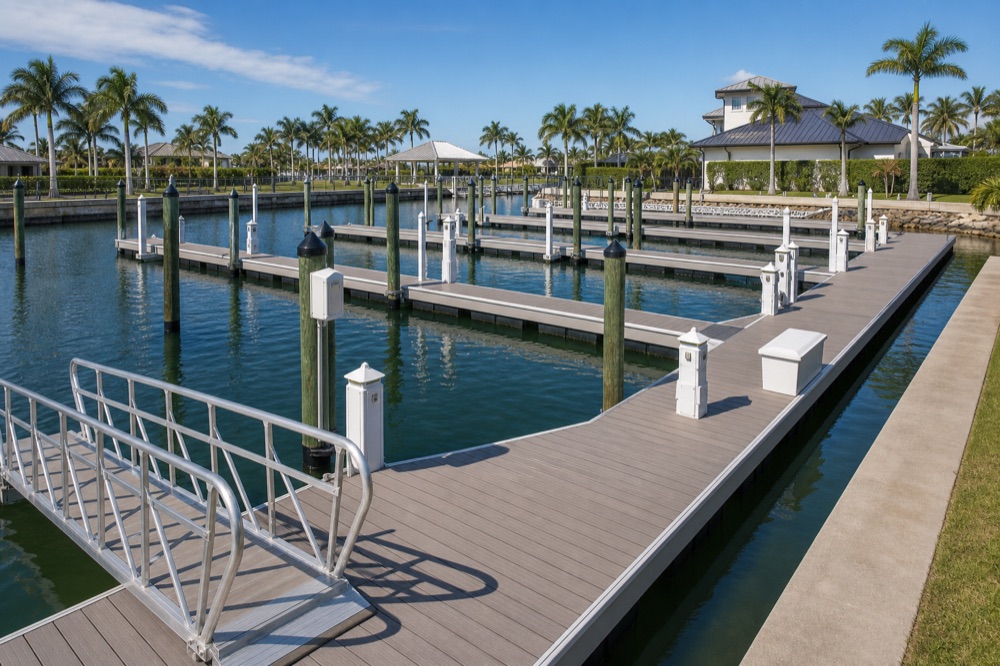
One option turns a storm into a logistics problem you solve months early; the other turns it into a condition problem you solve in the spring. Both are legitimate, and both fail in their own way.
 Storm & Hurricane
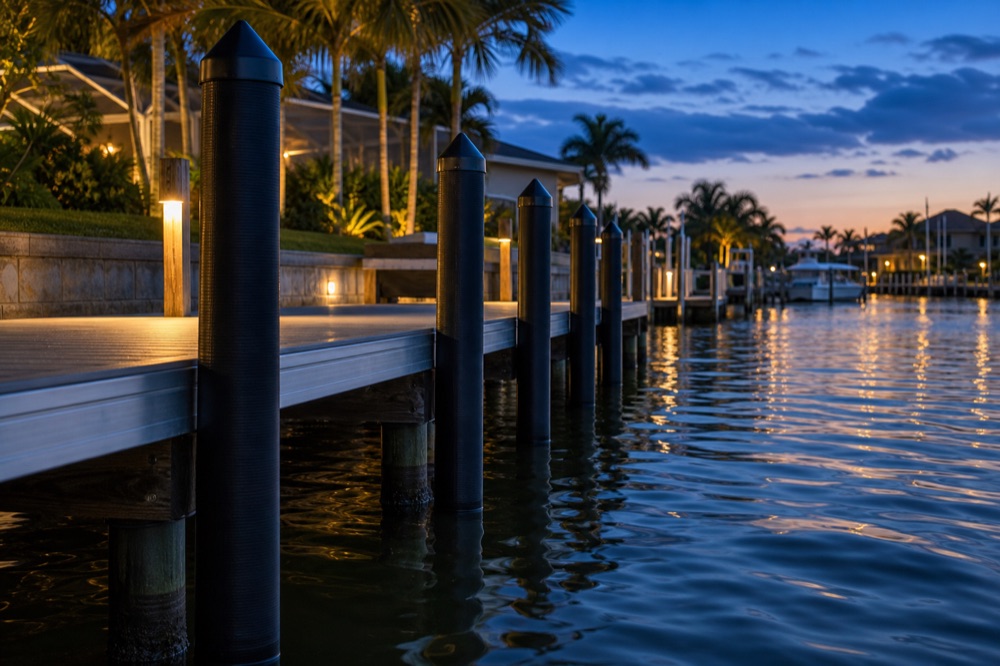
Power and internet go first, so the honest plan assumes no signal at all, a written check-in agreement, one local contact with real authority, and a short list of things you must never ask anyone to do.
Atlantic hurricane season runs June 1 through November 30. The useful way to think about it for a waterfront property is that the repair window is the months before it: spring is when the water is calm, crews have availability, and a small fix is still a small fix. Once a system is in the Gulf, scheduling structural work is not realistic.
The National Hurricane Center for forecasts, watches, warnings, and surge products, and your county emergency management office for evacuation zones and orders. Whether you are in Lee, Collier, Charlotte, or Sarasota County, your county office is the authority on what your specific zone should do. This site explains what storms do to waterfront structures; it does not forecast anything.
Fix the weak point you already know about. Almost every dock, lift, seawall, and piling failure we are called out to traces back to something that had been showing symptoms for months, a loosened piling, backed-out fasteners, a cracked seawall cap, blocked weep holes. Storms rarely invent damage. They collect on it.
There is no single right answer, and any guide that gives you one is oversimplifying. Hauling the boat out of the water entirely or moving it to protected water well ahead of the storm removes it from surge. If it stays on the lift, follow your lift manufacturer's storm guidance for your specific model and confirm with your insurer: raising, lowering, strapping, and canopy decisions all vary by rig.
We inspect, repair, and rebuild: docks, boat lifts, seawalls, pilings, boathouses, and the rest of what we build. We give free on-site estimates, we run our own crew rather than subbing the work out, and we handle permitting in-house. What we do not do is promise a response time or provide emergency services. Call (239) 397-3400 when you are ready for someone to look at what the storm left.
Docks, lifts, seawalls: inspected, repaired, built right. Call (239) 397-3400.