
King Tides & Storms: Why Timing Multiplies Water Damage
The same storm can be two completely different events on your dock depending on the tide it arrives on: here's why timing matters more than most waterfront owners realize.
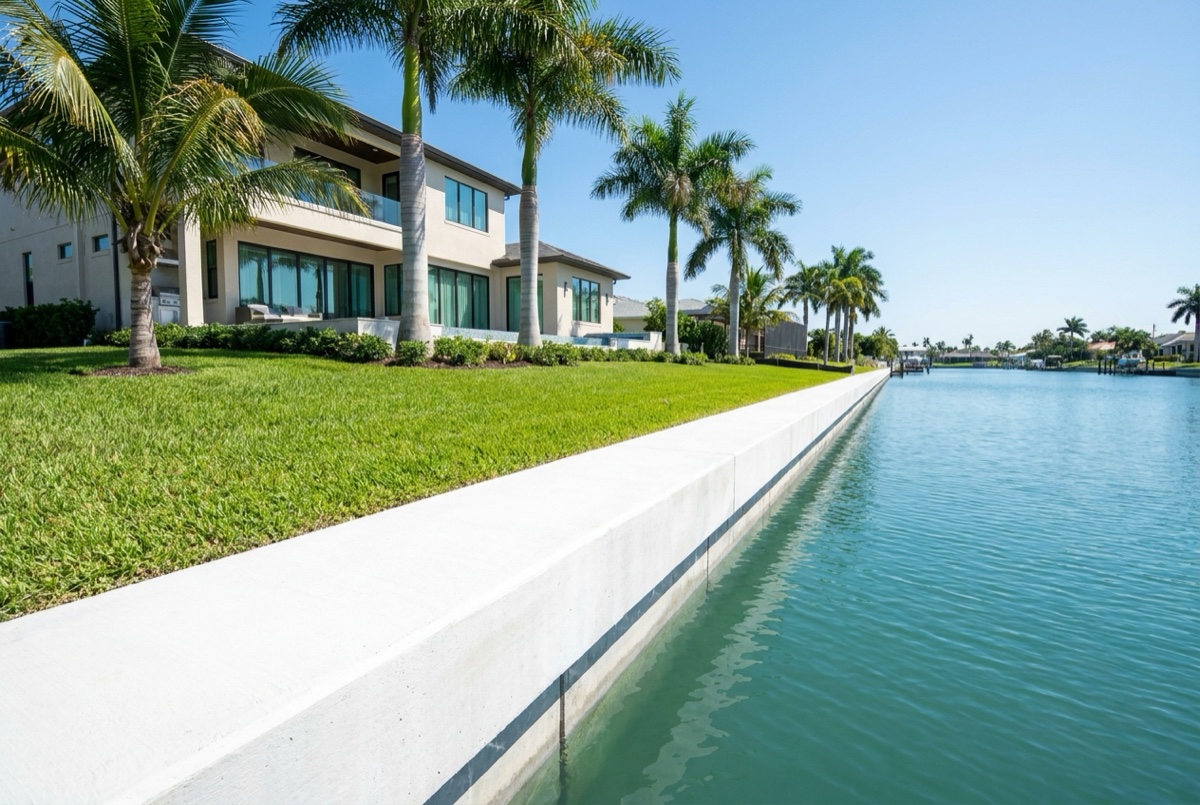
Key takeaways
- King tides are the seasonal highest high tides of the year: normal astronomy, not weather. In Southwest Florida they show up most noticeably in the fall, right in the back half of hurricane season.
- Storm surge doesn't replace the tide, it stacks on top of it. The same surge arriving at high tide and at low tide produces two different water levels against your seawall.
- What the tide eats is freeboard, the vertical distance between the water and the top of your dock deck and seawall cap. Less freeboard means water reaches structure sooner.
- You can't control the timing, but you can prepare on the earlier side of your window when a storm's arrival lines up with the high side of the tide cycle.
- Never plan around a tide table alone. The controlling forecast is National Hurricane Center advisories and the alerts your county emergency management office issues.
Two identical storms can hit the same canal and leave two very different messes behind. Same wind, same track, same duration, but one arrives while the tide is running out and the other arrives on top of the highest tide of the season. The second one is a materially different event for everything you own below the seawall cap.
That’s not bad luck. It’s arithmetic, and it’s the part of storm risk that homeowners tend to skip past. Here’s what king tides are, why timing multiplies water damage, and what it means for how early you prep.
What is a king tide, exactly?
A king tide is the highest high tide of the year: ordinary astronomy, not weather. Tides rise and fall twice a day because of the pull of the moon and sun. When those two line up, the tidal range gets bigger. When that alignment also lands near the point in the moon’s orbit where it’s closest to Earth, you get the strongest pull of all, and the high tides run noticeably higher than usual for a few days.
There’s nothing exotic about it. Around Southwest Florida it’s the week the water quietly comes up over the lowest seawall caps on a bluebird day, the neighbor’s floating dock sits higher than you’ve ever seen it, and a couple of low streets get standing water with not a cloud in the sky. “King tide” isn’t a scientific term: it’s just what everybody calls the seasonal peak.
The timing is what makes it worth writing about: the most pronounced king tides here land in the fall, which overlaps the back half of hurricane season.
Why does a storm on a high tide do more damage?
Because surge doesn’t replace the tide. It stacks on top of it.
Storm surge is the rise in water pushed toward shore by a storm’s wind and pressure. It arrives on whatever water level the tide has already set. Forecasters combine the two and call it storm tide: the total height of water above normal dry land. That’s the number that matters to your property, and it’s the reason two storms with identical surge can produce very different outcomes.
Think of it as a starting line. At low tide, surge has to climb through a lot of empty space before it reaches anything you built. At a king tide high, that space is already spent before the storm shows up. Everything that follows: decking, framing, lift motors, control boxes, dock lighting, the soil behind your wall: meets water sooner and stays in it longer.
Two things follow from that:
- The water doesn’t peak once. Tides keep cycling during and after a storm. A structure that came through the first high water can take a second and third round while the surge is still draining out.
- Recession isn’t automatically over. Water leaving on an outgoing tide moves fast, and fast-moving water pulls soil out from behind seawalls. Damage doesn’t stop when the wind does. More on the mechanism in storm surge explained for Southwest Florida.
What tide timing does to your freeboard
Freeboard is the vertical distance between the water and the top of a structure, your deck, your seawall cap. It’s the margin your waterfront was built with, and tide is what spends it.
Every part of a waterfront has a different amount:
- Fixed docks and seawall caps have a set freeboard. When it’s gone, water is on the deck and against the cap, and the deck starts trying to float.
- Floating docks don’t lose freeboard the same way. They rise with the water. Their limit isn’t the deck, it’s the guide pilings they ride on. The relevant question is how far up they can travel before they run out of piling, which is exactly what the floating dock playbook walks through.
- Boat lifts sit in between. Where the cradle, motors, and control gear end up relative to the water is a rig-specific question, and the storm-position decision belongs to your lift’s manufacturer guidance and your insurer, not to a rule of thumb.
Here’s the practical takeaway: a king tide is a free measurement. Walk out during one and photograph where the water sits against your cap, your deck, your pilings, and your lift. That’s your real margin, on a calm day, with no weather involved. If it looks tight then, you know what a storm has to work with.
How tide timing should change your prep schedule
You can’t move the tide, and you shouldn’t try to schedule around it. What you can do is bias early.
If a system is approaching and its likely arrival window overlaps the high side of the cycle, especially during a king-tide stretch: treat your deadlines as earlier than they look. Get the dock swept, the loose gear off the water, the boat plan in motion, and the documentation done on the front end of your window instead of the back. Our 72-hour checklist is built to be run early for exactly this reason.
And be honest about what tide timing does and doesn’t tell you. It’s the one predictable variable in a forecast full of unpredictable ones. Surge is site-specific: track, storm size, forward speed, approach angle, and the shape of your own basin all drive it, and none of that comes off a tide chart. The controlling sources are National Hurricane Center advisories and the alerts and evacuation orders from your county’s emergency management office. Everything on this page is context for those, never a substitute.
If a king tide showed you less margin than you expected: water at the cap, a wall that weeps, soil pulling away behind it: that’s worth a look before the next system. Florida Lifts & Docks has built and repaired waterfront across Southwest Florida since 2008 with our own crew. See what we do at our seawalls page or our dock repair page, or call (239) 397-3400 for a free on-site estimate.