
Living on a Port Royal Canal: The Owner's Orientation
The part nobody covers at closing: how the water behaves, what carries across it, which problems are not yours to fix, and the habits that keep a waterfront edge easy.
- The register
- Quiet, private, gated streets: discretion is part of the job
- Wildlife
- Check FWC for anything with a season, a limit, or a protected status
- Not our trades
- Dredging and mangrove trimming: different specialists, different permits
- The habit that matters
- Fresh water on everything metal, especially while you are away
Key takeaways
- Sound, light and wake all carry across a canal in a way they never carry across a lawn, that is most of canal etiquette in one sentence.
- A larger vessel pushes more water at the same speed, so idling out of the residential canals matters more here than almost anywhere.
- If the house is closed part of the year, someone local needs physical access to the dock and the authority to act, not just to report.
- Wildlife rules come from FWC. Anything with a season, a limit or a protected status is worth checking at the source rather than across the dock.
- Dredging and mangrove trimming are different trades with their own permitting paths. We do neither, and we would rather point you correctly.
Nobody hands you the orientation at closing. The house gets inspected, the paperwork gets signed, and then you are standing on your own dock working out how this is supposed to go: what the tide does here, how loud is too loud across the water, and who you call when the problem is not on your land at all.
Here is the version we would give a new neighbor. Less about rules than about habits, and quieter than most people expect.
What does a Port Royal address actually change?
Mostly, it raises the stakes on ordinary waterfront habits.
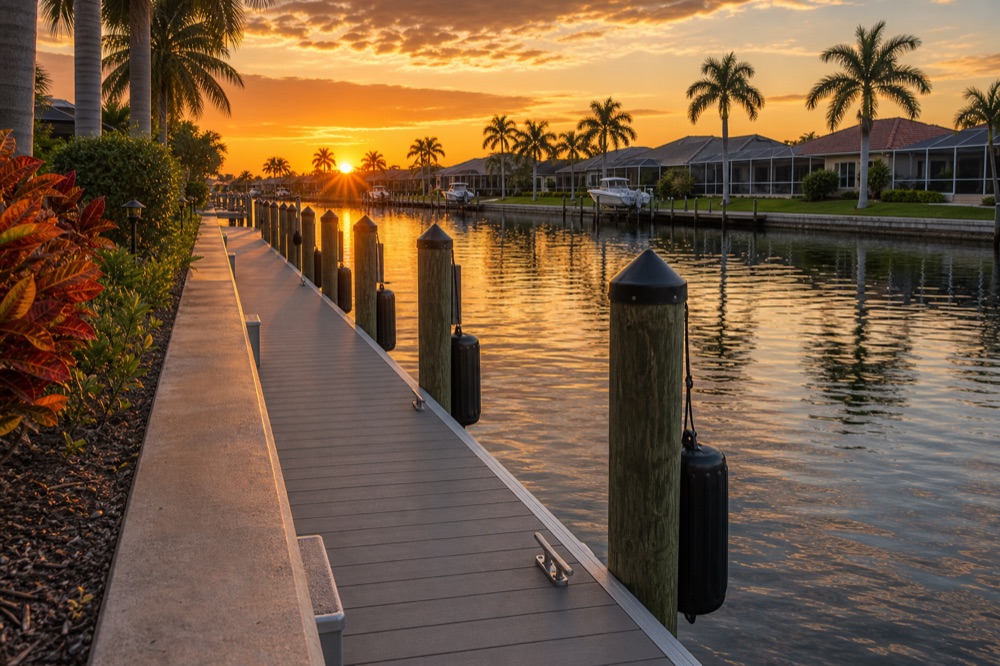
The water here is deep and wide with a no-bridge run to the Gulf through Gordon Pass, our Port Royal canal and water guide covers that geography properly. What follows from it for an owner is simple: larger boats, larger structures, more metal standing in salt, and neighbors close enough across the water to hear you enjoy any of it.
The other difference is the standard. On an estate property the dock, the wall, the plantings and the lighting are expected to be looked at together, which makes the waterfront edge part of the landscape rather than a utility at the bottom of the lawn. Owners who think of it that way maintain it on a schedule instead of in an emergency, and it shows.
Who looks after it when the house is closed?
Someone has to, because salt does not take the summer off.
If your house is quiet for part of the year, the dock is not. Growth builds on pilings, anodes give themselves up, cables sit weathering, and lines chafe where they always chafe. The cheapest maintenance available is fresh water, the lift and anything metal rinsed after use, and rinsed periodically when nobody is using it.
Two things worth arranging before you need them:
- A local contact who can physically get to the dock and has the authority to act, not only to report.
- A written check-in rhythm: what gets looked at, how often, and who hears about it.
Both matter most in storm season, when the window for moving a boat or clearing a deck is short and you may be several time zones away.
What makes a good neighbor on a canal like this?
Assume everything carries, because it does.
Sound travels across a canal in a way it never travels across a lawn. A conversation on the dock late at night is a conversation in somebody’s bedroom on the far side.
Light does the same. Dock lighting is genuinely useful, for seeing your footing, for finding the boat, for using the space after dark, but a fitting aimed out rather than down lights a neighbor’s living room. Good dock lighting is about placement and warmth rather than brightness, and where the landscape lighting was designed as a whole, matching it is most of the work.
Wake is the one with structural consequences, and it is the one owners here have the most control over. A larger vessel pushes more water at the same speed, and your wake works somebody else’s lines, their bunks and the toe of their wall. Idle through the residential canals and come off the throttle earlier than feels necessary.
Then there is the quiet part. These are private, gated streets, and people live here partly for that. Deliveries, service visits and dock work all land on a neighbor’s street as well as on your property, so the good version is planned in advance: staging arranged, protection for pavers and irrigation specified, crews that keep to themselves and leave the place clean. We treat that as part of the job rather than as a courtesy.
What is not yours to fix?
More than new owners expect. You generally own to the water, not to the bottom of it.
Responsibility for the waterway itself varies by waterway: city, county, a district, or private. That is the answer you need before chasing a problem that sits in the water rather than on your land. Who maintains canals in Southwest Florida covers how to find out for your address.
Two questions come to us often, and the answer is the same both times, not us.
- Dredging. If a slip has shoaled in, that is a different trade with its own permitting path. We do not dredge.
- Mangroves. They are protected in Florida, trimming them is regulated, and the penalties for getting it wrong are real. We do not trim them. Florida mangrove trimming rules covers what is actually allowed.
Pointing you at the right people costs us nothing and saves you a bad afternoon.
What about the wildlife?
Enjoy it, and get the rules from FWC rather than from the canal.
You will see a great deal: fish holding under the lights, birds on every piling, rays in the shallows, and manatees moving through on their own schedule. What you may and may not do around any of it: seasons, size limits, protected status, how to behave when something protected is sitting in your slip: is set by the Florida Fish and Wildlife Conservation Commission, it changes, and it is enforced. For anything with a season, a limit or a protected species attached, check with FWC rather than going on what you heard at a dock party.
The unregulated version is simpler. Birds are the universal complaint and there is no single fix, only consistency. Growth on pilings is normal until it is hiding the condition of the piling underneath. And keeping the boat on a lift rather than in the water removes most growth problems before they start, our Port Royal boat lift guide covers the setup side of that.
What is the year-round rhythm?
Lighter than people fear. Most of waterfront ownership here is a handful of habits, repeated:
- Rinse the lift and anything metal after use, and while you are away.
- Look along the whole length of the lift cables twice a year, not just the visible run.
- Push on a piling once a season, and watch the lawn behind the wall for soft spots.
- Set the ladder and the lines for low water, not for the pleasant afternoon you happened to be standing there.
- Do the structural work in spring, so storm season is logistics rather than repairs. Dock and lift repair covers what we are usually called out for.
That is genuinely most of it. Rinse things, idle out, keep your light and your noise on your own side of the water, take wildlife rules from FWC, and find out which problems belong to somebody else before you spend money on them. Treat the shoreline as part of the property it belongs to, because on these canals it is.
Welcome to the water. Anything you need built, repaired or simply looked at: (239) 397-3400.
The rest of our Port Royal library: permits, water, storms, and what we actually see on these docks.